Category Archives: Inspirational

A hero, during and after the war

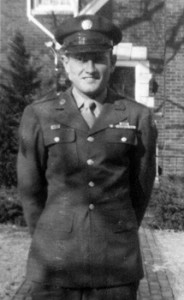
Cletis, uniformBy Steve Brawner
© 2016 by Steve Brawner Communications, Inc.

An American hero was laid to rest earlier this month.

Cletis Overton, 95, of Malvern, who died Feb. 29, enlisted in the Army in 1940 to serve as an aircraft mechanic and was sent to the Philippines. On Dec. 8, 1941, he awoke to the sounds of an air raid alert, bombs and gunfire. The Empire of Japan’s attack on the Philippines had begun.

When the enemy overtook his position on the Bataan peninsula, Cletis and his fellow soldiers were force-marched 60 miles to a prison camp. During what became known as the Bataan Death March, he saw three Americans stumble and fall, only to be quickly executed. Between 600 and 700 Americans and many more Filipinos died.

In a series of prison camps, Cletis and his fellow prisoners were forced into labor, given little food, and provided almost no medical care as they battled malaria, dysentery and other diseases.

Finally, as American forces drew near the Japanese positions, Cletis and his fellow prisoners were herded from Mindanao Island into the sweltering hold of a Japanese cargo ship. They received only a cupful of rice and a few swallows of water each morning and afternoon. Toilet facilities for 750 men, many with dysentery, consisted of two five-gallon empty oil barrels lowered into the hull. Then they were transferred to another ship, the Shinyo Maru, where conditions were just as bad.

As the Shinyo Maru departed the island, presumably for Japan, it was struck by a torpedo fired unwittingly by an American submarine. A wave of water almost waist deep rolled toward Cletis. Around him, men struggled and yelled. He fought his way toward a ladder through kicking legs, flailing arms, and scratching fingernails. Then he was rolled underwater by a rushing wave. For a moment, death seemed so certain that he considered taking a gulp of water to hasten it. Then he considered reasons to live – his parents, his girlfriend, and his belief that he had not yet done anything for God.

Somehow, he found an opening, made it to the ocean surface, and swam back to Mindanao Island while avoiding enemy soldiers who were shooting the survivors in the water. He was found by friendly Filipino forces. Six hundred sixty-eight men died in the sinking. Eighty-three survived. One died on the island, and one stayed to help the Filipinos.

The men were harbored by the Filipinos until they were met by the submarine USS Narwhal for the first leg of their trip home. Aboard the USS Monterrey, they whooped and hollered as the Golden Gate Bridge came into view. Soon he was home in Arkansas. As his mother, Virgie, saw him, she prayed in thanksgiving, they embraced, and then she cooked him fried chicken, his favorite meal.

It’s called the Greatest Generation not just because of what happened during the war, but afterwards. Cletis married his girlfriend, Maxine, became a dad and a grandfather, and when Maxine died, married his second wife, Adrienne. When he was in the water after the torpedo struck the Shinyo Maru, he promised God that he would share his Christian testimony whenever he talked about his experiences. He kept that promise. He harbored no bitterness toward his captors. He would say the guards had become what they had been taught to become, and that they were prisoners, too. In 2000, I helped him write a book about his life. One day, he told me undramatically, “If there is an attack on the United States or its possessions, and they needed 80-year-old men, I’d go.”

According to the National World War II Museum in New Orleans, 16 million Americans fought in World War II, they’re dying at the rate of 430 a day, and there are only 698,000 of them left – about 7,604 in Arkansas.

They all have stories to tell. Some will share them, and some will not. How can you know if your loved one will? Ask. Do it carefully and respectfully. But ask, because tomorrow there will be 430 fewer of them.

Related: Following in the footsteps of the Greatest Generation.

Arkansans of the year

arkansasFlagBy Steve Brawner
© 2015 by Steve Brawner Communications, Inc.

Time magazine names a “Person of the Year.” Sports Illustrated has a “Sportsperson of the Year.” Who are the Arkansans of the year?

In politics, it’s not even close. On issue after issue, Gov. Asa Hutchinson either achieved his objectives or appointed a study commission to buy time to achieve his objectives. He wants to continue but change the private option, the controversial program that uses Medicaid dollars to buy insurance for lower-income Arkansans, so he asked the Legislature to fund it two years while a replacement can be found. That’s what’s happened – so far. He and the State Board of Education butted heads over the Common Core-related PARCC exam. He wanted to replace it; the Board wanted to keep it. It’s gone. In the debate over the Religious Freedom Restoration Act, Hutchinson was perhaps the only elected official who pleased (too strong a word?) both sides. His signature education issue, requiring high schools to teach computer coding, has resulted in 4,000 students taking a class. The only downside to Hutchinson’s year is that next year can’t be this good.

Honorable mention: Baker Kurrus, superintendent, Little Rock School District. A non-educator in one of the state’s most high-profile education jobs, he’s trying to smooth ruffled feathers while telling hard truths. Does the Little Rock school superintendent belong in the “politics” category? He certainly does at the moment.

In business, I’m going with Donnie Smith, president and CEO of Tyson Foods. He and his company were questioned last year when Tyson bought Hillshire Brands for $7.7 billion. That was a lot of money, but buying the makers of Jimmy Dean Sausage and Ball Park Franks expanded Tyson’s already considerable reach. Tyson’s operating income rose 37 percent this year to $2.25 billion, and its sales of $40.6 billion are an increase of 9 percent over last year. That’s not chicken feed.

Honorable mention: George Gleason, CEO of Bank of the Ozarks. The $800 million purchase of Georgia-based Community & Southern Bank was the largest bank buy in Arkansas history and made Bank of the Ozarks an instant major player in Georgia. Full disclosure: I own a journalist-sized amount of stock in the company – meaning, not much.

In health care, I’m making New Hampshirite John Stephen an honorary Arkansan. Hired by the Health Reform Legislative Task Force to consult on reforming Medicaid, he and his firm, The Stephen Group, have offered information, insight and solutions, and as a result have much influence over Arkansas policymakers. They’ve argued the state shouldn’t completely ditch the private option while also shining a light on Medicaid’s problems. When he speaks, lawmakers listen, and he’s been speaking a lot.

Honorable mention: Hospital CEOs Troy Wells (Baptist Health), Dan Rahn (UAMS) and Chad Aduddell (CHI St. Vincent) are leading three of the state’s big institutions in a consolidating industry. You know how other areas of the economy such as banking and retail are increasingly dominated by a few players? It’s happening in health care, too.

In sports, it’s Brandon Allen, Arkansas Razorbacks quarterback. Has an athlete ever made such a quick turnaround from supposed “choker” to “clutch”? After missing late-game passes early in the season, he’s become one of the SEC’s most reliable quarterbacks and was one of the main reasons the Razorbacks won five of their last six games.

Honorable mention: Bret Bielema, Razorbacks football coach. He stuck with Allen and never lost faith in the team even when some were losing faith in his coaching ability. The Hogs have improved every year since he was hired.

In charities and nonprofits, The CALL and Project Zero are finding foster and adoptive homes for kids who really need them. The issue attracted attention this year when a report detailed problems with the state’s foster care system, and when Hutchinson spotlighted those children’s needs at his faith-based summit. Since 2007, The Call has brought 758 foster and adoptive families into the system, its website says, with more on the way. Project Zero, meanwhile, raises awareness through its Heart Gallery photos of waiting children.

Honorable mention: Too many great ones to name.

So who is the Arkansan of the year? There’s no way for me to know. What seems noteworthy today will be forgotten tomorrow, while seemingly minor events will have lasting consequences. (“Baby born in manger” probably didn’t make many headlines.) Maybe the names I’ve listed were important, or maybe they were just important to me.

At any rate, that’s my list. What’s yours?

Adoptions turn blue balloons red

By Steve Brawner
© 2015 by Steve Brawner Communications, Inc.

After Andrew Rodgers Jr. was adopted, he changed not only his last name but also his first.

The 15-year-old had grown up as “Marcus,” but that name was part of a childhood that saw him placed in foster care and moved from home to home. Separated from his three siblings, hope seemed in short supply. After he and two of his siblings were adopted by Andrew and Sabrina Rodgers of Maumelle, he decided to change his name.

“I was excited to be named after my father,” he said.

That father, Andrew Rodgers Sr., grew up in a Mississippi home with 23 brothers and sisters. Before 2011, he and Sabrina had no children. Now they have six, all adopted, including Andrew Jr. and two of his siblings.

The family was featured in a ceremony at the Pulaski County Juvenile Court building Nov. 19 marking National Adoption Day, which was two days later. With his children by his side, the elder Rodgers described what he called “an amazing journey.”

“It has been a time where we must commit, a time when we must be patient with each other, a time when we become the student, and we let the children be the teacher,” he said. “They teach us how to love. They teach us how to understand. They teach us how to prepare ourselves for a life-changing event, which is simply being called Mama and Daddy.”

The Department of Human Services’ Division of Children and Family Services finalized 711 adoptions last year. This year, the focus is on older children, the theme being, “We never outgrow the need for family.” Of the 600 Arkansas children who are legally free to be adopted, 39 percent are above age 10, and more than half of those are at least 14. The average length of stay in foster care for those children ages 10-up is 4.6 years, and their chances of adoption fall each day until they age out of the system. As DCFS Director Cecile Blucker explained, 204 children reached age 18 in fiscal year 2015. Of those, 128 chose to leave the system; the rest stayed to take advantage of state transitional services offered up to age 21.

Two-thirds of foster children will move seven or more times while in the system, according to the Annie E. Casey Foundation. Many who age out enter adulthood lacking a permanent support system. They don’t have a permanent family to guide them through high school and their late teenage years. They don’t have a parent who understands their abilities and who shares their hopes and dreams. No one is there to help them file their tax return, or point them to a trusted car salesman, or warn them if they are headed in the wrong direction, or provide a home if things don’t work out at first. And so, within four years of aging out, 25 percent have been homeless, less than half have graduated high school, 80 percent can’t support themselves and yet 42 percent have become parents. Adults who have been in foster care suffer from post-traumatic stress disorder at double the rate of combat veterans.

There are organizations in Arkansas that provide that needed support for a small number of these young people, including central Arkansas-based Immerse Arkansas (www.immersearkansas.org) and Northwest Arkansas-based Saving Grace (www.savinggracenwa.org).

Their leaders would agree that the better alternative is for their services never to be needed. Working to put Immerse Arkansas and Saving Grace out of business by finding adoptive homes for foster children are The CALL (thecallinarkansas.org), Project Zero (http://theprojectzero.org), and the state’s Department of Human Services, whose Arkansas Heart Gallery features photos of children waiting to be adopted at dhs.arkansas.gov/dcfs/heartgallery.

Were it not for Andrew Rodgers Sr., then Andrew Rodgers Jr. might have ended up as part of the problem. Instead, he plans to be part of the solution. Someday, he said, he’ll “most definitely” be an adoptive parent himself.

Balloons were released into the sky at the event Nov. 19 – red to signify those like Andrew who have been adopted, and blue signifying those waiting for that opportunity. The balloons were different colors, but they had this in common: They flew away.

So do young people. The question is, how many of them will have a home to come back to?

A day of thanks

It would have been easy on Oct. 3, 1863, for President Lincoln – or anyone else – not to be thankful. The nation (or nations, depending on one’s perspective) was still mired in a terrible Civil War, and while the Union had enjoyed victories that summer in Gettysburg and Vicksburg, much bloody fighting remained. Earlier that year, Lincoln’s wife, Mary Todd, had been injured in a carriage “accident” caused by an assailant sabotaging the driver’s seat. Their beloved son, Willie, had died the previous year at age 11.

It was in that context that Lincoln presented a proclamation written by his secretary of state, William Seward, declaring the fourth Thursday of November “a day of thanksgiving and praise to our beneficent Father who dwelleth in the heavens.”

The proclamation – really a prayer – is a remarkable look-on-the-bright-side document. Written by Secretary of State William Seward, it describes a bountiful harvest, an expansion of American territory, and a growing population. It doesn’t ignore the horrors of the Civil War. But it does point out that Union forces had enjoyed success on the battlefield, that the United States was at peace with foreign nations, and that “order has been maintained, the laws have been respected and obeyed, and harmony has prevailed everywhere, except in the theater of military conflict.”

This was not the first time Americans had set aside a day to give thanks. Eighty-four years earlier, the year the Constitution was ratified, President Washington had declared that Nov. 26, 1789, would be such a day. In the years following, states had set aside their own days of thanksgiving, but Lincoln’s proclamation made the practice national and, as it turned out, permanent

As bad as things sometimes have been lately, they have not been as bad as they were in the 1860s. And so, in the spirit of Abraham Lincoln, let’s consider the blessings of life in 2015.

The American democratic experiment remains flawed but vibrant. The president and Congress remain unable to accomplish too much too fast, just as the system was designed. Almost two dozen candidates from a variety of backgrounds have offered themselves as presidential candidates in our competitive two-party system. Ultimately, they will gain power by ballots, not bullets.

Meanwhile, Americans remain personally free most of the time. With relatively few exceptions, they can speak and worship how they choose without fear, unlike in some parts of the world. Through honest, hard work, a person can rise from the humblest of circumstances to do great things, as Lincoln did.

While many Americans continue to struggle to make a living, the Great Recession has ended. The national unemployment rate has dropped to 5 percent, half what it was six years ago, and the economy is stable enough that the Federal Reserve is expected to increase interest rates soon.

By many quality-of-life measurements, it’s better to live in America in the 21st century than it has been to be almost anywhere else in world history. Americans who earn $32,000 a year may not feel like they are part of the “1 percent,” but globally they are, according to an interactive feature, www.globalrichlist.net, operated by CARE. Life expectancy has reached 78.8 years, the highest ever recorded in this country. For most of us, food will be plentiful this Thanksgiving, and when we turn on the faucet, clean water will appear. A free public education remains available for almost every American child. Because of recent technological advancements, it’s possible to connect with friends and strangers thousands of miles away, and new advancements promise safer driverless cars and medical treatments and cures in the not-too-distant future.

It’s no wonder that so many – immigrants and refugees alike – try so hard to reach these shores.

In Arkansas, the unemployment rate is 5.1 percent, slightly above the national average. The state budget runs a surplus as usual. The state’s 600,000 acres of lakes, 10,000 miles of streams, and 17.2 million acres of forests attract residents and visitors alike. Just as “harmony has prevailed everywhere” in Lincoln’s day, most Arkansans are nice most of the time today.

Times have changed since 1863, but this much has not: Our ability to choose what we think about this time of year. We have 364 days to dwell on our problems. The fourth Thursday of November is a day for giving thanks, again.

A chance for a second chance

By Steve Brawner
© 2015 by Steve Brawner Communications, Inc.

A graduation ceremony for rehabilitating inmates may not be the ideal place to sell a Subaru, but that’s only one of two reasons Robert Long is attending.

“I’m doing a little prospecting here,” he said. “I know there’s people from all different walks of life. I was just at work. I wanted to be able to make it up here to see some of the guys that I was locked up with and let them see that I’m doing good, kinda spread that joy and that hope.

“So I brought a new 2016 Legacy with me, too, so everyone can look at it because it’s a beautiful car, and it attracts a lot of attention.”

Long was released from Arkansas Community Correction custody Sept. 28. Before that, he completed 240 hours of classes offered by The Exodus Project (exodus.life) on the campus of Arkansas Baptist College in Little Rock.

Founded by Paul Chapman and ABC President Dr. Fitz Hill, the ministry began seven-and-a-half years ago, but its current form took shape in February. It focuses on ethics and character based on biblical teachings, career development, and helping inmates recover and build a long-term plan for their lives. Participants are encouraged to ask themselves difficult questions in order to change their mindsets.

Fifteen begin each class, and 100 are expected to complete the program this year. Most participants are recovering addicts.

The theme of the ceremony Nov. 6 was “Out for Life.” Graduates wearing brown prison uniforms exchanged emotional hugs with a line of instructors and then received their diplomas from Gov. Asa Hutchinson – who as a former U.S. attorney once worked to put people in jail.

Arkansas prisons are so overcrowded that the state’s county jails can’t hold the excess, and so now the state is sending inmates to Texas. Last year, policymakers considered building a $100 million prison that immediately would have been filled to capacity – in large part by returning inmates. Arkansas releases 10,000 inmates every year – in the past, with nothing but a bus ticket and $100 – and the recidivism rate is more than 40 percent.

We can’t keep building $100 million prisons or relying on Texas. With prodding by Hutchinson, the Legislature this year funded a transitional facility to help 500 inmates re-enter society and stay out of jail, but that’s not enough. This summer, Hutchinson hosted a summit to inspire churches and other faith-based groups to do more to help inmates return to society but not to their old ways of life.

That’s what The Exodus Project is hopefully doing for Robert Long. Describing himself as once a “hopeless drug addict,” he completed the program and then moved into the ministry’s transitional home in Little Rock. At Subaru of Little Rock, he said he sold 11 units in his first month and earned $2,000 in commission on a recent Saturday. He brought promotional material in addition to the car to the graduation ceremony.

Beneath his short-sleeve blue dealership shirt is an impressive physique. He goes to the gym every morning before work to give him the high he’s sought from drugs in his past. I tell him he doesn’t look like a drug addict.

“A lot of people say that about me, you know, and I think that’s been one of the things that’s got me into trouble, too,” he said. “When you look at me in the face, you don’t really know what you’re dealing with. I can put up a pretty good facade even when I’m in the midst of my addiction. But the truth of the matter is I have transformed. You’re looking at a different man.”

Long’s job at the dealership will be one of the keys to his success. The Exodus Project is a Christian ministry, but co-founder Chapman said church involvement and education aren’t enough. The unemployment rate for ex-offenders is 47 percent. That’s a lot of idle hands.

“If we don’t move the needle on full-time employment, everything else (will) struggle to make a true difference,” Chapman said.

At the graduation, Hutchinson asked employers to wait later in the employment process before asking job applicants the disqualifying “Have you ever been convicted of a felony?” question. By delaying that question, someone like Robert Long won’t be eliminated before he has an opportunity to interview and impress.

“Let’s get beyond the checking of the box,” Hutchinson said. “Let’s give someone a chance to have a second chance.”