
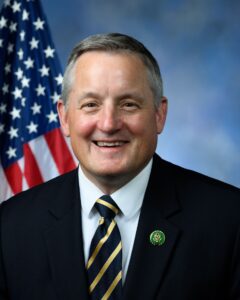
Westerman
U.S. Rep. Bruce Westerman, R-Ark., an engineer before he was a congressman, is trying to redesign the American health care system through the Fair Care Act.
He’s been introducing versions of the FCA since 2019 to reform a system that composes 18% of gross domestic product but often doesn’t produce better results than other countries’ systems that cost much less.
“I kind of approach everything from an engineering mindset,” he said. “You go through the engineering, problem-solving methodology. And it’s identify the problem, come up with a plan to solve the problem, do the work to solve the problem, and present your answer.”
Westerman said he proposed the 434-page FCA as a bipartisan solution. It has ideas from both parties and has had Democratic co-sponsorship in the past. He said past one-party efforts – the Affordable Care Act (Obamacare) and the unsuccessful Republican repeal effort in 2017 – haven’t worked.
It’s not easy being constructive in Washington these days. Congress is bitterly divided, as is the country as a whole.
Still, Westerman said it’s possible to pass legislation. He said the Natural Resources Committee he chairs has passed more bills that became law than any other committee, and those have included some contentious issues. The key is finding common ground and focusing on policy rather than politics.
“And when it comes to healthcare, it’s such an important issue, even though I’m not on the committees that have jurisdiction, I can’t sit back and say, ‘You know, somebody should fix that,’” he said. “I’ve got to get involved in it and offer my solution.”
Westerman said the health care system’s biggest problem is the lack of competition in insurance markets, hospitals and pharmaceutical companies.
Fair Care Act emphasizes health savings accounts
He wants more patients to obtain their coverage off the individual Health Insurance Marketplace, a mechanism created by the Affordable Care Act that he called “a good idea that was implemented poorly.” He’d allow consumers to purchase plans across state lines and through national associations. He’d require eight million federal employees to enroll in the Marketplace instead of the Federal Employee Health Benefits program. He would change how the system rates individuals based on age so that insurance costs could fall for younger people. Doing so would incentivize them to join the pool. There would be a new cheaper “copper” level plan.
At the same time, the FCA would remove the requirement that large companies provide health insurance to their employees. Instead, they could choose to provide health insurance, fund an employee’s health savings account, or do neither. Employees could use the HSA to pay for their insurance and other health care expenses.
“It gives you more consumer choice, and it gives consumers more control over their spending, and you give them the ability to pick a program that works well for them,” he said.
The FCA would provide $160 million to the Federal Trade Commission to hire staff to investigate anti-competitive mergers and practices. Westerman said there’s a lot of waste, fraud and abuse in health care, including criminal organizations gaming the system.
The FCA includes many other provisions. Among them are that it would prevent pharmacy benefit managers – which reimburse pharmacists – from requiring or incentivizing patients to use their own retail pharmacies. It also would allow Medicare to negotiate drug prices, and it would limit noneconomic damages to $250,000 in lawsuits.
In order to shore up the depleting Medicare Trust Fund, the FCA would make retirees who have earned $10 million or more in lifetime wages ineligible for two Medicare programs. One is Part B, which covers certain doctor and preventive services. The other is part D, which covers prescription drugs.
Will the FCA ever become law, or even major parts of it? Westerman is realistic but hopeful.
“We’ve got to keep getting the message out, and I’ve always said, you’ve got to have a solution,” he said. “And I think this has a lot of really good solutions in it. And, eventually, the timing’s going to be right where somebody wants to look at health care again, and hopefully they’ll look and see the Fair Care Act and say, you know, this is something that [can] make a difference because I really believe it would.”
Health care is complicated. I don’t know how to fix it. There are always winners and losers in politics and public policy. The same would be true for the Fair Care Act. The question would be, would there be more winning or losing?
Regardless, we’re losing now. Props to Westerman for trying to engineer a solution.
© 2026 by Steve Brawner Communications, Inc.
Steve Brawner’s column is syndicated to 24 news outlets in Arkansas. Email him at brawnersteve@mac.com.
Discover more from independentarkansas.com
Subscribe to get the latest posts sent to your email.