Why college? To get a useful degree and a job

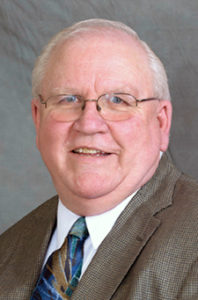
Dr. Maria Markham is the new Department of Higher Education director.

Dr. Maria Markham is the new Department of Higher Education director.

By Steve Brawner
© 2016 by Steve Brawner Communications, Inc.

What’s the purpose of college? In the past, answers to that question often have been relatively abstract: to get an education; to expand your horizons; to be exposed to new ideas. Or the answers would be completely wrong: because it’s the next thing to do after high school; to party; to play football.

Increasingly, Arkansas policymakers have a new, more concrete answer: to earn a degree or certificate that leads to a job.

Last Friday, the Arkansas Higher Education Coordinating Board approved a funding framework that would change the way colleges and universities are funded – emphasizing completion versus enrollment.

Traditionally, the state has funded institutions based on head count, meaning the more students enrolled, the more tax dollars rolling in. That’s an imperfect incentive because it places too much of an emphasis on getting students in school versus getting them through school. In 2011, the funding formula was tweaked. Now, 10 percent of a school’s state funding is based on various performance-based measures that haven’t really changed anything.

Now what’s being proposed is a totally different, outcomes-based funding formula. The framework is still light on the details, so this explanation will be light. Funding would be based less on enrollment and more on the number of students earning degrees and certificates. It would provide incentives for schools to help students move to a degree faster – the opposite of the current model, where institutions make more money if students switch majors three times and stay in school six years before quitting with nothing. How well students do once they leave college would figure into the mix.

Are there potential unintended consequences? Sure. The state does not want to encourage schools to accept only the best and brightest, so the model will provide extra money for helping underserved and at-risk students complete a degree. The other big concern is that schools will water down their academic requirements so students more easily complete their courses. Dr. Brett Powell, former ADHE director, said the state will have to trust that faculty members won’t let that happen.

How colleges are funded is important because obtaining an education after high school is both expensive (for taxpayers and students) and necessary. A study by the Georgetown University Center on Education and the Workforce found that of the 11.6 million jobs created since the recession, 11.5 million went to those with at least some education after high school.

Obviously, it’s better to have not just some college but a degree or certificate and a set of skills, and here’s where Arkansas has some challenges and opportunities. The state ranks 48th in its percentage of adults with a college degree, 29.8 percent. But Arkansas ranks fourth highest in the percentage of residents with a career and technical education certificate. And these days, those certificates can be really valuable – as well as relatively cheap and fast to obtain.

The Arkansas Department of Higher Education and higher education officials have crafted a plan, Closing the Gap 2020, which seeks to increase the percentage of Arkansans with a degree or certificate from the current 43 percent to 60 percent by 2025. To meet expected workforce needs, the state needs to increase its percentage of residents with a career and technical education certificate from 9 to 22 percent by 2020; its percentage with an associate’s degree from 7.2 to 12 percent; and its percentage with a bachelor’s degree, but no higher, from 15.1 percent to 18 percent.

The new outcomes-based funding formula has a long way to go before becoming law. The Legislature must approve the bare-bones framework next year. Then Higher Ed must add some meat to those bones under the leadership of its new director, Dr. Maria Markham. Then the Legislature has to approve the final plan in 2018.

Making the task easier is that some of the state’s higher education leaders are on board. The chancellors of the University of Arkansas System and the University of Arkansas at Fayetteville have expressed support. So have Arkansas State University President Chuck Welch and Dr. Robin Bowen, president of Arkansas Tech University.

For change to occur, that support will have to hold as the details become known. Somebody’s going to lose something, including institutions that don’t make the transition well. And who will be the winners? Students who complete their programs and are ready to make a living as productive citizens.

If that’s not the main purpose of college, it should be.

Related: Is college worth it?

Medical weed: What images do you see?

By Steve Brawner
© 2016 by Steve Brawner Communications, Inc.

Unless Arkansas somehow becomes competitive in the presidential race, which it probably won’t, the state’s airwaves won’t be crammed with political advertising by Hillary Clinton and Donald Trump. Pity our unfortunate fellow Americans in Ohio, Pennsylvania and Florida for that one. In Arkansas, the only race between candidates that might be mildly interesting is the one for U.S. Senate.

What we will have is a pretty good three-way debate about medical marijuana.

Arkansans likely will have two choices on their ballot: the Arkansas Medical Cannabis Act and the Arkansas Medical Marijuana Amendment. The act has already qualified, while the amendment is in the process of doing so.

Both would legalize marijuana for medicinal use, but they differ in substantive ways. The act would have the force of law, while the amendment alters the Arkansas Constitution, a more permanent statement. The act includes about 50 ailments for which marijuana could be prescribed; the amendment lists 14. Both would set up a network of dispensaries where patients could obtain the product, but the amendment’s would be for-profit enterprises while the act’s would be run by nonprofits. Only the act includes a provision allowing patients living too far from a dispensary to grow their own.

That last provision is the reason there are two ballot proposals. The leaders of the two groups,
the act’s Melissa Fults and the amendment’s David Couch, worked together in 2012 to convince voters to legalize medical marijuana and almost succeeded. Since then, they’ve split over “grow your own,” which Couch says Arkansans won’t accept. The split does not appear to be amicable.

Meanwhile, a campaign is forming to oppose both groups. On July 22, the Coalition for Safer Arkansas Communities held an informational meeting at the Arkansas State Chamber of Commerce. The coalition will include law enforcement personnel, educators, medical providers and others. Gov. Asa Hutchinson is opposed to the legalization efforts, as is the state’s surgeon general, Dr. Greg Bledsoe. The State Chamber is opposed because it says medical marijuana will complicate workplace safety enforcement efforts and worker’s compensation claims.

The main speaker at the meeting was Henny Lasley, a Little Rock native now living in Colorado, which legalized marijuana medically in 2000 and recreationally in 2012. Now, she says, youth marijuana use in Colorado is the highest in the nation. There are more marijuana stores in Denver than pharmacies, Starbucks, or McDonald’s. Hundreds of marijuana products – including all kinds of fun-looking foods – are for sale in that state. She and Dr. Bledsoe say that, far from being harmless, marijuana is a dangerous plant with long-term effects and far higher concentrations of the mind-altering THC compound than it contained in the past.

Lasley said that all of the four states, plus D.C., where marijuana is now legal recreationally originally legalized it medically. She and the coalition’s campaign manager, Terry Benham, say the medical marijuana efforts are just Trojan horses hiding the marijuana industry’s true intentions, full-scale legalization.

Fults and Couch say this is not a Trojan horse. They say marijuana ought to be an option for doctors and patients in some circumstances, such as cancer and epilepsy, and that the Food and Drug Administration is dragging its feet on studying the drug for political reasons, including the influence of the pharmaceutical industry. Medical marijuana is now legal in 25 states plus D.C., but legal recreationally in only four states plus D.C., so most states have not followed Colorado’s lead in expanding its use.

This campaign, like many, will come down to images – the kind voters see on television and the internet, and the kind they see in their heads. What comes to your mind with the words “medical marijuana”? A cancer patient or an epileptic getting a little relief, or a teenager getting his hands on a now-available gateway drug? Do you see a small network of dispensaries responsibly providing a plant to a few who can benefit from it? Or do you see marijuana stores popping up on Main Street?

If you’re not sure, campaigns will be trying to help you form those images, one way or the other. This is an election, after all.

It’s been a good election – for liberals

Hand with ballot and boxBy Steve Brawner
© 2016 by Steve Brawner Communications, Inc.

After four days of the Republican National Convention and two days of the Democrats, one thing is clear: Regardless of who wins in November, it’s been a lot better year for liberals than it’s been for conservatives.

For traditional conservatives, in fact, this election season has been tough, and a bit of an awakening.

The Republican Party has long been thought to be dominated by two factions – pro-business/less government types, and social conservatives. To maintain power, the party has had to appeal to Wall Streeters in New York and pro-lifers in Arkansas.

But it turns out that Donald Trump understood something that the data-driven party establishment didn’t: who really votes for Republicans, and why.

In recent years, the Republican Party has attracted more and more support from two very important groups who don’t fit neatly into the pro-business or social conservative wings: white working people without a college degree, and senior citizens.

At the same time, Republican Party policies have not always aligned with those voters. The party has supported trade deals like the North American Free Trade Agreement and the Trans-Pacific Partnership, teaming with President Clinton and President Obama to overcome the opposition of Democrats in Congress. Who’s been hurt the most by free trade? Working people without a college degree. Meanwhile, Republicans in Congress have supported significant changes to Social Security and Medicare that their senior citizen voters generally don’t support.

Then came Donald Trump.

During the campaign, he’s pledged repeatedly not to touch Social Security and Medicare, saying his policies will make the country so rich that no changes are needed. And during his speech to the Republican National Convention, Trump railed against a system rigged in favor of those rich Wall Streeters and blasted those free trade deals. He also repeated his plan to stop illegal immigration, which also has cost working people without a college degree the most.

Trump’s ascendancy is forcing the Republican Party to come to grips with the disconnect between some of its conservative policies and its voters. That’s difficult. Last week, some conservatives stayed home from the Republican National Convention, while others whooped and hollered or at least held their nose and golf-clapped for a candidate who, at times, sounded a lot like a Democrat.

For liberals, Hillary Clinton may have won the nomination, but Sen. Bernie Sanders won the battle of ideas. Thanks to him, the party has taken a giant step to the left, including promising a tuition-free college education to students with a family income of up to $125,000. During his speech to the rowdy convention Monday, Sanders railed against income inequality caused in part by … the same trade deals Donald Trump criticized.

As for social issues, Democrats at the national level no longer are even pretending to straddle the middle. During Sanders’ speech, the person sitting next to President Clinton was Cecile Richards, president of Planned Parenthood.

Every election is described as “the most important election of our lifetime.” This one actually does rank up there. We are watching the realignment of both parties. The Republicans, for three decades the party of Reagan conservatism, are becoming the party of Donald Trump. To some degree, they must in order to appeal to their own voters. The Democrats are becoming more liberal – so liberal that President Obama is now one of the party’s moderates, and the Bill Clinton of the 1990s wouldn’t even fit in the party today.

So for liberals, the Democrats, and in some ways the Republicans, have moved in their direction if not past them.

Conservatives, meanwhile, will have some tough questions to ask about their own philosophy. Maybe the best they can hope for is to be both the party of Reagan and the party of Trump.

As for the Wall Streeters who both nominees say they’re mad at? I’m pretty sure they’ll do OK, regardless of who wins or loses.

Related: Trump played checkers and they played chess – in a checkers year.

Don’t be a reptile this election

By Steve Brawner
© 2016 by Steve Brawner Communications, Inc.

You’re not a reptile, so don’t let yourself be treated like one this election cycle.

In legal circles, the “Reptile Theory” is the basis for many plaintiff’s attorneys’ cases. According to a report by Dr. Ann Greeley that’s posted on the American Bar Association’s website, lawyers across the country have stopped trying to focus on building sympathy for their clients and instead are focusing on rousing anger toward the defendant.

The practice got its name from a 1960s theory of evolutionary biology by neuroscientist Paul MacLean, who said the brain at its most primitive core is “reptilian” and focused on survival.

Regardless of whether or not plaintiff’s lawyers believe that theory makes any sense biologically, they want jurors focused on safety – theirs and others. Lawyers aren’t just building a case against the defendant; they’re identifying a source of danger facing the entire community, including the jurors. A tire blowing out and causing an accident could happen to anyone, so the lawyer wants to give jurors a chance to punish the danger itself and hopefully eliminate it by punishing the defendant.

If a plaintiff’s lawyer focuses on the plaintiff’s suffering, on the other hand, then juries might find fault with that person’s actions. Maybe the driver bears some responsibility for the tire blowing out because he drove over a broken glass bottle. Besides, why should that guy get rich just for being in the wrong place at the wrong time?

Plaintiff’s lawyers are not the only ones relying on the Reptile Theory. Political campaigns do it, too, especially this year. The unfavorable ratings for Donald Trump and Hillary Clinton are so historically high that the Reptile Theory is either’s best path to victory.

That’s a big reason why this year’s Republican National Convention was so much an exercise in Hillary fear-raising rather than Trump praising. Like a plaintiff’s lawyer, the party tried to make voters focus on their fears and punish the defendant – this week, Clinton. It’s why the first night’s theme was “Make America Safe Again.”

Of course, the Reptile Theory is only part of the reason for the party’s focus on Clinton. There are legitimate concerns about her candidacy. At the same time, some Republicans can’t bring themselves to say much positive about their own nominee, even if they should. In a seven-minute speech, U.S. Sen. Tom Cotton mentioned Trump’s name one time, and then only his last name. Sen. Ted Cruz, whose wife Trump had insulted and whose father Trump had suggested was involved in the John F. Kennedy assassination, didn’t even endorse the candidate, instead encouraging his audience to “vote your conscience.”

I have no doubt that the Reptile Theory will be alive and well at the Democratic National Convention, when Trump will become the defendant.

There’s nothing necessarily wrong with criticizing an opponent. A majority of Americans have serious concerns about both Trump and Clinton, so of course the opposing campaigns will try to use those concerns to their advantage.

The problem is that fear alone, unless you’re in imminent danger, is a terrible basis for making decisions. As those plaintiff’s lawyers know, frightened people are more easily manipulated. When we’e afraid, we’re more likely to surrender our freedom, we stop thinking logically and creatively, and we start looking for people to blame. And then really bad things can happen.

Moreover, the two major parties use these fears to maintain their shared control. Republicans and Democrats make us believe we must vote for one or the other – the one we fear the least – rather than give a third party or independent a chance.

Reptiles have been around a long time. They are good at individual survival – eating and avoiding being eaten. But they don’t advance, they don’t make the world a better place for their young, and they don’t do anything great.

So, yes, this election, vote your fears. But also vote your hopes and dreams, and your logic and reason.

Most importantly, as Cruz said, vote your conscience. It’s something that reptiles don’t have but humans do, which helps us invent things like democracies and elections.

Good news: Schools getting connected

Like all Arkansas public school students, Warren students Jackson Denton and Breize Fellows are being connected to high-speed broadband internet.

Like all Arkansas public school students, Warren students Jackson Denton and Breize Fellows are being connected to high-speed broadband internet.

By Steve Brawner
© 2016 by Steve Brawner Communications, Inc.

Ready for some good news? Do you remember a few years ago when Arkansas’ public schools had inadequate internet connections, and there was a big controversy, and it seemed like this was going to be another one of those huge political fights requiring a lot of taxpayer dollars?

Problem solved. Seriously.

Mark Myers, director of the state Department of Information Systems (DIS), told the House and Senate Education Committees Monday that by July 2017, Arkansas will be one of three states where every school is connected to high-speed broadband internet. The fiber network will give schools speeds of 200 kilobits per second per student, which is twice the generally accepted minimum standard of 100 kbps. The network is ready to expand those speeds to 1 megabit per second per student without having to buy new equipment.

Let’s review the back story. Back in 2013, it became obvious that many Arkansas schools didn’t have the broadband they needed to use the internet as a learning resource or to administer online tests associated with the Common Core. Arkansas received a “D” in the 2013 “Digital Learning Now” report from the Foundation for Excellence in Education.

The state was spending huge dollars and getting terrible results. An report by the Quality Digital Learning Study Committee had found the state had invested almost $160 million in vendor costs since 1992 on the Arkansas Public School Computer Network (APSCN), a backbone that was offering schools a measly 5 kbps. At a time when everyone was moving to high-speed options like fiber, the state was still spending 70 percent of its budget on copper wiring – basically, a stagecoach on an interstate highway.

Individually, schools were doing a much better job of connecting to the internet than the state was. APSCN was costing an average of $286 per month per megabit – the equivalent of a household paying $2,800 to $5,700 for cable modem service. Meanwhile, schools were paying about $13 to private providers to supplement their connections. Because of that, according to a 2014 report by the nonprofit group EducationSuperHighway, 58 percent of Arkansas districts were meeting the 100 kbps standard, largely through their own efforts. However, 17 percent offered speeds of only 10-49 kbps, while 5 percent were even slower.

Naturally, there was a big argument about what to do about all of this. For a time, some wanted schools to hook up to the state’s Arkansas Research Education Optical Network, or ARE-ON, a private network used by universities and hospitals. Schools were prohibited by state law from connecting to it, and private internet providers were opposed because they didn’t want to compete with the government. There was talk of a special legislative session.

Then a consultant, CT&T, found that connecting to ARE-ON was not cost-effective and that instead the state should partner with those private providers. The move to connect to ARE-ON lost steam. Newly elected Gov. Asa Hutchinson ordered DIS to create a high-speed backbone for schools. The state worked with than 20 private providers. The timing was good because more fiber was being laid. In some cases, schools were let out of contracts that extended past the July 2017 goal.

The state is connecting to high-speed internet for about the same cost it was spending on those old slow connections. The annual total cost is just under $13 million a year, a fraction of the $2.19 billion budgeted for the public school fund in fiscal year 2017. E-rate, a federal program that provides funding for schools and libraries, will pay for 80% of the $6 million in transport costs. School districts don’t have to pay anything to be part of a secure statewide network.

So now, by the start of the 2017-18 school year, every public school student in Arkansas will have access to fast internet connections. Those connections will enable them and their teachers to use the internet for instruction and for school projects. Districts will spend less or, eventually for some, nothing on textbooks, which are extremely expensive, inflexible, and quickly become outdated. And as demands increase, so can the network. The big political fight never happened, and everybody got what they wanted.

Told you this was some good news.

Related: How two sisters and a cup of coffee changed a school.
In West Memphis, it’s all connected.