Category Archives: Uncategorized

For foster parents, mercy triumphs over judgment

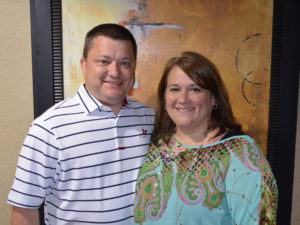
Andrew and May Baker were name Foster Family of the Year.

By Steve Brawner
© 2017 by Steve Brawner Communications, Inc.

On May 16, an awards banquet was held where no one really cared who won.

That was the day the Arkansas Foster Family of the Year and 10 regional winners were honored by the state Division of Children and Family Services (DCFS). They were honored for doing what foster families do: giving loving homes to children removed from their biological families, giving those biological families a helping hand during difficult times, and giving the taxpayers a heck of a good deal.

Foster families temporarily take care of many of the 5,200 children whom the state has removed from their homes because of abuse, neglect and other reasons. The arrangements can last from days to years. Sometimes the foster child is ultimately adopted by the foster parents, and sometimes the child is adopted by another family, but in most cases that’s not the goal. The goal is to provide support services to the children’s biological families so they can be reunited.

Here are some of the ones who “only” won regional awards. Ben and Lora Yother from Greenwood, two nurses, have cared for 13 foster children, including medically fragile ones. Steve and Ruth Hale from Conway started fostering in 2012 after they already had eight grandchildren. They’ve fostered 53 children and adopted their first one, seeing her through a teenage pregnancy that produced their ninth grandchild. Charles and Ginger Blue of Nashville have opened their home to 75 foster children in seven years. Terra Cobb of Texarkana, a single mother, has fostered 66 children since 2012. Meanwhile, she’s adopted three children ages 3,4 and 5 and cares for her 80-year-old grandmother in her home. Shantel Moore of Sherwood, another single mother, specializes in fostering teens and teen girls. Tate and Tammy Pfaffenberger of DeWitt have fostered 20 children since 2014. Last year, Tammy continued to care for two foster children – along with her own – despite undergoing radiation treatments for breast cancer. Then, while still undergoing the treatments, she accepted a third foster child.

As someone wrote about her, “Through chemo, losing her hair, staying up all night with babies, going to sporting events, you name it, she never complained.”

That’s some tough competition.

That said, somebody had to “win,” so the Foster Family of the Year was Andrew and Amy Baker of Searcy. He’s a leadership in ministry professor at Harding University, while she’s a speech pathology professor there. They were selected not because of the number of children they’ve fostered (nine long-term over three years) but because of their efforts to reunify the children with their biological parents or other relatives.

The Bakers learned to care about these kids during their own upbringings. When Amy was a child, her parents hosted weekend visits for young people living at the Southern Christian Children’s Home in Morrilton. Andrew’s parents in the state of New York opened their home to what he called “pretty hard core” teenage detainees, some barely avoiding prison and some being loved for the first time in their lives.

Like all foster parents, the Bakers experience grief when the foster children they’ve grown to love leave their home and return to their families. As Andrew explained, “If it doesn’t hurt, you didn’t do it right.”

But reunification is still their goal, as it is the system’s, and so they work with those families throughout the process and stay close to them afterwards. No one wants to be a bad parent, they say, and if circumstances had been reversed, maybe they would have made the same mistakes. If for whatever reason their children were removed from their home, they would want the foster parents to be striving for reunification, too.

“Mercy triumphs over judgment, and I think that’s our role is to be a voice of mercy in a very complicated system,” he said.

Want to try to beat out Terra Cobb or Tammy Pfaffenberger for next year’s title? Contact DCFS at http://www.fosterarkansas.org or 501.682.8770. Another avenue is The CALL in Arkansas (thecallinarkansas.org, 501.907.1048), a ministry focused on recruiting and training foster and adoptive families. Project Zero (theprojectzero.org) helps foster children who are eligible for adoption find permanent homes.

Related: This family’s really super.

Walking away from the game

By Steve Brawner
© 2017 by Steve Brawner Communications, Inc.

One of the Razorbacks’ best players announced this week that he was retiring as a college sophomore. For football fans and the entities that profit from the game, the bigger issue is the number of young people who might never play at all.

Rawleigh Williams had already suffered one neck injury his freshman season, had a successful surgery, and returned to lead the Southeastern Conference in rushing, putting him on the path to a pro career.

Then in the Razorbacks’ final spring practice April 29, he made ordinary contact with a defensive player and fell to the ground, unable to rise. Medical personnel rushed to his side along with Head Coach Bret Bielema and then his distressed mother, Kim, and his sister. A ruptured disc in his neck was surgically replaced and fused in place.

That was enough for Williams, who announced his decision to end his playing career but not to leave the game. In an essay on the Arkansas Razorbacks’ website, he said he could not bear to put his mother and sister through another such episode, adding, “I want to be able to walk.” He’ll keep his scholarship and finish his education in hopes of an office career in football.

We’ve all grown immune to seeing young men carried off a field after a “season-ending injury” that could affect them the rest of their lives. In the worst cases, there’s a long delay as players kneel and the crowd grows silent. Otherwise, the broadcast goes to replay and then commercial, and then play resumes with a replacement player briefly introduced.

It’s the worst part of a very entertaining show. But the reality is that many players who make it to the NFL become broken middle-aged men thanks to a sport that even the Buffalo Bills’ general manager last year acknowledged humans are not supposed to play. Among the health issues are concussion-caused brain ailments such as chronic traumatic encephalopathy, or CTE, a degenerative disorder that can strike relatively early in life. We’ve also learned, thanks to the book “League of Denial,” that the National Football League denied the sport’s link to brain injuries much like the tobacco industry did with smoking and lung cancer.

The ultimate result of the research was a billion dollar settlement requiring the NFL to compensate 20,000 ex-NFL players. The NCAA also agreed to a much smaller settlement for college players.

Yes, every player has made a choice to step on that field. But let’s be honest: Society takes a kid, often from the wrong side of the tracks, and gradually makes the game more rewarding. Through junior high and high school, he plays in front of adoring crowds, leading to a college scholarship to play in front of even larger crowds, and then, if he’s good enough, NFL riches. Warnings about what might happen in 40 years often fall on deaf ears. By the time a young man appreciates the risks, he’s a football player with responsibilities. According to former pro tight end Jordan Cameron, who retired after four concussions in six years, many players don’t actually love the game.

Of course there is another side to the argument. Many players in high school, college and the pros do love the game. Rawleigh Williams does. Young men are going to take risks, prove their manhood, and find outlets for their testosterone-fueled impulses. It’s been said the last words of many a Southern male are, “Hey, watch this!” Isn’t it better if these things happen in an organized activity with rules, a sense of brotherhood, and a clock that ends the activity on time?

It seems few people have boycotted football since “League of Denial” was published, but the game’s long-term and short-term risks must be better appreciated than they were. While young men may see themselves as the next star player, many of their mothers see themselves as potentially the next Kim Williams looking at her son lying prone on the field. How many are discouraging – or forbidding – their sons from ever playing the game? Surely some.

Football increasingly will be something that most people never actually do, even as children, because of the risks and because there are just so many other choices. So would fewer people playing the game lead to fewer people interested in the game? Seems likely, if not undeniable.

Related: Whew, that’s a lot of debt for football seats

After legislators meet, marijuana more limited but still legal

By Steve Brawner
© 2017 by Steve Brawner Communications, Inc.

It was a good legislative session for some (gun rights supporters), a bad one for others (supporters of more highway spending), and for supporters of medical marijuana, it was as good as could be expected.

The amendment passed by Arkansas voters in November could be amended with a two-thirds vote by legislators, and at least that percentage likely voted against it, as did Gov. Asa Hutchinson, former head of the Drug Enforcement Administration. There were ample opportunities these past three months for those lawmakers to mostly overturn the amendment overtly or subversively. But the attitude among many legislators and the governor was that regardless of what they believed about the amendment, the people voted for it, so their democratic duty was to make it work.

An early test was House Bill 1058 by Rep. Doug House, R-North Little Rock, which changed a provision in the amendment requiring doctors to certify that the potential benefits of medical marijuana likely would outweigh the risks for a patient. Doctors, Rep. House argued, would be reluctant to make that claim because there are no accepted medical standards for marijuana, which remains an illegal drug in the eyes of the federal government, and they could face liability issues. The bill allowed doctors instead to simply state the patient suffered from one of the qualifying medical conditions spelled out in the amendment. In other words, they were identifying an illness, which they would do anyway.

If the spread of medical marijuana were to be limited, here was the perfect place to do it. The Legislature could simply leave the amendment exactly as the voters had approved it, and many doctors wouldn’t prescribe it. You could see the wheels turning as legislators considered that possibility. It passed the House with 70 votes, three to spare, on Jan. 17, and then passed the Senate with 24 votes, none to spare, on Jan. 23. The governor signed the bill into law as Act 5 four days later.

Efforts that would have significantly limited the drug failed to advance. Senate Bill 238 by Sen. Jason Rapert, R-Conway, would have delayed the legalization of medical marijuana in Arkansas until it is legal in the United States. It didn’t even get a motion in committee. Senate Bill 357 by Rapert would have prohibited the smoking of marijuana anywhere in Arkansas. It failed twice in the Senate. House and Senate bills that would have made it illegal to sell edible marijuana products each failed in their respective chambers.

Legislators in all passed two dozen medical marijuana bills, and some did limit its use or add to its price and thus make it less accessible. Act 1098 by Rep. House adds a 4 percent tax for cultivation facilities, dispensaries, and other medical marijuana businesses. The tax will pay for regulating the drug but will raise the price for consumers at least 8 percent. Other laws prohibit smoking marijuana where tobacco smoking is prohibited, ban products that could appeal to children, allow schools to prevent marijuana-impaired students from attending school, and ban the possession of marijuana by military personnel or their caregivers and on military sites. Act 593 by Rep. Carlton Wing, R-North Little Rock, includes a range of legal protections for employers if they take action against employees who are impaired while on the job or if they exclude employees from safety-sensitive positions.

Even with those changes, lawmakers did not fundamentally alter the fact that marijuana soon will be available in Arkansas, legally, for qualifying patients. The market merely awaits the bureaucratic process and the establishment of businesses. The first licenses for growers and dispensaries could be issued by the end of September, and then there has to be time to grow the plants, build the facilities, and open the doors to patient-customers.

Of course, there is the matter of marijuana still being illegal for any purpose under federal law, which covers every square inch of the country, including Arkansas. All of this is happening because the Obama administration looked the other way, Congress tacitly approved, and the Trump administration so far is following suit.

This would be a lot less weird if federal law were either changed or enforced. Seeing how neither apparently is going to happen, expect to see medical marijuana – legal in Arkansas, technically illegal in America – available for purchase around January.

When Democrats should vote for Republicans

By Steve Brawner
© 2017 by Steve Brawner Communications, Inc.

A couple of thousand mostly Democratic-leaning participants gave Sen. Tom Cotton an earful last week during his rowdy town hall meeting in Springdale. While civic engagement is good (and civil discourse would be even better), most of those folks would accomplish more by voting in the Republican Party primary.

That’s because, for the foreseeable future, Arkansas is going to be a mirror image of what it’s been for much of its past, and that’s a reliably one-party state. After 150 years of being dominated by Democrats and a brief period from 2008-12 when it was competitive, the state will be ruled by Republicans for a while, if not the rest of most of our lives.

Cotton knows this, which is why he was willing to endure an uncomfortable couple of hours that will not change the way he votes. He knows the people who took their shots at him represent a fraction of the state’s voters and were not going to vote for him anyway.

Most parts of Arkansas are dominated by one party at the state and national level – mostly the Republicans except in urban areas and parts of eastern Arkansas with high minority populations, which are decidedly Democrat.

That reality means we don’t have competitive races hardly anywhere. In the 2016 elections, President Trump beat Hillary Clinton 61-34, none of the congressional races were close (and only one even featured a Democrat), and only seven of the 41 competitive state legislative races were decided by less than 10 points, five in the Republican candidate’s favor. Three of those seven involved a Democratic incumbent losing to a Republican challenger.

So each May, Democratic voters in a lot of places may have to make the same choice some Republicans used to have to make: Voting in the other party’s primary for the candidate they can live with, and then voting in the general election for the doomed candidate they want – assuming their party fields a candidate.

Moving forward, the most important divides in Arkansas politics often are not going to be between Republicans and Democrats but between Republicans and other Republicans on an issue by issue basis. To use one example, at the national level, there’s a very real difference between how Cotton sees trade with Cuba (continue the embargo) and how Sen. John Boozman and U.S. Rep. Rick Crawford from the agricultural 1st District see it (open it up some).

At the state level, a number of issues are determined not by what the two parties argue about, but by which Republicans occupy Republican-dominated seats. A big issue this legislative session has been a proposed tort reform constitutional amendment that would cap the amount of punitive and noneconomic damages awarded in lawsuits. Democratic legislators are completely against it, and presumably so would be most of the attendees at the Cotton rally. But the issue has also split Republican legislators, some of whom oppose the proposal. Health care is on the back burner while everyone waits to see what happens in Washington. Once there’s more clarity there (whenever that happens), there’s going to be a huge fight at the State Capitol, often pitting Republicans against other Republicans.

If this sounds like I’m offering unsolicited advice to Democrats – I’m not, although somebody surely should. This message is for anyone of any persuasion who wants their vote to matter most. Aside from very important ballot initiatives like medical marijuana and tort reform, the state’s political direction will be decided at least as much in May party primaries as in November general elections. In fact, in Arkansas, that’s pretty much the way it’s always been.

By the numbers, 645,000 Arkansans voted in the 2016 primaries while 1.1 million voted in the general election, a difference of 500,000 people.

No doubt much of that was driven by the presidential race, which was a foregone conclusion in Arkansas in November but still competitive in May. As a result, in a state with 1.7 million registered voters, Trump won the Republican Party primary (and inevitably its six electoral votes) because 134,744 voted for him then, while the rest were voting somewhere else, for someone else, or not at all.

Those 134,744 voters had a lot louder voice than anyone at a town hall, it turns out.

The wrong wall

By Steve Brawner
© 2017 by Steve Brawner Communications, Inc.

After signing executive orders regarding trade, abortion and Obamacare, President Trump has begun addressing the issue that propelled him to the presidency: illegal immigration. Specifically, he wants that wall on the border with Mexico built, and he still wants Mexico to pay for it.

Enforcing the border is a core responsibility of government. But is this the right kind of wall?

This is 2017. Everything about our lives that can move from the physical to the digital is doing so. You can deposit a check with your cell phone. The U.S. Postal Service is going broke because we’re all texting and emailing.

Walmart, king of retail, is focusing much of its efforts on online sales. Many products can be bought online and shipped to your doorstep, for free. In many cities in Arkansas, you can order groceries online and then have them brought to you in the parking lot, again for no extra cost.

This is happening because Amazon sells goods that way, and Walmart must compete. Just as Walmart started with one store in Rogers and then took over the country, Amazon started by selling books and now sells everything to everybody. Like Walmart, it’s constantly innovating. The latest news is that it’s been awarded a patent for a giant blimp that would dispatch package-carrying drones to households like bees buzzing from a hive. Meanwhile, the company is opening physical stores, including one that doesn’t have cashiers. Customers with smartphones just place their item in their physical cart, and it automatically registers in their virtual one.

Walmart has seen this script before. It knows that Amazon can do to it what Walmart did to Kmart and Sears. In business, you can be on top, and then you can be gone, and it can happen very quickly. Walmart doesn’t want Bentonville to be the next Detroit.

But bricks and mortar aren’t simply being replaced with the digital world. They’re supplementing each other in constantly changing ways. Walmart is meshing its online sales with its physical locations. Amazon, the digital company, is opening physical locations.

And that brings us back to the wall. The border between the United States and Mexico is about 2,000 miles long, and 700 miles are already fenced with a barrier that snakes across the frontier and through cities.

So what do you with that remaining 1,300 miles when you share it with a neighbor whose past and future are inseparably linked with yours?

If your only goal is to keep people out, then a physical wall is better than no wall. True, resourceful people will find a way over it, under it or through it. A ladder is an extremely effective tool for climbing things. But not everyone is so resourceful.

But building that wall would be extremely expensive – $15 billion is one estimate, and of course it would have to be maintained and guarded.

Moreover, this wall – along with Trump’s vow to make Mexico pay for it – does not exactly represent diplomacy at its highest. It’s kind of a slap in the face to the entire Western Hemisphere. So it’s not surprising that, on Thursday, Mexico’s president cancelled a meeting with Trump.

Keep in mind that Walmart isn’t going digital just because it’s more efficient. It’s also doing it because it must look like a 21st century company to younger generations, lest it become Sears or Kmart.

Branding is as important for countries as it is for companies. A 2,000-mile barrier between the United States and everything to the south sends a truly awful signal about what the United States is becoming. This is, after all, the country whose Statue of Liberty faces the open water and is inscribed with Emma Lazarus’ poem, “Give me your tired, your poor, your huddled masses yearning to breathe free.” I’d rather be known for that than a wall.

We’d be better off following Walmart’s and Amazon’s lead and mixing both the physical and the virtual, by innovating and being flexible. Along with the wall that already stands, and maybe some more, make greater use of drones and satellites and other technology along with a mobile and flexible border patrol force that’s allowed to do its job. Since we apparently must argue, let’s argue about the degree to which the model reflects Walmart (more physical) or Amazon (more virtual). Also part of the strategy: Don’t bully your neighbor.

Let’s not be Kmart. This is, after all, the era of smartphones. The country doesn’t need just a tough border policy, but a smart one.

Related: Out of the shadows