Category Archives: Uncategorized

Democrats’ DCCC targeting French Hill

French Hill, Maria

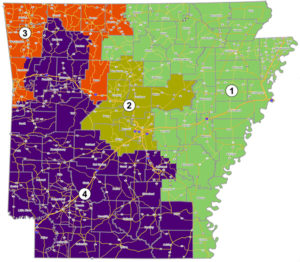
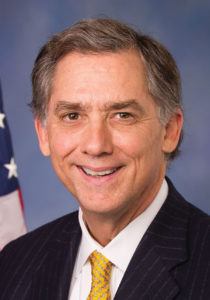
Rep. French Hill represents Arkansas’ 2nd District.

Voters in central Arkansas’ 2nd District might, possibly, maybe experience something that doesn’t happen that much in congressional races – a real, contested campaign. That’s because national Democrats are targeting that race to try to unseat the Republican congressman, Rep. French Hill.

Hill was re-elected easily in 2016 with 58 percent of the vote against an uncompetitive Democrat and a Libertarian. His was one of many Arkansas races where the outcome was never in doubt. Democrats didn’t even field candidates in the other House elections. President Trump was such a shoo-in that Hillary Clinton, Arkansas’ former first lady, didn’t campaign here.

This time, the Democratic Congressional Campaign Committee (DCCC), the House Democrats’ campaign arm, has made the 2nd District one of its targeted races. It already has run radio ads attacking Hill. Continue reading

Arkansas Week – Sept. 29, 2017

This week’s Arkansas Week on AETN: Wes Brown with Talk Business & Politics, Jacob Kaufman with KUAR, and Steve Brawner  join host Steve Barnes to discuss health care, Arkansas’ low unemployment rate, the Alabama Senate race, and the Little Rock mayoral race.


Poll: Few in the middle with Trump

By Steve Brawner

A newly released poll has found that with President Trump, most Arkansas voters have a strong opinion one way or the other, and it’s about half and half. Ideally, those aren’t the results you want in a strong, stable democracy in a big, diverse country.

According to the poll by Talk Business & Politics and Hendrix College, Trump’s approval rating in Arkansas has dropped from 60 percent in February to 50 percent in July, with 47 percent disapproving and only 3 percent having no opinion.

The drop of 10 points is interesting but not shocking. Running for president is easier than being president, which is why all presidents’ hair changes color, including Trump’s. It doesn’t take long for presidents to start offending people, especially when they try to do it.

What’s more notable is the way those numbers break out. Of the 50 percent who approve of Trump, 39 percent strongly approve and only 11 percent somewhat approve. Meanwhile, 40 percent strongly disapprove and only 7 percent somewhat disapprove. Forty percent, the same percentage as strongly disapprove, want him impeached. Continue reading

Repeal, and then what?

By Steve Brawner

© 2017 by Steve Brawner Communications, Inc.

The Senate health care bill is dead. Senate Majority Leader Mitch McConnell killed it Monday after it did what President Obama couldn’t do – make Obamacare more popular – and after too many Republican senators said they’d vote against it and none expressed enthusiasm for it.

The unenthusiastic included Arkansas Sens. Tom Cotton and John Boozman, who both remained noncommittal even though Cotton was one of 13 Republican senators who wrote the bill behind closed doors.

McConnell’s new plan is to repeal Obamacare now, but it wouldn’t take effect for two years while Congress creates a replacement. In response, Cotton told conservative radio host Hugh Hewitt Tuesday that he was “pleased” with that direction. He said Congress already voted to repeal Obamacare in 2015, a move supported by all six members of Arkansas’ congressional delegation.

Of course, in 2015 everyone knew President Obama would veto the bill. This vote would actually count because President Trump would sign it.

Cotton seems to think this could happen and seems to support it, even though he told “Meet the Press” in January that any repeal vote should include a path forward and that “kicking the can down the road a year or two years is not going to make it any easier to solve.” He told Hewitt that senators who voted once to repeal Obamacare would have no choice politically but to do so again. Boozman also is on board with the idea.

Let’s hope they don’t get that chance.

Here’s the thing about businesses, including health care-related ones such as insurance companies and hospitals: Like a tree growing on the side of a cliff, they can thrive in difficult environments as long as they know the rules. They can make a profit even when taxes are too high, regulations are too onerous, and government is too big.

But it’s much harder to thrive amidst the shifting sands of uncertainty. In that environment, free market providers can’t make business decisions, so they play it safe and wait to see what happens next. If the Affordable Care Act (Obamacare) were repealed with only a vague promise from politicians of something coming later, the entire system would be thrown into disarray, leading insurers to leave markets and making health care more expensive and less available.

Besides, working off a deadline is not exactly Congress’ strong suit these days. Time and again, it’s funded the government through continuing resolutions – spending what it did last year, plus some, because it didn’t have time to do a real budget. It’s repeatedly extended the debt ceiling at the last minute, and it’s delayed important legislation because it couldn’t get its act together. One example: After the No Child Left Behind education law expired in 2007, Congress didn’t do anything about it until 2015, when it finally replaced it.

We can’t have years of limbo with health care, because people will die. If Republicans don’t have an answer seven years after Obamacare was passed, they won’t have one in two more. It’s not hard to foresee an inconclusive election in 2018, and then the two-year deadline passes with no consensus, so there’s a new deadline, and then another.

Since “repeal and replace” is dead and “repeal, then replace” is a terrible idea, what’s left? There’s “return” – just go back to the old system, where insurance companies denied coverage based on pre-existing conditions, set lifetime limits, and cut people off based on technicalities. In other words, sell you insurance as long as you don’t need it. Want to go back?

Instead of repeal, replace or return, there’s a fourth “R” – reform. Change current law  incrementally, and then change it again as needed. This would require a bipartisan approach, along with listening to health care providers and other stakeholders, which did not happen this time. It would anger some supporters and media blowhards, and it would mean accepting that you can’t get everything you want in a democracy. But the health care system would be better.

There is another option, offered by President Trump: Let Obamacare “fail,” and then create a new system.

Presumably, he still could get the health care he needs after the system “fails” and policymakers try to figure out how to pick up the pieces.

The rest of us shouldn’t have to live with such uncertainty. Let’s go with the fourth “R.”

Steve Brawner is an independent journalist in Arkansas. Email him at brawnersteve@mac.com. Follow him on Twitter at @stevebrawner.

Could Paul Spencer give Arkansas Democrats a shot?

By Steve Brawner
© 2017 by Steve Brawner Communications, Inc.

Arkansas’ 2nd Congressional District just got more interesting, perhaps even almost competitive, and it might point the way for Arkansas Democrats in other parts of the state.

Paul Spencer is forming an exploratory committee to run for that congressional seat as a Democrat. It’s currently occupied by Rep. French Hill, a Republican.

Spencer was a founder of the group Regnat Populus, which tried in 2012 to get an ethics reform measure on the ballot that would limit campaign contributions. The effort failed to collect enough signatures, but legislators did respond by placing on the 2014 ballot a wide-ranging “ethics” amendment passed by voters. It did limit campaign contributions as well as gifts by lobbyists to legislators, but it also snuck in a provision weakening term limits, a measure Spencer later criticized.

Spencer has continued to stay active in politics, his primary focus being campaign finance and ethics reform. He’s also pro-life, which is kind of interesting considering the chairman of the Democratic National Committee, Tom Perez, recently said all Democrats must support abortion rights. In his day job, Spencer is a history and government teacher at Little Rock Catholic High School for Boys.

It’s just an exploratory committee, but Spencer sounds like he’s running. In a statement, he said that “only the needs of special interests are being represented in the 2nd District.” He said recent Republican health care policy “demonstrates reckless disregard for the people of Arkansas.”

Arkansas Democrats have been beaten up pretty badly in recent years. In 2008, the party controlled five of the state’s six congressional offices, all seven statewide constitutional offices, and 102 of the 135 seats in the Legislature. Now Republicans control everything at the state and national levels, although Democrats still control the majority of local offices for now.

In 2016, the Democrats only managed to field one congressional candidate, and not a strong one. That was in the 2nd Congressional District, the one Democrats have the best shot of winning because it includes Little Rock and Pulaski County along with outlying counties that are much more Republican. Hill lost Pulaski County, while Hillary Clinton beat President Trump there by 19 points.

Spencer – who, let’s be clear, would be a long shot – truly believes in what he’s saying and can articulate why he’s running. His candidacy would give the party what it often lacks: a passionate, recognizable candidate who can offer a contrast with the Republican incumbent. Hill, a successful banker, is more of an establishment Bush Republican trying to navigate the party’s waters now that it’s led by President Trump, who is not Hill’s kind of candidate. His policies are conservative, particularly when it comes to business-related issues, but he has a moderate, measured style. So Hill the banker versus Spencer the crusader could be interesting.

One challenge for Spencer would be how to fund his campaign. After dedicating himself to limiting campaign donations, how would he collect enough money to run a credible race? On the other hand, as the 2016 presidential race showed, maybe money and the things it buys – an avalanche of 30-second ads and an army of consultants – isn’t as important as it used to be.

Spencer’s type of candidacy may point the way forward for Democrats in other parts of the state. The party’s traditional message –“We’re Arkansas Democrats, not national Democrats” – isn’t working anymore. Moving forward, the party can’t merely bash Trump and promise more government goodies like more pre-K classes, and it certainly won’t win in Arkansas embracing Hollywood-style cultural liberalism. You can call Spencer a liberal, but his message is bigger than that: It’s that the system is rigged against the little guy and needs to be fixed. For Democrats to make any gains in Arkansas, that’s the message that might work – less about providing more stuff, more about providing a fair shake.

The system’s rigged. Hmm. Come to think of it, that’s the same message that helped Trump take over the Republican Party.

Related: What matters: Voters’ view of the world