Category Archives: U.S. Congress

Crawford: Blueprints without constitutional amendment won’t pass budget

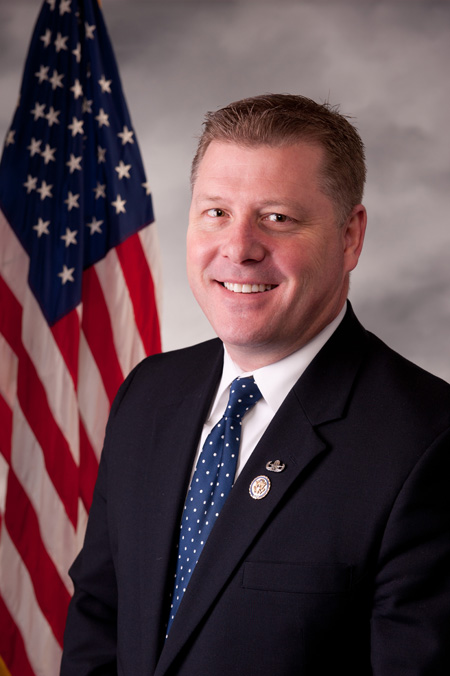
Rick Crawford

On April 10, the House of Representatives narrowly voted for a budget plan by Rep. Paul Ryan, R-Wis., that, on paper, would have balanced the budget in 10 years.

Rep. Rick Crawford, who represents eastern Arkansas’ 1st District, doesn’t trust paper. Or Congress.

Crawford voted no to that budget blueprint and also to another one by the Republican Study Committee. That one, which failed by a wide margin, would have balanced the budget by 2017 – again, only on paper. Both plans would have reduced taxes and spending, including by repealing Obamacare and by replacing the current Medicare system with subsidies to seniors to purchase insurance. Democrats countered with a plan that left spending on Obamacare and Medicare alone, raised taxes, and didn’t balance the budget – on paper or otherwise. None of these plans had a chance of passage.

The state’s other House members – Rep. Tim Griffin in central Arkansas’ 2nd District; Rep. Steve Womack in Northwest Arkansas’ Third District; and Rep. Tom Cotton who represents everything else in the Fourth District – voted yes to the Ryan plan. Cotton was the only Arkansas congressman who voted yes to the Republican Study Committee plan as well.

Crawford believes all these budget blueprints fail to tackle the underlying structural issues that are increasing the national debt, and that making long-range plans is pointless because Congress changes every two years. What’s needed, he says, is a constitutional amendment requiring a balanced budget or one that would limit spending to a certain percentage of the nation’s gross domestic product.

Crawford pointed to the 1990s, when President Bill Clinton and Congress managed to briefly balance the budget. It wasn’t long before the red ink started flowing again because there was nothing structurally to stop it.

“I’m not an obstructionist,” he said in an interview. “I’m not part of the ‘h—, no caucus.’ I’m trying to be a constructive legislator, but the reality is we’ve seen this over and over and over again, and Congress keeps doing the same thing and expecting a different result.”

The mechanisms Crawford proposes both are problematic. A balanced budget amendment must include a provision allowing Congress to vote by super-majority to deficit-spend – in the event of war or a national emergency, for example. That clause would be abused. Moreover, deficit spending can be helpful during a recession, assuming the government would pay the money back in good times, which, unfortunately, it never does. A spending limit amendment, meanwhile, might force Congress to take a meat cleaver versus a scalpel approach to cutting programs. Like the balanced budget amendment, Congress would try to circumvent it.

At this point, however, it’s getting harder to see what alternatives are available. The national debt is $17.6 trillion and climbing. The Founding Fathers unfortunately did not include anything in the Constitution that would keep Congress from spending money it does not have. The U.S. government has never, not since 1790, finished a year debt-free. Fool me once, shame on you. Fool me 224 times, shame on me.

Only 12 Republicans voted against the Ryan plan, and they did it for different reasons. Crawford says many congressmen agree some kind of structural reform is needed. But he says he may be the only one insisting on a constitutional amendment in order to move forward.

“You have these conversation in private,” he said. “You know, you sit next to somebody on the House floor and, ‘You’re voting no on the budget?’ ‘Yep.’ ‘And how come?’ I tell them why. They go, ‘Yeah, that makes a heck of a lot of sense. It sure does. You’re right.’ And then they turn around and vote yes.”

There are 535 members of Congress, all with differing agendas and ideas. So, in the immediate future, expect to see lots of blueprints, but no balanced budgets.

What SS and Medicare reforms WOULD Sen Pryor support?

I asked Sen. Mark Pryor Tuesday what reforms to Social Security and Medicare he WOULD support during a press conference where he received the endorsement of the National Committee to Protect Social Security and Medicare.

He said he supported cutting waste, fraud and abuse in Medicare; allowing it to bargain for prescription drugs; and emphasizing preventive care. When pressed, he criticized his opponent’s votes and then called for bipartisan solutions.

We cannot balance the budget without reforming Social Security and Medicare. Mandatory spending, of which those two programs are the major part, composes 64 percent of the federal budget, and that number will rise as the baby boomers age.

Pryor knows this, but he’s not going to say so during an election year.

At least he acknowledged there’s a problem.

Pryor faces headwinds despite lead

Is Sen. Mark Pryor really ahead in the U.S. Senate race?

That’s the finding of a new Talk Business-Hendrix College Poll, which says that Pryor leads his opponent, U.S. Rep. Tom Cotton, 45.5 percent to 42.5 percent.

The race hasn’t moved much in that poll since October 2013, when Pryor led, 42-41 percent. To win, the campaigns and their allies will be focusing their efforts in two areas. One is motivating the base to turn out to vote, and the other is going after the other 12 percent – the 8 percent who are undecided, the 2 percent who say they will vote for Libertarian Nathan LaFrance, and the 2 percent who say they will vote for Green Party candidate Mark Swaney.

In other words, expect a lot of political commercials in the next seven months. Control of the U.S. Senate may depend largely on the outcome of this race.

I need to disclose this somewhere: I’m a freelance journalist, and one of my clients is Talk Business. Back to the column.

This is just one poll. Despite its findings, Pryor still faces considerable headwinds, which is why if I had to bet money on who’s going to win, I’d pick Cotton. Momentum, history, and the year the election is occurring are not on Pryor’s side.

Let’s start with momentum – specifically, the Republican Party’s in Arkansas. Prior to 2008, much of the South – but not Arkansas – had switched from the Democrats to the Republicans. Since the election of President Obama, Arkansas has undergone a historic shift toward the GOP. When Obama was elected, the state’s congressional delegation was 5-1 Democrat. Now, it’s 5-1 Republican. Now-Sen. John Boozman defeated then-Sen. Blanche Lincoln by 21 points in 2010. The state Legislature has undergone a similar shift from Democratic domination to Republican leadership. In the 24 state Senate elections where the two parties have squared off since Obama was elected, the Republicans have won 19.

History also favors Cotton. Off-year elections often are unkind to members of the president’s party. Voters who oppose a sitting president are more motivated to vote than those who support him. In the 2006 elections during the second term of President George W. Bush’s administration, the Democratic caucus in the U.S. Senate gained six seats from 45 to 51 – the same number that Republicans need this year to take the Senate. In 1994 (after the Clintons also had tried to pass a health care plan), Republicans gained nine Senate seats.

Finally, there’s the year of the election. Under President Obama, two electorates have developed – a younger, more diverse one that votes only in presidential election years and leans Democratic, and an older, more conservative one that also votes in the other elections and gives Republicans an advantage. If Pryor would have faced re-election in 2016, he would be dealing with more favorable demographics. At the very least, President Obama would be less of an issue on his way out of the White House.

Of course, that would have meant Pryor would have had to run in 2010, when Lincoln lost by 21 points after Obamacare had passed. In 2008, Pryor didn’t even have a Republican opponent.

The issue that hangs over all of this, of course, is Obamacare. Pryor, as you must know if you are reading this kind of column, voted for it. To his credit, he hasn’t pretended that he didn’t, though I don’t see how he could. Obamacare will remain deeply unpopular in Arkansas through November, even if they do eventually get that website fixed.

Meanwhile, Pryor’s other disadvantages remain – momentum, which can be altered, and history and the year of the election, which can’t.

Green Party nominates four to U.S. House

The Arkansas Green Party nominated candidates for all four U.S. House races in Little Rock today, including two candidates who have run multiple races.

Meanwhile, Fred Smith, the former Harlem Globetrotter whose attempt to run as a Democrat was voided by a judge’s ruling in April, will run for House District 50 as a Green.

The following candidates are running for the U.S. House:
First District – Jacob Holloway, a 24-year-old ASU student
Second District – Barbara Ward of Little Rock, who works at the Historic Arkansas Museum
Third District – Rebekah Kennedy, an attorney from Fort Smith. Kennedy ran unsuccessfully for attorney general in 2006; for U.S. Senate in 2008; and for attorney general in 2010
Fourth District – Josh Drake, an attorney from Hot Springs. This is Drake’s third consecutive attempt to be elected to this seat.

Independent Arkansas caught up with Kennedy, Drake and Ward at the convention and was able to get video interviews with Kennedy and Drake. The three were realistic about their chances. Drake even said, “I joke that if I had a chance of getting elected, my wife wouldn’t let me run.” But Kennedy in particular promised a vigorous campaign.

The three believe in Green Party values – stopping climate change, nationalized health care, a reduction of corporate influence in Washington. Drake was more passionate about health care while Kennedy focused on energy and the environment.

Asked why they aren’t running as liberal Democrats, they all said they believed in the Green Party. Kennedy and Drake asserted that there’s not much of a difference between Democrats and Republicans, anyway.

Kennedy said it would be more effective to compete with Democrats from the left than to simply lose to “prepicked” candidates in the primary. She said both parties are so poll-driven that they won’t do much to change the status quo – in particular concerning her primary issue, climate change.

“Instead of having an intelligent conversation among the people of this democracy about where we want to go in the future, we just have people rehashing the same things over and over, and unfortunately, it’s not true that you can leave well enough alone and never change everything and everything will stay the same,” she said.

Drake said, “You’d rather run with a party that stands for ideals that you can believe in, that you can be proud of, rather than always apologizing for the lesser of two evils that the Democratic Party has become.”

Smith’s earlier Democratic candidacy was thrown off the ballot after a circuit judge ruled that he had not provided proof that his felony conviction for theft had been dismissed or expunged by the filing deadline. It’s a long story, so if you want more, here it is.

All told, the Greens nominated 14 candidates in Arkansas and endorsed Dr. Jill Stein for president. Roseanne Barr – yes, that Roseanne Barr, was a candidate.

For Congress: Arkansas engineers

I publish a magazine for the state’s two engineer associations, the Arkansas Society of Professional Engineers and the American Council of Engineering Companies of Arkansas.

These are good folks, they work hard, they are mathematically inclined, and sometimes they are a little nerdy. I wish they would run for Congress.

You won’t see a road-building project stalled because engineers refuse to budge on some side issue. You won’t see a project fail because one faction of engineers wanted to embarrass the other.

Engineers build bridges and roads; our current congressmen can’t even agree how to fund them. In fact, Congress is two years late passing its latest highway bill.

It’s time to replace these rigid ideologues and political game-players with practical problem-solvers who know how to get the job done. That’s why I’m endorsing Arkansas’ engineers for Congress.

More in this week’s column.