Category Archives: Elections

Why Supreme Court races matter: Lake View

golden balanceBy Steve Brawner
© 2016 by Steve Brawner Communications, Inc.

How important are the two Arkansas Supreme Court races on your ballot March 1? Two words provide the answer: “Lake View.”

In a case that drug out over 15 years, the Lake View school district, which no longer exists, argued that the state’s school funding system didn’t meet standards set forth by the Arkansas Constitution. The Constitution requires that the state “shall ever maintain a general, suitable and efficient system of free public schools and shall adopt all suitable means to secure to the people the advantages and opportunities of education.” The Lake View district said the state wasn’t doing that because it didn’t fairly serve small, poorer districts like itself. The Supreme Court repeatedly agreed, demanding that the state revamp its system to provide an “adequate” and “equitable” education for all students.

The state complied. Education went from being a local responsibility to being a state one. Hundreds of millions of taxpayer dollars were spent improving school facilities. School districts were consolidated. The Legislature ensured that before anything else is funded, schools get their money. In the midst of the Great Recession, when other states were cutting education funding, Arkansas schools always got more, and it’s made a positive difference.

As in years past, members of the House and Senate Education Committees this year will prepare an adequacy report for the full Legislature. The guiding principle will be the same as it’s always been since the Lake View case: How much more must be spent on schools to keep the state out of court? Once the report is done, it likely will be accepted by the rest of the Legislature without a lot of serious debate.

In other words, about 42 percent of the state’s general revenue dollars will be directed largely in obedience to rulings made years ago by Supreme Court justices.

The Lake View case ultimately was about more than just education. Because so much money was dedicated to schools, some tax cuts weren’t even considered. Meanwhile, less remained for other state needs, including health care.

In fact, it’s possible that the Lake View case is one of the reasons why the state has the private option. That’s the program that uses federal Medicaid dollars to purchase private health insurance for lower-income Arkansans. It was created after the U.S. Supreme Court ruled that states could choose whether or not to use Obamacare dollars to expand their Medicaid populations. A lot of Republican-leaning states said no. Arkansas said yes by creating the private option in 2013.

It’s hugely controversial. Opponents say it’s Obamacare, which it is.

Why does it exist here? Lake View may be one of the reasons. Because so many state dollars were tied up in schools, perhaps Arkansas was a little more willing to accept federal dollars for health care.

The decisions made by Supreme Court justices in the Lake View case have colored every area of state government for much of two decades, and will do so moving forward. That why Supreme Court justice races are so important.

So let’s return to March 1, when voters will have four choices for two slots. In the chief justice’s race, current Associate Justice Courtney Goodson faces Circuit Judge Dan Kemp of Mountain View. Goodson has been an associate justice since she was elected in 2010 (and is now one of four female justices on the seven-person court). She previously served two years on the Arkansas Court of Appeals. Before that, she was a law clerk at the Arkansas Court of Appeals from 1997 to 2005. Kemp has served 29 years as a circuit judge and 12 years as a drug court judge. He also served nine years as a municipal court judge.

For associate justice position 5, Circuit Judge Shawn Womack of Mountain Home faces attorney Clark Mason of Little Rock. Womack was elected a circuit judge in 2008. Prior to that, he served 10 years in the Arkansas Legislature, including as chairman of the Joint Budget Committee. Clark Mason is an attorney and former president of the Arkansas Trial Lawyers Association.

By the way, after this election, there will be no justices left on the Court who ruled in the Lake View cases. The issue of school funding – again, 42 percent of the state’s general revenue budget – might come up again. Just saying.

Related: Still want to elect judges?

Still want to elect judges?

Hand with ballot and boxBy Steve Brawner
© 2016 by Steve Brawner Communications, Inc.

There are times when the work of journalists doesn’t really change much, and there are times when it might help. This might be one of those times when it helps.

I’m referring to the Arkansas Democrat-Gazette’s recent series detailing how six class action law firms, all but one based out of state, have contributed $296,000 in campaign funds to current Arkansas Supreme Court justices, and then argued cases in front of those justices, winning more than they lose. A partner in the one Arkansas firm, John Goodson, is married to Associate Justice Courtney Goodson, who recuses from cases involving his firm.

Justices must raise money like any other candidate, and most probably don’t like it and do the best they can within an imperfect system. Still the series has called into question whether they are being unduly influenced by those donations. 

The larger question is whether judges should be elected at all.

Americans have come to accept that legislators and executive branch officials raise money from interest groups and then give them something in return. We don’t like it, but we apparently can live with it.

But the idea of the judicial branch potentially being for sale is a little harder to accept. Someday we might be the one sitting in a courtroom facing an opponent who gave that judge a big donation. And now, thanks to the U.S. Supreme Court, judges can receive even more of those helpful dollars, and from more sources that can remain as anonymous as they want to be.

Electing judicial candidates has always been awkward because it’s the branch that’s supposed to worry about the law rather than popular opinion. Traditionally, candidates have refrained from describing their specific views in order to maintain their impartiality when they hear a case. That practice made it hard for voters to make an informed choice, but at least it lessened the politicization of the courts.

But with more at stake and more dollars involved, the justice system is becoming more political. For example, a 2014 Supreme Court race involved an ugly and misleading ad funded by an outside group against the losing candidate who had once done his duty as a court-appointed attorney for a sex offender. Another example occurred last year, when the Supreme Court stalled in making a potentially unpopular ruling on the state’s gay marriage law until the U.S. Supreme Court bailed it out and made the decision for it.

The issue is especially timely because, in less than a month, Arkansas voters will elect two Supreme Court justices. For chief justice, Goodson faces Circuit Judge Dan Kemp of Mountain View. For associate justice position 5, Circuit Judge Shawn Womack of Mountain Home faces attorney Clark Mason of Little Rock.

These two races together are arguably as important to Arkansans as the 2014 governor’s race. But in that race, most voters probably had a pretty good idea who they were voting for. Enough dollars are flowing into judicial candidates’ races to call their impartiality into question, but not enough to really introduce the candidates to the voters.

What should be done about all this? The Arkansas Bar Association has appointed a task force to study the issue. A group of legal types, including two retired Supreme Court justices, has created a privately funded effort to try to correct misleading advertisements and to provide information about candidates through a website, www.arkansasjudges.org, that doesn’t offer much yet. Gov. Asa Hutchinson has questioned if appellate judges – the Arkansas Supreme Court and the Court of Appeals – should be appointed, as they are at the national level.

That’s an imperfect solution, too, because it could give the governor a lot of power. However, there are ways to make it less imperfect. In Missouri, the governor appoints from a list of three candidates provided by a judicial commission, and then, at the next election, the voters decide if the judge should be retained. If not, which has only happened twice, then the process begins anew.

State Rep. Matthew Shepherd, R-El Dorado, introduced a constitutional amendment in the 2015 legislative session to create a similar system in Arkansas, but it didn’t make it. Maybe 2017 will be different.

For now, we’ll still elect our Supreme Court justices the same way we do now – two of them, in fact, on March 1. Know which ones you want to vote for yet?

How Conner Eldridge thinks he can win

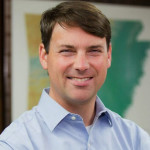
Conner Eldridge

Conner Eldridge

By Steve Brawner
© 2016 by Steve Brawner Communications, Inc.

The campaign headquarters office where Conner Eldridge and I visit Jan. 19 is spacious but sparsely furnished – still developing, in other words, like his candidacy.

The 38-year-old former U.S. attorney knows he faces an uphill battle trying as a Democrat to win the U.S. Senate seat currently held by Sen. John Boozman, a Republican. Since 2010, the state’s allegiance has flipped. After a century and a half of Democratic dominance, Arkansas’ congressional delegation is now entirely Republican, as are all of its constitutional officers and two-thirds of its Legislature.

Eldridge, however, believes he can buck that trend. He thinks he has advantages this year that haven’t been available to the last two Democrats running for Senate: Sen. Blanche Lincoln, who won only 37 percent against Boozman in 2010; and Sen. Mark Pryor, who won 39 percent against now-Sen. Tom Cotton in 2014.

Eldridge looks at those numbers and then compares them to the University of Arkansas’ 2015 Arkansas Poll. It found an electorate split three ways: a third Republican, a third Democrat, and a third independent. Twenty-three percent of independents say they lean Democrat. Add them to the Democrats’ third, and that’s pretty much the base of Lincoln and Pryor voters.

He has to secure those votes plus find enough to win the election.

How does he think he can do that when Lincoln and Pryor fell far short? First, this will be the first contested Senate race in Arkansas in a presidential election year since 2004, when Lincoln defeated state Sen. Jim Holt.

That’s significant because presidential elections draw a higher turnout with a broader, more diverse electorate than midterms. In 2012, there were 1,078,548 ballots cast in Arkansas. In 2014, there were 226,000 fewer voters. It’s no secret that those missing voters in higher proportions are younger and/or minorities – in other words, more often Democrats. Midterms tend to draw an electorate that is older, more affluent, more conservative, and more white. Those characteristics more often describe Republicans.

Eldridge thinks some of those Democratic voters who stayed home in the 2010 and 2014 midterms will return to the polls this year and vote for him. How much is that worth? Some.

Second, Eldridge believes that Hillary Clinton, Arkansas’ former first lady, will outperform President Obama more here than she will in any other state. Obama won 37 percent here in 2012, dragging Democrats like Pryor down with him. Clinton should do better, and if she does, Eldridge should benefit. How much is that worth? Some.

Third, the Arkansas Poll revealed that despite serving in the House and Senate since 2001, Boozman remains somewhat of a low profile figure. Asked if they approved of the job he is doing, 44 percent either didn’t know or had no opinion, while his favorables were relatively low at 38 percent against even lower unfavorables of 18 percent. It’s not that Arkansans don’t like Boozman, who is an uncommonly nice and gracious person. A lot of them just don’t know him that well. Eldridge would be a new face and says he would be a more active senator.

“And I think Arkansas voters, independent voters, Republicans, Democrats, and independents, still vote the person, not the party, and are hungry, particularly at this important time, for somebody who’s going to shake things up, make a difference, work hard, and get things done,” Eldridge told me.

Finally, he draws hope from the recent Louisiana governor’s race, where a Southern Democrat won a rare victory these days against a Republican. The Democrat was an ex-Army Airborne Ranger while the Republican has a history with prostitutes. But at least it can be done.

So with a base of support somewhere close to 40 percent, plus a few percentage points because it’s a presidential year and a couple of points because it’s Hillary Clinton running and not Obama, and a bit more support from independents because he’s a new face, Eldridge thinks he can make a game of this.

We’ll see. This is a crazy year, at least in the presidential race. But Boozman still has an “R” by his name, and in the last two Senate elections in Arkansas, that’s been worth a lot.

Steve Brawner is an independent journalist in Arkansas. Email him at brawnersteve@mac.com. Follow him on Twitter at @stevebrawner.

The solution to the birther debate

Ted Cruz, in blue shirt, in Little Rock Aug. 12.

Ted Cruz, in blue shirt, in Little Rock Aug. 12.

By Steve Brawner
© 2016 by Steve Brawner Communications, Inc.

At the base of the Statue of Liberty are poet Emma Lazarus’ words: “Give me your tired, your poor, Your huddled masses yearning to breathe free, The wretched refuse of your teeming shore. Send these, the homeless, tempest-tost to me, I lift my lamp beside the golden door!”

That’s a wonderful description of a country, and the current debate about which candidates are eligible to run for president is not worthy of it.

The subject has come up because the Constitution says the president must be a “natural born citizen,” a term that has never been legally defined. Donald Trump and some others are making an issue of the fact that Sen. Ted Cruz was born in Canada to an American mother and a Cuban father and then moved to the United States at age 4. A suit has been filed in Texas asking the Supreme Court to rule on his eligibility.

Many say the argument is nonsense, and it probably is, but there are some constitutional scholars saying Cruz is not eligible because of what “natural born citizen” meant in English common law in the 18th century, when the Constitution was enacted.

So now the “birther” issue has returned. Yay. Going back to the 2008 campaign, we’ve just spent eight years hearing people question the citizenship of President Obama, who was born of an American mother and a Kenyan father in Hawaii, a fact that some refuse to accept despite the birth certificate (It was Photoshopped!) and the birth announcements in Hawaii newspapers. (There could have been another Barack Obama born in Hawaii that day? Mom phoned it in from Africa because she knew her baby would run for president 47 years later?)

Obama and Cruz are not the only candidates whose American-ness has been doubted. A lawsuit has been filed questioning the eligibility of Sen. Marco Rubio, who was born in Miami to Cuban immigrants who were not then citizens. There were questions about Sen. John McCain’s eligibility in 2008 because he was born in the Panama Canal Zone, where his military father was stationed. That would be the same John McCain who spent five-and-a-half years in a Hanoi prison because he believed accepting an early release would betray his father, his fellow prisoners and his country.

All of this is occurring because of three words in the Constitution that no longer need to be there. Someone is less American because they or their parents long ago chose to come here rather than by chance were born here? That’s inconsistent with the ideals of a nation founded by immigrants.

My solution would require a constitutional amendment, which means it won’t happen, but you’ve already read this far, so here goes: The president must have been a citizen for 35 years, regardless of birthplace. That would equal the current minimum age requirement. A 35-year-old born in this country has been a citizen that long, so why not ask the same, and no more, of those who are Americans by choice? Fair enough?

That leaves open, of course, the possibility that a foreign-born immigrant could be elected president while holding a secret allegiance to his or her home country (as if domestically born Americans’ motives are always unquestionable). To prevent that from happening, the system, and the voters, would just have to run these candidates through the wringer, as happens with other candidates. If John McCain’s American-ness can be questioned, anyone’s can.

Under the Constitution, a habitual liar or a complete dummy born in Seattle is eligible to be president, but an ideal candidate born a ferry ride away in Vancouver to Canadian parents is not – even if brought to America as an infant. It would be illegal for businesses to disqualify their best CEO candidates that way. And dumb.

Immigrants choose to come here – often at great sacrifice. They learn the language, excel academically, serve in the military, and pass a citizenship test that would stump most domestically born citizens. They take an oath to renounce their homelands and pledge loyalty to the United States. When they do, they should be fully American, with no asterisk or “yes, but.”

In other words, they have walked through Emma Lazarus’ golden door. We could do worse than electing a president who once yearned to breathe free.

It’s the social issues, stupid

A pro-life supporter expresses his opinion at the Capitol in Little Rock during the March for Life January 17.

A pro-life supporter expresses his opinion about Planned Parenthood at the Capitol in Little Rock during the March for Life January 17.

By Steve Brawner
© 2016 by Steve Brawner Communications, Inc.

Current events are demonstrating that what moves political elites and what moves normal people often are two different things.

The big debate among the political elites is over the size and role of government, particularly regarding the economy. That’s why they donate hundreds of millions of dollars to an establishment candidate like Gov. Jeb Bush who promises to cut spending and taxes, and why they assume, like I did, that Donald Trump would eventually go away. As President Clinton’s 1992 campaign said, “It’s the economy, stupid,” right?

Well, not always. What really moves people often are social and cultural issues: guns, gay rights, abortion, etc. Economic issues are mostly about what people do. Social issues are about who they are.

The prevailing national example of this reality is this year’s presidential race, where Trump is driving conservative elites crazy because he’s never been one of them. He has a history of supporting liberal and moderate political positions and has given money to many Democrats, including the Clintons. During this campaign, he’s not really talking that much about cutting government, the Republican elites’ favorite topic.

But he’s established a connection with many voters talking about illegal immigration, which for elites is merely an economic issue but to average people is also a social and cultural one. He’s going to build a wall and make Mexico pay for it. That’s not an economic policy. And he’s made political correctness, which is definitely a social issue, part of his campaign by pushing the envelope with his words time and again and never apologizing for it.

Closer to home, on Sunday, thousands of Arkansans opposed to abortion participated in the annual March for Life at the Capitol. They carried handmade signs. They prayed. They donated money to Arkansas Right to Life, which has won a lot of victories in recent years and will push this next legislative session for a ban on dismemberment abortions, where the fetus is torn apart and then extracted from the womb.

Thousands of conservative Arkansans do not march on the Capitol to cut the capital gains tax.

This upcoming Saturday, the Arkansas Coalition for Reproductive Justice will respond with a pro-choice rally. Because this is Arkansas, and because abortion is already legal, there won’t be thousands of participants. But, weather permitting, there will be hundreds.

During the 2015 legislative session, the most far-reaching public policy debate was over Arkansas extending the private option, the program that uses federal dollars to purchase health insurance for 200,000 lower-income individuals.

But what really grabbed everyone’s attention was the Religious Freedom Restoration Act, which some saw as an effort to protect religious belief while others saw it as a tool for discrimination against gays. Activists chanted “Shame on you!” at legislators and then lined the steps inside the Capitol. Corporate interests like Wal-Mart also were opposed. Gov. Asa Hutchinson, who initially supported it, sent it back to the Legislature when it reached his desk, and a milder version mirroring federal law was passed.

With economic issues, a lot of people care a little. With social issues, a few people care a lot. In politics, the second is often more powerful than the first. In an October CBS News/New York Times poll, 92 percent said they support background checks for all gun buyers, but Republican candidates know the other 8 percent will base their votes on that issue alone. So no background checks for all gun buyers.

While compromise is doable when it comes to economic issues, it’s very difficult with social ones. If one side says a tax should be 10 percent and the other 14 percent, the two can meet in the middle. With social issues, where the debate is over absolute right and wrong, finding the gray middle ground is harder. Then those deep-seated social divisions bleed into other areas. Elected officials can’t make the difficult compromises needed to balance the budget, for example, after the trenches have been dug over gay rights and guns.

I guess it doesn’t matter that much. Few candidates are seriously talking about balancing the budget, anyway. Maybe they would, if someone could figure out how to turn it into a social issue.