
Be more like former UA Trustee David Pryor

By Steve Brawner
© 2019 by Steve Brawner Communications, Inc.

We should think less about which tribe political candidates belong to, or where they fall on the left-right spectrum, and more about whether they govern responsibly – like, for example, former University of Arkansas System Trustee David Pryor.

Pryor is best known for being a former governor and senator. He’s a Democrat, for what that’s worth.

This column isn’t about any of that. Instead, it was Pryor who, along with current board member Cliff Gibson, voted in 2016 against a $160 million expansion of Donald W. Reynolds Razorback Stadium to 76,412 seats, including 3,200 new premium seats for rich people. The other eight board members voted yes.

Pryor opposed the project for several reasons. He argued that the university had higher priorities and that it wasn’t the right time to expand the football stadium. A big concern was the fact that the expansion was financed largely by a $120 million bond issue, ultimately backed by the state.

“A bond issue is a debt of the University of Arkansas,” he said in 2016. “It is a debt of the people of Arkansas, and ultimately if something goes wrong, who’s responsible? And that’s the people.”

So what could go wrong? Continue reading
Why $659,580 could be really important

By Steve Brawner, © 2019 by Steve Brawner Communications, Inc.

Arkansas will spend $2.25 billion in general revenue dollars to educate its 500,000 public school students this year, and all of that money and all of those students could be affected by a $659,580 contract approved by the House and Senate Education Committees.

(Editor’s Note: The Arkansas Legislative Council later did not grant approval of the contract. It is unclear what will happen next.)

As reported by the Arkansas Democrat-Gazette, the legislators voted to pay that amount to a consultant, Denver-based Augenblick, Palaich and Associates, to conduct an educational adequacy study. The contract still must be approved by the Arkansas Legislative Council, a big committee of legislators that meets between legislative sessions. If it gives the OK – which is not certain – then the consultants will dive deeply into Arkansas’ school funding matrix.

This will be the first school adequacy study since those produced by another consultant, Picus Oden & Associates, in 2003 and 2006 helped create the funding matrix. Continue reading

The 2020 vote: Later would be better than earlier

By Steve Brawner, © 2019 by Steve Brawner Communications, Inc.

Candidates in Arkansas filed for office last month, a year before the November 2020 elections, because state lawmakers moved the Republican and Democratic primaries to March 3 so the state would vote earlier and be more relevant in the presidential race.

They should have picked a later date. Being late might have made Arkansas more relevant than being early – and more importantly, being early means we’ll have fewer choices elsewhere on the ballot.

Lawmakers voted this year to move Arkansas’ primaries to March in presidential election years while keeping them in May in other years.

The logic makes sense. Because of the move, the state will be closer to the front of the line after only Iowa, New Hampshire, Nevada and South Carolina. Candidates theoretically will pay more attention to it, and Arkansans will vote while the race is still competitive.

Unfortunately, 13 other states were thinking the same thing and also will vote March 3. Almost all of them are bigger than Arkansas and some are much bigger, including California and Texas. So don’t expect any candidates to make anything more than a brief stop here. Continue reading

Six questions as campaign filing begins

By Steve Brawner, © 2019 by Steve Brawner Communications, Inc.

We’re barely into November 2019, and candidate filing for the November 2020 elections begins Monday and ends on the 12th. Here are six questions waiting to be answered over the course of the next year.

1. Has the red wave reached its peak? 

Republicans already occupy all the congressional and statewide offices and three-fourths of the Legislature. They can increase their state legislative majority by winning in a few spots, particularly in the few rural, conservative areas still represented by Democrats, while holding on to their own vulnerable seats.

Two races in the Senate will be interesting to watch. Sen. Eddie Cheatham, D-Crossett, faces a strong challenge from Republican Ben Gilmore, who has raised a lot of money and has friends in high places, having worked for U.S. Rep. Bruce Westerman and now for Lt. Gov. Tim Griffin. Republicans also will run businessman Charles Beckham against Sen. Bruce Maloch, D-Magnolia.

Meanwhile, in District 92 in Northwest Arkansas, freshman Rep. Megan Godfrey, D-Springdale, faces Republican Jed Duggar. Yes, he’s one of the 19 raised by Jim Bob and Michelle. The district’s demographic trends – it’s urban with a large Hispanic population – helped Godfrey get elected, and she’s young and dynamic and a fresh face. But Duggar will have his name, fame and other advantages. He’ll get several dozen votes from his family alone.

2. Will Rep. Mickey Gates, R-Hot Springs, file to run again after being expelled for failing to pay his taxes? 

No, he won’t. Next question. Continue reading

Another Senate candidate – maybe

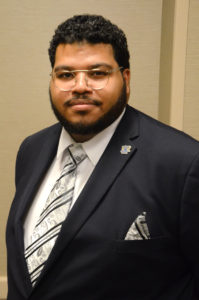
Ricky Harrington is the Libertarian nominee for Senate.

By Steve Brawner, © 2019 by Steve Brawner Communications, Inc.

Sen. Tom Cotton has another opponent as of Saturday – maybe.

The Libertarian Party of Arkansas held its convention that day and nominated Ricky Harrington, 34, of Pine Bluff to run against Cotton and the only announced Democrat, Josh Mahony.

Libertarians support very limited government. They are to the right of Republicans on tax and spending issues. They are to the left of many Democrats on some other issues, such as opposing the drug war and the use of force in general.

Prison reform is one of Harrington’s biggest concerns. An employee of the prison system, he supports reducing the size of Arkansas’ inmate population, particularly with respect to nonviolent offenders. During a brief interview, he said he supports abolishing the Department of Homeland Security, repealing the Patriot Act, ending “endless” wars, and protecting gun rights.

He says he was inspired to enter the race by several events, including this year’s passage of Act 164. (More on that subject in a few paragraphs.) The Harding University graduate was working as a missionary in China in 2016 and was dismayed by what he saw happening in the U.S. presidential campaign. He’s African American, and when he returned to Arkansas, he said he was stopped by police for driving 35 miles per hour in a 40 mph zone. That was a frustrating moment for someone who had just spent two years in a communist country. Continue reading