
“Medicare!” vs. “Obamacare!”

Medicare vs. Obamacare. That’s what this year’s Senate race between Sen. Mark Pryor and Rep. Tom Cotton is about.

Cotton’s campaign points to Pryor being the necessary vote to pass Obamacare, and Pryor’s points to Cotton’s Medicare votes that would raise the eligibility age for future beneficiaries and create a voucher-like system where seniors would buy insurance using government subsidies.

Last week, Pryor received the endorsement of the National Committee to Protect Social Security and Medicare. He stood before seniors who held hand-lettered signs, talked about how he voted to increase benefits, and said that House members who had voted to change Medicare were irresponsible.

Vouchers are a bad idea, but Medicare really does face serious, long-term challenges. It’s 14 percent of the federal budget, and Social Security is 24 percent. The costs of those two programs are part of the reason the Congressional Budget Office projects we’ll add another $541 billion this year to our $17.6 trillion national debt. The challenges will increase as the baby boomers age and as Americans live longer.

Call it a “cut” if you want, but somehow Medicare will have to spend less than it’s projected to spend – for its sake and for the rest of the budget’s. When I asked Sen. Pryor at his press conference what changes he would support, he said reform is needed and listed a few ideas such as allowing the program to negotiate drug prices and emphasizing preventive care. When I followed up by asserting those wouldn’t be enough, he didn’t disagree, saying, “The only way we’re going to get Medicare fixed is to do this in a bipartisan way.”

That’s true. But campaigns create the environment in which officials govern after the election. When candidates win by assuring voters that actual problems aren’t really problems, it weakens the ability of Congress to create those difficult bipartisan fixes later.

Republicans have used Obamacare – and President Obama himself – to gain a 5-1 majority in the Arkansas congressional delegation and majorities in the state Legislature. The message has been simple: Obamacare is bad.

But that message ignores the health care system’s serious problems. It hasn’t insured millions of people. Before Obamacare, it cold-heartedly denied insurance to those with pre-existing conditions and stopped covering them if they cost too much money. It’s 18 percent of our gross domestic product, far more than the rest of the industrialized world. A big reason Medicare has challenges is because it’s paying to treat seniors within this system.

Republicans, including Cotton, have focused far too much on what’s wrong with Obamacare and not enough on their own ideas. “Obamcare is bad” is not a health care policy.

Cotton’s Medicare votes are becoming a bigger political problem than Pryor’s support of Obamacare, as reflected by recent polls showing Pryor in the lead. By now, everyone who’s paying attention knows that Pryor voted for Obamacare, but they’re just now learning about Cotton and Medicare.

We’ve also reached the point where the news about Obamacare is not all bad. Yes, the employer mandates have been delayed, the website rollout was a disaster, and Obama never should have said that people who liked their plans could keep them. But the latest news, that eight million people have enrolled in insurance plans, gives Democrats the ammunition they’ve needed to return fire on the issue.

In an ideal democracy, the candidates would engage in an honest debate about Medicare’s long-term sustainability and about how to fix a health care system that was broken before Obamacare and still is. That debate, mirrored across the country, would continue in a statesmanlike fashion in Congress after the election, resulting in better policies.

Instead, the candidates will shout past each other – one saying “Medicare!” and the other “Obamacare!” – until November. It’s not an ideal democracy, but it’s the one we have.
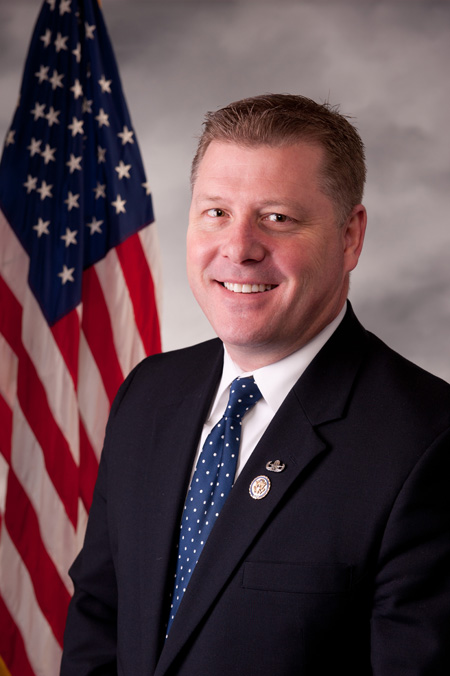

Crawford: Blueprints without constitutional amendment won’t pass budget

Rick Crawford

On April 10, the House of Representatives narrowly voted for a budget plan by Rep. Paul Ryan, R-Wis., that, on paper, would have balanced the budget in 10 years.

Rep. Rick Crawford, who represents eastern Arkansas’ 1st District, doesn’t trust paper. Or Congress.

Crawford voted no to that budget blueprint and also to another one by the Republican Study Committee. That one, which failed by a wide margin, would have balanced the budget by 2017 – again, only on paper. Both plans would have reduced taxes and spending, including by repealing Obamacare and by replacing the current Medicare system with subsidies to seniors to purchase insurance. Democrats countered with a plan that left spending on Obamacare and Medicare alone, raised taxes, and didn’t balance the budget – on paper or otherwise. None of these plans had a chance of passage.

The state’s other House members – Rep. Tim Griffin in central Arkansas’ 2nd District; Rep. Steve Womack in Northwest Arkansas’ Third District; and Rep. Tom Cotton who represents everything else in the Fourth District – voted yes to the Ryan plan. Cotton was the only Arkansas congressman who voted yes to the Republican Study Committee plan as well.

Crawford believes all these budget blueprints fail to tackle the underlying structural issues that are increasing the national debt, and that making long-range plans is pointless because Congress changes every two years. What’s needed, he says, is a constitutional amendment requiring a balanced budget or one that would limit spending to a certain percentage of the nation’s gross domestic product.

Crawford pointed to the 1990s, when President Bill Clinton and Congress managed to briefly balance the budget. It wasn’t long before the red ink started flowing again because there was nothing structurally to stop it.

“I’m not an obstructionist,” he said in an interview. “I’m not part of the ‘h—, no caucus.’ I’m trying to be a constructive legislator, but the reality is we’ve seen this over and over and over again, and Congress keeps doing the same thing and expecting a different result.”

The mechanisms Crawford proposes both are problematic. A balanced budget amendment must include a provision allowing Congress to vote by super-majority to deficit-spend – in the event of war or a national emergency, for example. That clause would be abused. Moreover, deficit spending can be helpful during a recession, assuming the government would pay the money back in good times, which, unfortunately, it never does. A spending limit amendment, meanwhile, might force Congress to take a meat cleaver versus a scalpel approach to cutting programs. Like the balanced budget amendment, Congress would try to circumvent it.

At this point, however, it’s getting harder to see what alternatives are available. The national debt is $17.6 trillion and climbing. The Founding Fathers unfortunately did not include anything in the Constitution that would keep Congress from spending money it does not have. The U.S. government has never, not since 1790, finished a year debt-free. Fool me once, shame on you. Fool me 224 times, shame on me.

Only 12 Republicans voted against the Ryan plan, and they did it for different reasons. Crawford says many congressmen agree some kind of structural reform is needed. But he says he may be the only one insisting on a constitutional amendment in order to move forward.

“You have these conversation in private,” he said. “You know, you sit next to somebody on the House floor and, ‘You’re voting no on the budget?’ ‘Yep.’ ‘And how come?’ I tell them why. They go, ‘Yeah, that makes a heck of a lot of sense. It sure does. You’re right.’ And then they turn around and vote yes.”

There are 535 members of Congress, all with differing agendas and ideas. So, in the immediate future, expect to see lots of blueprints, but no balanced budgets.

Help wanted for 400 jobs, and more

What would happen if an out-of-state employer was prepared to build a factory in Arkansas and pay 500 people a starting salary of $50,000 a year – but was having trouble finding the employees?

The state of Arkansas and the local community would pull out all the stops for that $25 million annual payroll. After ensuring the industrial park had adequate water, wastewater and electrical connections, there might be an offer of state-financed employee training. Then there would be a big press announcement with the governor, the mayor and the plant manager.

What if I told you a similar opportunity already exists with one of Arkansas’ established employers, immediately, with no need for a factory?

Here’s what Steve Williams, CEO of North Little Rock-based Maverick Transportation, told me about his trucking company’s situation.

“I’d go out and buy, easily go out and buy 500 trucks … and have more than enough business for those people to haul. I just can’t find 500 people to train to put in the trucks to do that. It’s literally, they do not exist.”

Because he can’t find enough drivers, Williams is buying about 100 trucks, leaving unfilled 400 jobs with starting salaries of about $50,000 a year. Some truck drivers earn $80,000.

Maverick Transportation is not the only trucking company looking for drivers. The American Trucking Associations estimates that the industry will need to find about a million in the next 10 years. There are many trucking companies in Arkansas. Those trucks also have to be maintained and repaired.

A person can go from unemployed to a truck driving job offer in 20 weeks at a cost of $10,400. That’s what it takes to earn a commercial driver’s license at the Diesel Driving Academy in Little Rock. Barry Busada, senior vice president, said many motor carriers will reimburse drivers for the cost of that tuition after hiring them.

I’ve oversimplified this situation. Many long-distance truck drivers are away from home a couple of weeks at a time, which is why turnover at many carriers is 100 percent a year. New government enforcement mechanisms have reduced the labor pool by forcing carriers to hire only drivers with clean records, which is not a bad thing.

Still, truck driving is a solid, middle class job requiring a skill that can be gained in 20 weeks. Very few college graduates make that kind of money after four or five years of a taxpayer-financed university education.

Two thoughts. First, jobs out there, even in this economy, and not just in trucking.

Second, Arkansas’ education system and workforce policies should be about filling jobs as much as creating them. Yes, Arkansas should nurture high-tech companies and the so-called “jobs of the future.” But Maverick is ready to hire 400 people now, and those jobs don’t require constructing college classrooms or remaking the K-12 public education system. Plus, truck driving jobs can’t be outsourced to China. Diesel Driving Academy students are eligible for federal student aid. Could Arkansas also create or at least encourage truck driving scholarships or loans?

This is not just about driving trucks. It’s about the value Arkansas places on work that doesn’t require a desk or a college degree. In the recent fiscal session, Sen. Jane English, R-Little Rock, changed her vote on the private option from a no to a yes as part of a deal to revamp the state’s workforce training system. English, who has worked years in this field, says the current system is too duplicative, too inefficient, and doesn’t meet the needs of employers or workers. Young people are not encouraged to work in skilled, blue-collar jobs. People aren’t being trained for the jobs that actually are out there.

That would include truck driving, where 400 people could make $50,000 a year, if Maverick Transportation could only find them.

What SS and Medicare reforms WOULD Sen Pryor support?

I asked Sen. Mark Pryor Tuesday what reforms to Social Security and Medicare he WOULD support during a press conference where he received the endorsement of the National Committee to Protect Social Security and Medicare.

He said he supported cutting waste, fraud and abuse in Medicare; allowing it to bargain for prescription drugs; and emphasizing preventive care. When pressed, he criticized his opponent’s votes and then called for bipartisan solutions.

We cannot balance the budget without reforming Social Security and Medicare. Mandatory spending, of which those two programs are the major part, composes 64 percent of the federal budget, and that number will rise as the baby boomers age.

Pryor knows this, but he’s not going to say so during an election year.

At least he acknowledged there’s a problem.

U.S. can’t afford not to invest in Alzheimer’s research

Advocates for the Alzheimer’s Association made a push in Congress this week for more funding for research. They based their argument on the costs of Alzheimer’s. This disease, which causes so much pain for patients and their families, also threatens the nation’s financial health.

According to the association, the total health care cost of caring for individuals with Alzheimer’s will be $214 billion this year, with Medicare and Medicaid paying $150 billion of that. Almost 20 percent of everything the federal government spends on Medicare is spent caring for patients with Alzheimer’s and other forms of dementia.

As the baby boomers age and as costs of care increase, the numbers become truly scary. By the middle of this century, overall annual medical costs for Alzheimer’s and other dementias are projected to rise to $1.2 trillion.

More than five million Americans now have Alzheimer’s – 200,000 of them under the age of 65. It is the country’s sixth leading cause of death. About 52,000 Arkansans have it – 8,000 of them between the ages of 65-74, according to the Alzheimer’s Association.

Progress has been made in recent years with other diseases – most notably AIDS, which was a certain death sentence a couple of decades ago until it became a national priority. Between 2000 and 2010, deaths attributed to HIV fell 42 percent. They also fell for stroke, heart disease, prostate cancer and breast cancer.

But deaths attributed to Alzheimer’s increased 68 percent over that same time period. While five approved drugs will treat the symptoms for 6-12 months in half the patients, there’s no cure, no long-term effective treatment, and no means of prevention.

Congress did increase funding for research by $100 million this year, which was a good start. However, for every $1 that the National Institutes of Health now spends on Alzheimer’s research, Medicare and Medicaid spend $265 on patient care, and it’s often not the kind of care that prolongs productivity or enhances quality of life. We’re warehousing a lot of people.

The Alzheimer’s Association says that, if the onset of Alzheimer’s could be delayed five years, the national costs of care would be cut by half. It’s asking for another $200 million for research, which is a significant increase in this kind of budgetary environment. On the other hand, it’s less than the cost of two of the Pentagon’s proposed 2,400 new F-35 Joint Strike Fighter planes – a weapons system that, as “60 Minutes” recently reported, is $163 billion over budget and seven years behind schedule.

Alzheimer’s is a clear and present danger. If we’re truly worried about America’s future, couldn’t we get by on 2,398 planes and use the savings from the other two to fund Alzheimer’s research? If not, I’m betting we can find $200 million somewhere in the federal budget.

None of this, of course, is taking into account the human toll Alzheimer’s takes on individuals and their families. Alzheimer’s is a particularly villainous disease. It robs individuals of their golden years, when they still have work to do and wisdom to offer. The mental decline can be rapid, but the physical death can stretch into decades. For loved ones, the long goodbye can be an almost unbearable mix of exhaustion, distraction, grief and guilt.

When Japan bombed Pearl Harbor, Americans mobilized for action. The same occurred when the Russians beat us into space.

Alzheimer’s is that kind of threat. Discovering a cure would be a gift to the world. Find the $200 million.