
One state’s chaotic, creative conservatism

By Steve Brawner
© 2015 by Steve Brawner Communications, Inc.

If I were to tell you that a state legislature this year passed a six-cent gas tax increase. abolished the death penalty, and voted to let young illegal immigrants brought by their parents to America obtain a driver’s license, what state would you guess that would be? California? Massachusetts? Maybe Colorado?

Try Nebraska.

Yep. The Midwestern state where three-fourths of the legislators are Republicans did all of those things. In fact, legislators overrode their newly elected Republican governor’s veto on all three bills.

This column has an Arkansas connection, but first, what’s up with Nebraska?

The sponsor of the gas tax increase, Sen. Jim Smith, told me the bill was simply an acceptance of financial reality. The roads needed more money, and legislators didn’t trust Congress to help. Two of Nebraska’s neighbors, Iowa and South Dakota, also raised their gas taxes this year.

Regarding the death penalty ban, which he voted against, he said some Nebraska legislators are Catholic, and the Church opposes the death penalty. Also, a number of Nebraska legislators are libertarian Republicans, which means they tend to distrust government in all walks of life, including social issues. As another Nebraska lawmaker explained, if she doesn’t trust government to manage her health care, she shouldn’t trust it to put someone to death.

As for young illegal immigrants with driver’s licenses, Nebraska was the only state that had such a ban. The thinking in ending it was, the residents have a legal status under President Obama’s executive order, and they need to be able to drive in order to get to work.

There are two other things worth noting about Nebraska. While its lawmakers are Republicans and Democrats, it’s the only state where they don’t run with a party label attached. Consequently, Smith said, “We have 49 independent contractors.”

Also, Nebraska is the only state with a unicameral legislature – in other words, just a Senate with no House. While Arkansas has 135 legislators, Nebraska has 49. While Arkansas lawmakers considered 2,200 bills and passed 1,288 into law this year, Nebraska legislators only considered about 600 bills and passed about 240 into law. Could a more focused agenda help legislators engage in serious debates about big issues? Just a thought.

Here’s another reason why I’m writing about Nebraska. Republicans everywhere tend to be ideologically unified. Officeholders tend not to wander too far from party orthodoxy, even when they want to, lest they be labeled a “RINO” (Republican In Name Only) and draw a primary opponent. Republican commentators, meanwhile, are so predictable that there’s usually little point in seeing what they have to say. Democrats, long the more disorganized party, are becoming more unified, too, but this column is not about them.

And yet in Nebraska, a legislature full of Republicans passed bills that raised the gas tax, ended the death penalty, and made life easier for illegal immigrants. Those are not the standard conservative positions, but it’s not hard to see the gas tax as pro-commerce, the death penalty ban as anti-government, and the driver’s license bill as pro-personal responsibility – all principles conservatives say they support.

So if that can happen in one conservative, Republican, mid-America state with an agricultural heritage and only one football team, could it happen in another? As the Republican majority becomes more entrenched in Arkansas, like it’s already entrenched in Nebraska, could we see the emergence of a more creative, chaotic conservatism that applies the party’s principles in new ways?

Certainly, divisions among Arkansas Republicans have already occurred over issues like the Medicaid private option. Some see it as a way to reform government health care, while others see it as capitulation to Obamacare. Arkansas Republicans also will divide along urban and rural lines just like Arkansas Democrats always did, and just like Republicans do in Nebraska.

What other types of factions will form? How often will one faction team up with Democrats? And just how chaotic will it often be? It certainly was chaotic when Democrats had a secure majority.

Maybe this was an unusual year in Nebraska. Maybe it was simply that the time had come for those three bills. Or maybe voters there will send some of those legislators packing during the next election.

Or maybe it’s still possible to buck the party orthodoxy, in either party in any state, if legislators see themselves as independent contractors.

Divided States of America

By Steve Brawner
© 2015 by Steve Brawner Communications, Inc.

Last Monday, Gov. Asa Hutchinson decided to end Arkansas’ participation in the state’s current end-of-the-year Common Core PARCC exam, despite the fact that the State Board of Education had voted to do the opposite. It was only the fourth biggest story of the week.

That’s how much there was to talk about. The Supreme Court’s rulings on gay marriage and the Affordable Care Act, plus the Confederate flag issue, all were more newsworthy than Common Core, which usually gets people’s attention.

These issues run deep. For many Americans, gay marriage is either a fundamental human right, or it’s an attack on traditional marriage and a sin. Obamacare is an acceptable expansion of health insurance, or it’s a government takeover. Great-great-grandfather fought nobly for the South, or Great-great-grandfather was a slave.

There was an air of finality to last week’s developments. Gay marriage is now legal everywhere, and it’s also supported by a growing majority of Americans, particularly those under 30, so politicians calling for massive resistance won’t accomplish much if their goal is to make it illegal again. Obamacare is now firmly entrenched in the health care system, especially with this latest Supreme Court decision. To substantively change anything at the federal level, Republicans would have to win the White House, the House and a 60-vote majority in the Senate, an almost impossible task given the math in 2016. Then they would have to coalesce behind an alternative, which would be even harder. The Confederate flag has far fewer defenders than it did a couple of weeks ago. It’s been removed from Alabama’s Capitol, and even NASCAR’s chairman said he wants his sport “disassociated” from it.

But the arguments will continue, as they always do in a democracy. The debate over gay marriage now shifts to the extent that private individuals and businesses can be compelled by government force to accept it. Obamacare will be the focus of more litigation, and House Republicans will continue to stage votes to repeal it. Regardless of what happens to the Confederate symbol, far deeper substantive divisions will remain over race, justice, and the meaning of the past.

One of the things that’s most frustrating about American politics is that there are issues where we could agree, at least about the problem, if we gave it a shot. Most of us would say it’s wrong to keep adding to the national debt that we’re passing on to our kids, and because money doesn’t grow on trees, the government must over time collect as much money as it spends. We should agree that the country should maintain its highways, control its borders, and manage an orderly immigration system.

Unfortunately, we often can’t take meaningful action on these important areas where we could agree because the debate is so clouded by those important areas where we’ll never agree. Republicans and Democrats in Washington have become like a married couple that can’t stop fighting over the in-laws long enough to call 9-1-1 about their kitchen that’s on fire. Even a commonsense issue like the national debt, which must be addressed by a series of difficult but doable mathematical compromises, becomes enmeshed in the culture war. It’s hard to work with the other guy when you’ve told your supporters he’s a communist or a Nazi.

Increasingly, these United States are looking much more divided, much more tribal, and much more us versus them. Too many of our daily conversations, the media we consume, and our Facebook posts – my goodness, the Facebook posts – are marked by mocking, scornful attitudes towards entire groups of people, often based on beliefs.

And that’s a little scary. You can’t really believe in freedom unless you believe in freedom for those who are different than you, and that’s hard to do for someone you don’t respect. The next step after contempt is control, and control tends to spread like a virus that starts in one part of the body and then multiples until everything is infected.

We’re not all going to get along, but, like a lot of difficult marriages, we can meet in the middle as often as possible for the sake of our kids. No one ever said living in a free society would be easy, but Someone did once say, “Blessed are the peacemakers.” So peace be unto you, even when we don’t agree, and even when we can’t.

Arkansas’ one star

By Steve Brawner
© 2015 by Steve Brawner Communications, Inc.

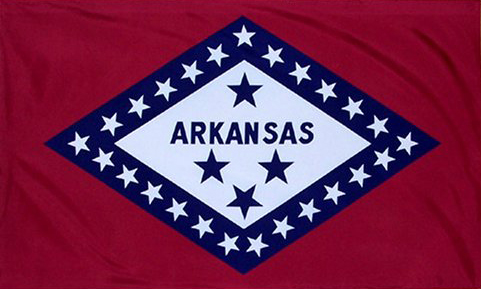
arkansasFlag Flags are symbols, and symbols mean different things to different people – good people.

For some, the Confederate flag represents regional pride, a connection to the ancestral past, and sacrifice. For others, it’s a symbol of oppression and discrimination – long ago, recent, and present. For others, it’s about vague, undefined defiance. And for a small number of people, including that mass murderer in Charleston, it’s an inspiration to do very bad things.

Three out of four of those associations aren’t positive.

You can display almost whatever symbol you want on your car, property or shirt. When it comes to public areas, the Confederate flag has its places – such as in museums and adorning the graves of Confederate soldiers.

But I can’t see a good reason to display at any state Capitol a symbol that makes a lot of people feel bad and is used by a few to promote hatred and bigotry. So I’m glad the governor of Alabama ordered the flags removed from his Capitol. I hope South Carolina legislators do the same. Moreover, I support Fort Smith Southside’s decision to change its “Rebels” nickname and stop playing “Dixie.” If I were an African-American student, I would not like those being associated with my school.

So what about that one star on Arkansas’ flag?

According to the online Encyclopedia of Arkansas, the state did not have a flag until 1913. The Pine Bluff chapter of the Daughters of the American Revolution decided one was needed to fly above the Navy’s new battleship, the USS Arkansas, and initiated a statewide contest to design one. Miss Willie Hocker of Wabbaseka had the winning design.

The flag the state adopted is not just one symbol, but many. The red, white and blue colors represent the United States. The diamond represents Arkansas being the only diamond-producing state. The 25 stars arrayed in the blue diamond represent the fact that Arkansas was the 25th state admitted to the union.

The first flag included three blue stars, two above and one below the word “Arkansas,” to represent the three nations to which Arkansas belonged prior to statehood: France, Spain and the United States. In 1923, the Legislature added a fourth blue star to mark the state’s membership in the Confederacy. At first, there were two stars above the word and two below. The next year, the design was changed so that the Confederate star stands alone on top. In 1987, the Legislature passed a bill, signed by then-Gov. Bill Clinton, that reaffirmed the flag’s symbolism, including the fact that the star’s purpose is “to commemorate the Confederate States of America.”

That star, and that commemoration, has not escaped notice, especially given that Hillary Clinton is running for president and has spoken in support of South Carolina removing the Confederate flag from its Capitol.

The question is, what does it mean to “commemorate”? My online Merriam-Webster dictionary defines it several ways, including “to remind people of,” and “to remember and honor.” Google’s definition includes the word “celebrate.”

Does Arkansas’ flag remember, or does it celebrate the Confederacy? It seems to me to do more remembering – at least, it does for us today. I have no more allegiance to the Confederacy than I do to France or Spain. It’s troubling that the era is marked by the single star above Arkansas rather than one of the three below. I’d rather the top star represent the U.S.A. That could be changed with an act of the Legislature, but I don’t look for that to happen.

The meanings of symbols change over time and often according to circumstance. For example, the dollar bill can represent thrift, industry or greed, depending on how it’s used. The U.S. Capitol dome sometimes appears in political commercials to represent corruption, not democracy.

For enough Americans, the Confederate flag’s meaning has never changed. It has always represented slavery and discrimination. It’s always made some of us feel set apart and looked down upon. So it doesn’t belong amidst the halls of democracy where, ideally, everyone is supposed to be represented equally.

As for Arkansas’ flag, let it be a history lesson, and a reminder of how far the state has journeyed. At one time Arkansas was French. At another, Spanish. And at another, on the wrong side of history. It’s all worth remembering, even if it all shouldn’t be celebrated.

Is being governor easy?

By Steve Brawner
© 2015 by Steve Brawner Communications, Inc.

Maybe being Arkansas’ governor is not that tough a job.

No offense to governors present and past, but that thought occurred to me after seeing a recent poll by Talk Business, Hendrix College and Impact Management Group. Gov. Asa Hutchinson enjoyed a 52-18 percent approval-disapproval rating, which was similar to former Gov. Mike Beebe’s 54-22 rating in a Public Policy Polling survey last year. No incumbent governor has lost a re-election race since 1982, when Bill Clinton beat Frank White two years after White beat Clinton.

Beebe’s numbers remained high throughout his time in office, and he was re-elected with 64 percent of the vote at a time when some other Arkansas Democrats were being swamped by the Republican red tide. The Talk Business poll even found him leading Sen. John Boozman, who hasn’t offended many people, 45-37 in a hypothetical U.S. Senate race.

That’s a Democrat leading an incumbent Republican in a Southern red state while President Barack Obama is still in office and Hillary Clinton is the likely Democratic presidential nominee. Who could do that besides a popular former governor?

That’s not to discount Beebe and Hutchinson as governors or people. It’s early, but so far Hutchinson has exuded calm, self-controlled leadership. Beebe understood state government as well as anyone, and he’s an excellent communicator who speaks plain Arkansan at the lectern and in person. Both have governed from a practical, consensus-building perspective. For what it’s worth, both know how to work the press. Furthermore, and the importance of this cannot be overstated, both married well.

But maybe they’re both good at a job where it’s not difficult to be merely adequate.

Arkansas is a lower income state that’s had its struggles, so most people – Republicans, Democrats, business and community leaders, and even members of the media – are inclined to want the governor to succeed.

The office itself adds to the governor’s personal aura. He lives in the Governor’s Mansion and is escorted by State Police officers. When he walks in the room, people stand and heads turn. He’s the only state elected official who really has a statewide audience, especially given that the other major positions are part-time (lieutenant governor), a lawyer (attorney general), and a bureaucratic administrator (secretary of state). State legislators come and go without capturing the general public’s attention. They have a lot of power during legislative sessions, but when they go home, the governor is still on the job. When a disaster strikes, it’s the governor who takes the helicopter tour, calls out the National Guard, and asks for federal dollars to make it right.

But while he’s treated like royalty, his powers are limited, which relieves some of the pressure that comes with the big title. The Legislature can override his veto with a simple majority, which is the same percentage that passed the bill in the first place. As a result, there’s not much pressure for the governor to veto many bills. Also, these days the most controversial issues are generally debated at the federal level or in the courts, so the governor usually has an alibi. If the Supreme Court declares Arkansas’ gay marriage ban unconstitutional, nobody will be mad at Hutchinson. If the state eventually has to raise some kind of tax to pay for highways, he can say he had no choice because Congress didn’t provide enough federal money.

Finally, the governor is the state’s chief marketing officer, which has its own benefits. On Hutchinson’s first day on the job, he phoned several companies to brag on Arkansas – important but noncontroversial work. He’s already traveled to Silicon Valley and recently returned from Paris and Germany, all in the name of economic development. He was the one who called legislators into special session to try to land a huge defense contract for Camden, and if the effort is successful, he will be standing at the podium accepting congratulations along with company officials.

Maybe most governors will do fine as long as they avoid political or personal scandal, treat legislators respectfully, work within political realties, and don’t say or do anything stupid. Those aren’t easy, but they’re definitely doable. So it’s a job that comes with a high upside, lots of respect, decent perks and reasonable expectations.

Nice work, if you can get it.

The Common Core conundrum

By Steve Brawner
© 2015 by Steve Brawner Communications, Inc.

A lot’s been happening with Common Core this past couple of weeks.

It started June 8, when a panel appointed by Gov. Asa Hutchinson and led by Lt. Governor Tim Griffin recommended that the state dump the end-of-the-year PARCC exam, meant to compare Arkansas with a dwindling number of other states, and instead use one offered by the more familiar ACT. Hutchinson accepted the recommendation, and Education Commissioner Johnny Key and his Department of Education began moving in that direction. After a legislative session in which Hutchinson got almost everything he wanted, it seemed like a done deal.

Only it wasn’t. The actual decision maker, the State Board of Education, which five years ago approved Arkansas’ inclusion in the movement, said no on June 11. Board members said they needed more time and more data before they could approve such a change.

So was that it? No. Legislators, many of whom don’t like PARCC, can use the power of the purse to block future testing contracts. Then on June 22, Hutchinson directed the Department of Education to dump PARCC because Key had found a provision in a five-year-old memorandum which seemed to give him the ability to do that.

So now, we’re back where we started, which is stuck in the middle of a major societal change a lot of people oppose or at least like to complain about.

How did we get here? The Common Core is not a curriculum. It’s a set of common standards in math and English adopted by all but a handful of states – Texas, of course, being one of them. The thinking is that, in a mobile society competing in a global economy, students across America ought to know roughly the same things at roughly the same times.

Birthed by the National Governors Association and the Council of Chief State School Officers, the Common Core partly was a reaction to No Child Left Behind. That’s the law signed by President George W. Bush in 2002 requiring every single American student – regardless of mental ability or English fluency – to be at least average by now, with the federal government empowered to financially punish schools who don’t meet that goal.

Sounds crazy? There’s more. No Child Left Behind let states define their own standards, which resulted, not surprisingly, in a lot of easy ones. In Arkansas, 83 percent of fourth-graders in 2014 tested at least “proficient” on the state’s Benchmark exam, which PARCC replaced this year. But the National Assessment of Educational Progress, another test given to a sample of students nationwide and generally considered trustworthy, found that only 32 percent of Arkansas fourth-graders were proficient.

That’s a 51-point swing. When we test and grade ourselves knowing we have a financial interest at stake, we give ourselves high marks. When an outside source tests and grades us, we do poorly. That’s why we might need some form of common goals measured by an objective assessment.

The conundrum, of course, is how to do that while still maintaining local school district autonomy and independence. Common Core was supposed to be the answer, but people still distrusted it, and then of course the Obama administration started handing out grants, and with grants come rules, and with rules comes control. And that, understandably, concerns a lot of people.

Part of the problem is the way Common Core was adopted – by a little-noticed vote of the State Board of Education in 2010. This was a major change in the way students are educated, and yet few Arkansans had heard much about it until kids started bringing home math problems their parents couldn’t figure out. Some people got concerned and others got plain mad, and political leaders reacted accordingly. The PARCC test became a target, and ending Arkansas’ participation in it might help let off a little steam.

This country is such a mess right now that it can be a little discouraging, can’t it? Many problems are so obvious that we can hardly argue about their existence. We know our schools aren’t good enough. We know our immigration system is a failure. Our health care system has been on an unsustainable path for decades. We know it’s wrong to keep adding to the national debt. And yet we can’t ever seem to decide where we are going, make a plan and get the car in gear.

What gear is Arkansas in regarding Common Core? Stuck in PARCC, for now.