19 not-angry students

By Steve Brawner
© 2016 by Steve Brawner Communications, Inc.

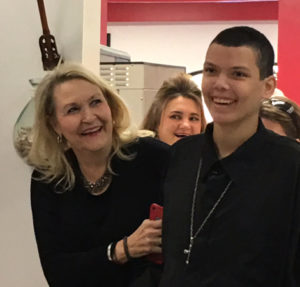
All adults have been 18 once, but most of us have not been 18 in 2016. There’s a difference, which I kept in mind as I spoke to 19 freshmen taking part in a special leadership course at the University of Arkansas at Fort Smith last week. 

The students were there because the university’s chancellor, Dr. Paul Beran, believes they’re future leaders, and for some reason he thought I might have something to say to them. So I encouraged them not to get mad. Proverbs 22:24 says, “Make no friendship with an angry man,” so don’t be that angry man. 

Thankfully, that message turned out to be merely a warning, not a scolding, because I didn’t see a lot of anger in that room. I don’t spend much time around 18-year-olds, but I was struck by this bunch’s youthful optimism and positive outlooks. One student named Kelsey completely disagreed with one of my comments, but in the most respectful way possible. Maybe she was simply showing deference to her elder, but while her eyes were passionate, they were not unkind or condemning.

Gosh, I hope she stays that way.

I choose to believe that those young people looked cheerful and optimistic because they really are cheerful and optimistic. So the question becomes, why them and not so many of us? 

Part of it’s just being young, of course. It just feels better than being older, physically. 

But 18-year-old future leaders also lack two bad habits that many of the rest of us have developed – the media we consume, and the things on which we focus.

These young people watch the news some, but that’s about it. They have things to do, tests to study for, friends to hang out with, and future mates to seek. So they’re not going to spend three hours listening to a news anchor or talk radio host yell about the latest manufactured controversy. Plus, young people simply don’t get their news that way, thank goodness. They get their news in bite-sized chunks and move on.

The other thing I suspect about these students is that they spend more time in the “circle of influence” than they do in the “circle of concern.” Those are two illustrations by the late Dr. Stephen Covey, author of “The Seven Habits of Highly Effective People.” The circle of concern is a big circle involving all of the things we worry about. Contained within is the smaller circle of influence, which involves what we can actually affect. 

Our attention should be focused on the circle of influence, but as adults it can be very tempting to wallow in the circle of concern. The word “ruminant” refers to animals such as cows that chew their food, swallow it, and return it to their mouth to chew it again. Too many of us adults spend too much time ruminating about things we can’t control, like this year’s presidential race. We internalize it, spit it back up and then chew on it some more, this time mixed with bile. The students at UAFS seemed to be following the race, and many seemed to share in the widespread disappointment with this year’s choices. But maybe because they have other things to do – things they can influence, like the next test – they aren’t ruminating on it.

The late comedian George Burns used to sing, “I wish I was 18 again and going where I’ve never been. But old folks and old oaks standing tall just pretend. I wish I was 18 again.” 

Until someone invents a time machine, that wish won’t come true – which means it never will, because if it were possible to travel back in time, we would have already met someone from the future. Still, even old folks and old oaks can recapture some youthful optimism by turning off the TV and focusing less on what we can’t change, and more on what we can.

No debate: Tough for Arkansas Democrats to win statewide races

By Steve Brawner
© 2016 by Steve Brawner Communications, Inc.

You can’t blame a guy for trying, and that includes trying to be a U.S. senator.

I’m referring to Democratic candidate Conner Eldridge’s latest attempt to debate Republican Sen. John Boozman, or at least to remind whoever is listening that Boozman doesn’t want to debate him.

Which he doesn’t, and why would he? Debates are unpredictable, and Boozman might make a big mistake, although this campaign is showing that a candidate can say or do just about anything and still become a major party presidential nominee. Boozman has agreed to one debate, sponsored by AETN Oct. 12.

Boozman will continue doing what all front-running incumbents do: Avoid his opponent no matter how much the opponent gets under his skin, stay out of trouble, and use his huge fundraising advantage to run television ads, which Boozman has begun doing with a recent $300,000 ad buy. The ad shows him in a positive light and doesn’t mention Eldridge, who isn’t on TV yet.

Meanwhile, Eldridge will continue doing what all underdog opponents do: try to throw a kink in those plans. After months of calling out Boozman – even driving a truck around the state with two podiums – Eldridge finally held a debate without him in Fayetteville with the Libertarian candidate, Frank Gilbert. On the stage was an empty podium signifying Boozman’s absence.

The run-up to the debate was kind of messy. As reported by KUAR’s Jacob Kauffman, the debate was to be organized by the University of Arkansas Associated Student Government. Apparently the Boozman campaign was never issued an invitation, which of course it would have declined. Still, when the snafu became apparent, the debate’s moderator, Doug Thompson with the Northwest Arkansas Democrat-Gazette, pulled out.

I should disclose that I was then approached by Gilbert to see if I would be willing to moderate and said I would do it, but then I removed myself from consideration when I learned about the empty podium prop. The night of the debate, television anchor Dillon Thomas also backed out.

Basically, everybody got what they wanted, though in a roundabout way. Boozman avoided the debate. Eldridge got a visual of an empty podium that he can use to remind voters that Boozman won’t debate him – which is more useful to him than an actual debate, which few would watch. Gilbert had a chance to discuss the issues, which is why he’s running as a Libertarian and not as a major party candidate.

The problem for Eldridge is that this election was over when he decided to put a “D” at the end of his name and Boozman already had an “R” at the end of his, and “Sen.” at the front.

Here are the percentages statewide Republican candidates have won in recent elections: 57 percent by Sen. Tom Cotton in 2014; 55 percent by Gov. Asa Hutchinson in 2014; 61 percent by Mitt Romney in 2012; and 58 percent by Boozman in 2010.

Here are the percentages won by Democrats in those races: 39, 41, 37, 37, by Sen. Mark Pryor in 2014, by Mike Ross in his race for governor in 2014, by President Obama in 2012, and by Sen. Blanche Lincoln in 2010.

See a pattern there? The Republican ceiling is somewhere in the high 50s to low 60s. The Democrats’ ceiling is somewhere in the high 30s to low 40s. It’s possible that the six people running for president as independents and third party candidates might mess up that equation in that race a little, but not much. Otherwise, Hillary Clinton, Arkansas’ former first lady, would be campaigning here.

Debates will not make Arkansas competitive. What will make Arkansas competitive is demographic change – when the voting population becomes more diverse, as has happened in other states, and when today’s young people become active voters. The rising millennial generation seems to be more liberal about some things, although some voters become more conservative as they grow older.

Eldridge can’t wait for all of that. He’s running this year, so you can’t blame him for trying to make this race competitive, even though he probably can’t.

So why run as a Democrat? For the same reason Gilbert ran as a Libertarian – because it’s the party that most closely fits his views. You can’t blame a guy for that, either.

Steve Brawner is an independent journalist in Arkansas. Email him at brawnersteve@mac.com. Follow him on Twitter at @stevebrawner.

Casino vote makes strange bedfellows

By Steve Brawner
© 2016 by Steve Brawner Communications, Inc.

There’s a lot more to this debate over the proposed casino amendment than just whether or not Arkansas should have more slot machines than it already does – which is quite a lot between Oaklawn and Southland.

Issue 5 would create a constitutional amendment authorizing the building of one casino each in Washington County, Miller County and Boone County. The casinos would be required to pay the state 18% of their net and would pay 1.5% to the city where they are located and .5% to their local counties. An Arkansas Gaming Commission would regulate.

The amendment’s backers, Arkansas Wins in 2016, say Arkansas should have casinos here because they’re already just across the border elsewhere – in Mississippi, in western Oklahoma; in Caruthersville, Missouri; and in Shreveport, Louisiana. Adding three casinos in Arkansas would keep Arkansas gamblers at home and attract some out-of-staters. A lot of people think going to casinos is fun. If they’re going to gamble, eat at buffets and go to shows, they might as well do it in Arkansas, employing Arkansans, boosting tourism and paying state taxes.

Politics makes strange bedfellows, and that’s definitely true with this issue. Opposed to the effort are faith-based groups such as the Family Council along with the state’s existing gambling providers, Oaklawn and Southland, which race horses and greyhounds on a part-time basis and operate casino-like entities full-time. The Family Council doesn’t want the gambling; Oaklawn and Southland don’t want the competition.

They’ll be working in parallel but not really together. The Family Council will spread through its grassroots network of churches its message that gambling leads to social ills – addiction, divorce, etc. – without the promised economic benefits. Meanwhile, Oaklawn along with Southland’s parent corporation in August donated a total of $109,500 to the Committee to Protect Arkansas’ Values/Stop Casinos Now. In fact, they’re the only donors listed in the required campaign filing with the Arkansas Ethics Commission. That money is funding a lawsuit in the Arkansas Supreme Court to disqualify the amendment.

Four years ago, a group with a similar name and the same chairman, former Arkansas Sheriffs Association Executive Director Chuck Lange, raised more than $1 million from Southland, so that $109,500 is probably just seed money.

The Committee’s messaging so far has focused less on gambling’s ills and more on what the proposed amendment does and doesn’t do. The amendment defines gambling as whatever is legal in Arkansas’ surrounding states and in Nevada, meaning Arkansas policymakers would be handcuffed in defining terms and setting limits. It would allow sports betting and alcohol sales.

Like previous casino amendments that have either been tossed from the ballot or voted down by Arkansans, this one is backed by those who would make money off it. It would embed in the Arkansas Constitution a permanent monopoly granted to two Missouri businessmen, Bob Womack of Branson and Jim Thompson of Blue Eye, and their successors and assignees.

That means no one else could operate a casino anywhere in Arkansas except those two along with Oaklawn and Southland. Those two existing casinos are limited by law, for now, to “electronic games of skill,” such as blackjack tables with electronic “cards” rather than those dealt by humans.

So expect to hear opponents use the words “out of state” a lot, even though Arkansas’ two current gambling establishments also are owned by out-of-state entities – Oaklawn by the Cella family of St. Louis, and Southland by Buffalo-based Delaware North.

All of this very easily could become moot. The issue is now in the hands of the Arkansas Supreme Court, which is considering whether the ballot title is misleading and whether the signatures were collected improperly.

In fact, all four voter-led ballot initiatives – this, two that would legalize medical marijuana, and one that would limit judgments in medical lawsuits – are being sued for one reason or another.

Will at least one of them be disqualified? History shows that’s a pretty safe bet.

Whew, that’s a lot of debt for football seats

football-on-tee-150-dpiBy Steve Brawner
© 2016 by Steve Brawner Communications, Inc.

The next time you’re tempted to base your beliefs purely on political stereotypes, keep in mind that it was a former Democratic U.S. senator who stood, basically alone at first, against a huge government spending program financed by public debt.

That would be David Pryor, University of Arkansas trustee and leader of the opposition against a $120 million bond issue to help pay for adding 3,000 premium seats to Reynolds Razorback Stadium.

Pryor’s was one of two votes last Thursday – the other being Cliff Gibson’s – against the bond issue. The debt, which rises to $186 million counting interest and fees, will also pay for rounding out the stadium, adding a video board, updating the Broyles Athletic Center, and other improvements. The bond issue will be repaid over 20 years through ticket revenues and is not expected to affect students, who, unlike at the state’s other four-year universities, are not charged a fee for athletics.

The business case for the expansion isn’t unreasonable. The University of Arkansas Athletic Department is well managed and one of a relatively small number across the country that pays for itself. Athletic Director Jeff Long said the department has already secured millions of dollars in commitments for those premium seats. To be competitive in major college football, a program must invest resources into taking care of its wealthy fans. They’re the kind who donate extra money.

Still, I’m with Pryor on this one, for three reasons.

– It’s public debt. Neither taxpayers nor students are supposedly on the hook, but if the financial arrangement isn’t working, somebody must pay that money back. While the state’s Revenue Stabilization Act supposedly forces a balanced budget each year, the truth is that the state of Arkansas has billions of dollars in debt, and the University of Arkansas is a state institution.

The other thing about debt is that it becomes your master. Future decisions will be made with this bond issue in mind. The team must keep winning to fill the stadium to pay for the bond issue, so Coach Bret Bielema had better keep engineering these late game heroics. The need to raise revenue for the bond issue will be one more reason for the Razorbacks to stop playing games in Little Rock after 2018 when the current contract ends.

– It’s regressive government financing. The bond issue is adding expensive football seats – suites, semi-private loge boxes, club seats – that are being financed by the fans who buy regular seats. Those regular seats already are priced at just about the limit for a middle class fan – for nonconference games, $35 for upper level seats and $55 for lower level ones, with conference games priced higher. Taking your family to a game already sets you back $250, and the bond issue payments will raise the cost.

– It sends the wrong message and allocates resources in the wrong direction. Pryor called this the largest financial commitment the state has ever made for higher education, and it’s for a football stadium. In January, while the Board of Trustees was advancing the stadium project, the University of Arkansas for Medical Sciences begged for $97 million to renovate its aging facilities. So far, that money has not been found. What should be the higher priority: the football stadium, or the hospital? The entity that teaches college students to be football players, or the entity that teaches medical students to be doctors?

The Razorbacks are a tie that binds, and I’m glad they beat TCU Saturday. But sometimes this state forgets that the University of Arkansas is a school, not a football team. The vote by the board of trustees is not a scandal, because the money is probably going to be there and the Athletic Department has a history of good financial stewardship. Still, $120 million – actually, $186 million? Woo, pig sooie, but whew, that’s a lot of debt for football seats.

‘Tis the season for lawsuits

By Steve Brawner
© 2016 by Steve Brawner Communications, Inc.

Every calendar year has four seasons, and so does every campaign year. There’s the filing season, when potential candidates decide to run; the primary season, when the parties choose their nominees; the general election season, which ends in November; and, tucked in its own little spot about now, is a fourth season: the lawsuit season.

Yes, ’tis the season when opponents of various voter-initiated acts and amendments try to remove them from the ballot, or at least keep their votes from being counted, by filing suit in the Arkansas Supreme Court.

This year, four initiatives have qualified for the ballot by gathering enough signatures from registered voters: a constitutional amendment that would legalize marijuana for medical use; an initiated act that would do the same, with some differences; an amendment that would limit attorney fees and jury awards for pain and suffering in medical lawsuits; and an amendment that would authorize casinos in Boone, Washington, and Miller Counties.

All four have drawn legal challenges. Generally speaking, the groups are making the same arguments that are always made about these issues: that the ballot titles are misleading, and that technical violations occurred in the signature collecting process.

These lawsuits are just part of accepted campaign strategy, so both sides know they have to budget for legal fees. The lawsuits almost always happen when issues are this controversial and when someone stands to lose something. For example, the Arkansas Bar Association has filed suit to stop the amendment that would limit attorney fees and jury awards – which, when higher, produce higher fees. The casino amendment faces a lawsuit from a group supported in part by Oaklawn Park and Southland Gaming and Racing, which don’t want the competition.

That last paragraph sounded cynical, didn’t it? Human beings have complicated motivations. For example, the Arkansas Bar Association’s unanimous opposition to the medical lawsuit amendment probably is due partly from a desire to protect an income stream, at least with some members. At the same time, attorneys have a unique appreciation for the importance of why big verdicts sometimes are needed. Moreover, the amendment is being pushed primarily by nursing homes who want to reduce losses from big jury verdicts, some of which might be based on emotion and good lawyering. Can’t blame them for that.

So now the questions go straight to the Arkansas Supreme Court, where the wheels of justice will turn more swiftly than is normal. We’re reaching mid-September. Election Day is Nov. 8. Absentee ballots must be mailed to voters no later than Oct. 14. Early voting begins Oct. 24. That means the Supreme Court must consider arguments and render decisions as soon as possible. Even if it moves quickly, it’s not unusual for the ballot to be littered with proposals that the court has ruled invalid.

At this point, I’m definitely against one of the proposals, leaning against two and wavering on one. Still, my preference is to vote, even if something passes I don’t like.

In a state whose motto is, “The people rule,” it’s probably best if the measures stay on the ballot, if they can. All four were approved – actually, partly rewritten – by the attorney general’s office to comply with state law. All four’s signatures were validated by a small army of full-time and temporary workers with the secretary of state’s office. Should four Supreme Court justices override those efforts?

Also, all four represent the kind of issue for which voters are well-suited to express their will. These aren’t questions of bureaucratic minutiae. They’re big-picture questions about values and about what this state ought to look like. Whether there should be casinos in Arkansas when surrounding states already have them has been debated around many a kitchen table. So has whether marijuana’s clear harm to many means it shouldn’t be available to those it clearly helps. Would limiting a type of jury award help doctors and nursing homes lower costs for all of us, or would they become more negligent? The voters can decide.

If the legal minds on the Supreme Court believe that real problems exist with a ballot title or signature gathering process, then yes, disqualify a proposal. It’s their job to look at the details.

But if it’s in the gray area, let’s hope the Court errs on the side of not disqualifying. In a state whose motto is “The people rule,” the presumption should be to let the people rule.