Category Archives: State government

Tough task for health care task force

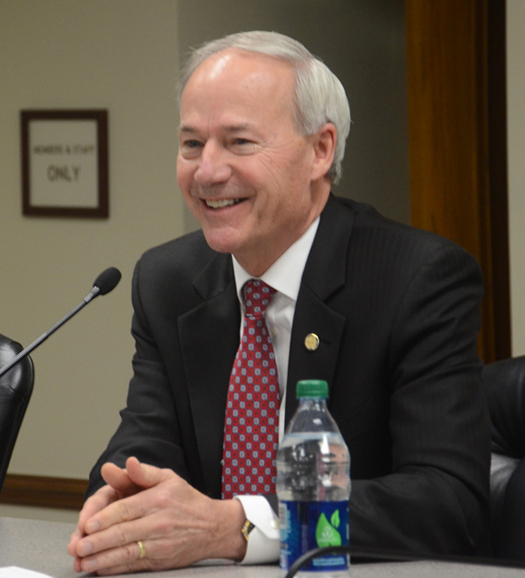
Jim Hendren is one of the chairmen of the health care task force.

Jim Hendren is one of the chairmen of the health care task force.

By Steve Brawner
© 2015 by Steve Brawner Communications, Inc.

Sixteen legislators will spend the next 22 months trying to figure out how to do what no one has been able to figure out so far – cost-effectively provide health care to lower-income people without growing government and making more people dependent upon it.

Also, they must try to produce a proposal that would be supported by 75 percent of the Legislature and the governor. Meanwhile, the Supreme Court this year will issue a ruling on Obamacare that could throw the entire health care system into disarray.

The group is called the Arkansas Health Care Reform Legislative Task Force. Tough task, huh?

The task force was created earlier this legislative session as Gov. Asa Hutchinson’s way of resolving the impasse over the private option. He doesn’t want it simply to go away without a replacement.

The private option was Arkansas’ response to the Affordable Care Act’s requirement that states expand their Medicaid populations, and the Supreme Court’s subsequent ruling that it had to be only optional. Many Republican-leaning states turned down federal money rather than grow Medicaid. Arkansas used that money to buy private insurance for 200,000 people, and counting.

Now Arkansas is leading the nation in the reduction of its uninsured population. According to a recent Gallup poll, the percentage of Arkansans without insurance dropped in one year from 22.5 to 11.4 percent. The private option will bring $1.3 billion in federal funds to the state in 2015. Without it, rural hospitals would probably close, as they have in states that turned down the money.

But the private option is rightfully controversial. It has roots in Obamacare. While the federal government is paying for almost all of it now, the state’s share grows over time – supposedly to 10 percent, but who knows with the federal government these days? Legislative opponents say this is how the $18 trillion national debt keeps growing. Everyone always has a hand out.

Because the private option involves spending money, it must pass with 75 percent majorities each year, and it’s barely done that twice. This year did not look promising, so Hutchinson asked legislators to form the task force to consider not only how to change (and surely rename) the private option, but also to consider broader Medicaid reforms.

The 16-member task force by design is split between legislators who have consistently voted for and against it. If this were Washington, it would accomplish nothing, but Little Rock is not Washington. The sponsor of the legislation creating the task force, Sen. Jim Hendren, R-Sulphur Springs, expects it to make progress “because we’re going to act like grown-ups.”

Hendren has been a private option opponent because he believes it’s unsustainable at both the state and federal levels. However, he recognizes that the old system – lots of uninsured people getting charity care in emergency rooms – wasn’t working. Plus, you can’t just yank insurance away from 200,000 people. Plus, he’s Hutchinson’s nephew. So what now? Ideally, he said, the task force will create something that will “meet the needs of those people that need it and encourage them to improve their station in life, and we also do it in a financially sustainable way.”

For many reasons, the culture in Little Rock is much more collaborative than in Washington, D.C. Unlike in our nation’s capital, state legislators tend to meet somewhere in the middle. Moreover, the lines between private option supporters and opponents can be somewhat blurred, Hendren said. “Obviously we’re not going to have a society in Arkansas where people can’t get health care at all. It’s just a question of how we deliver that in an affordable way,” he said.

The task force’s other Senate members are Sens. David Sanders, R-Little Rock; Jason Rapert, R-Conway; Linda Chesterfield, D-Little Rock; Keith Ingram, D-West Memphis; Terry Rice, R-Waldron; John Cooper, R-Jonesboro; and Cecile Bledsoe, R-Rogers. House members are Reps. David Meeks, R-Conway; Joe Farrer, R-Austin; Justin Boyd, R-Fort Smith; Michelle Gray, R-Melbourne; Charlie Collins, R-Fayetteville; David Murdock, D-Marianna; Deborah Ferguson, D-West Memphis; and Kim Hammer, R-Benton.

They must produce their first report by the end of the year. They won’t “solve” health care, but they will produce something useful. No one will get everything they want, and they’ll accept that, like grown-ups.

Can states save the federal government?

By Steve Brawner
© 2015 by Steve Brawner Communications, Inc.

Common Core cover cutoutThe thing about human nature is that we resist the big change until there’s a crisis, even though we know a crisis is inevitable if we stick with the status quo.

It often takes a diagnosis for us to quit smoking or change our diets. Some alcoholics must lose everything before they’ll finally seek help.

On the other hand, some people do make lifestyle changes before they absolutely must. Can a society do the same?

On March 2, the national debt stood at $18,149,954,531,765.07, according to the U.S. Treasury Department’s website. That’s $57,000 per American.

The government has been in debt since 1835, but the numbers have been soaring lately. It took two centuries to reach $1 trillion in 1980 and then 35 years to add $17 trillion to that.

There have been a few years when the government did not add to the debt, but not many. Debt has been an ever-present part of America’s past – and unfortunately, its foreseeable future. The federal government’s own Congressional Budget Office predicts the debt will increase $7.7 trillion over the next 10 years. The debt then will continue to rise because of the government’s many unfunded promises.

Someday there will be a reckoning. You can’t keep adding debt forever. And yet Washington seems incapable of stopping this train wreck from happening. So can the states do it?

In the State Capitol on Wednesday, the House of Representatives voted to advance the Compact for a Balanced Budget, a national effort to amend the U.S. Constitution. It now goes to the Senate.

The Constitution has been amended 27 times, the first 10 amendments being the Bill of Rights. With each amendment, Congress has initiated the process.

However, under the Constitution’s Article V, the process can be initiated by states instead of Congress. Thirty-four states must agree to a call, Congress must make the call, the delegates must meet to propose amendments, and then 38 states must approve those amendments. It’s never been done before.

The Compact for a Balanced Budget spells out exactly what the convention would do and how it would do it. Delegates would vote for a single amendment saying the government cannot spend more than it collects unless it borrows under a debt limit that can be increased only with approval by state legislatures. It also requires a two-thirds vote by Congress for most tax increases.

The previous day, the House voted against a resolution advancing the Convention of the States, another national effort to amend the Constitution through the Article V process. That effort would let delegates consider a balanced budget amendment but also others that would limit the government’s power and scope. Supporters tried again on Friday and narrowly passed it through the House. It now goes to the Senate as well.

I like the Compact’s approach much better, but I understand why people are opposed to both. A balanced budget amendment could rob Congress of the flexibility it needs in a crisis. It could be ignored. Or it could give the Supreme Court an outsized say in taxing and spending matters. Clearly, the Convention of the States is a conservative movement meant to reduce the size of the federal government, which many Americans don’t really want to do.

Other arguments against the Article V approach are not as persuasive. Some fear a “runaway convention” where delegates make scary changes to the Constitution. That’s hard to imagine. Remember, whatever the convention proposes must then be ratified by 38 states, one at a time. It’s far more likely the process either would produce nothing, or something so watered down as to be meaningless.

Some are opposed to amending the Constitution because they say it is just fine like it is. Thank goodness that argument didn’t carry the day before passage of the 13th Amendment, which abolished slavery, or the 19th, which ensured women have the right to vote.

The framers of the Constitution gave us a wonderful document, but it has become increasingly obvious since 1835 that it contains a flaw: The government has many incentives to create debt without a mechanism to discourage it. Thomas Jefferson recognized that flaw in 1798.

The framers also understood their own imperfections, and humanity’s, as well as the fact that times change. That’s why they made it possible to amend the Constitution, with great difficulty.

They wisely included the Article V provision. Congress can’t always be trusted, so a democratic process was needed to bypass it – before a crisis occurs, preferably.

Is America governable?

By Steve Brawner
© 2015 by Steve Brawner Communications, Inc.

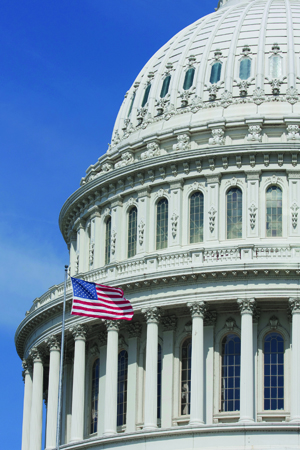
U.S. Capitol for blogThe American republic has limped past being dysfunctional and stumbled into being ungovernable. Even if you hate the government, this situation should concern you because it means big problems aren’t being addressed, while new ones are being created.

Two current legislative fights illustrate this reality – No Child Left Behind and the broken immigration system.

Congress has yet again stalled on its long overdue reauthorization of No Child Left Behind. That’s bad, because this law is completely unworkable. Signed by President George W. Bush in 2002 and passed with bipartisan support, it required that 100 percent of American students in grades 3-12 test at their grade level by the end of the 2014 school year, or the federal government would punish the schools where they didn’t. That’s every single child, regardless of language difficulty or intellectual challenge – a requirement so ridiculous that Congress ought to fix it, but it can’t. As a result, the Obama administration has been granting waivers to states telling them how they can disobey the law.

The president is supposed to enforce the law, and Congress is supposed to write laws that make sense, right?

The same applies to immigration. The president wants to ignore the laws Congress has passed, and Congress can’t agree on how to fund the Department of Homeland Security in response. Meanwhile, the border remains porous, and millions of people live in the shadows among us. Children brought here by their parents basically have no home country. Meanwhile, the United States quite effectively limits the influx of skilled overseas workers – exactly the people we need.

If these two issues were outliers, we could deal with them. Unfortunately, they’re the norm. A few other examples …

The national debt. Uncle Sam now owes $18 trillion, or the equivalent of $57,000 for each American. The debt has doubled since 2007 and tripled since 2001, and it’s still rising. The only possible solution is to reduce spending substantially while collecting more revenues somehow. There’s not a remote possibility that Republicans and Democrats in Washington will agree to do that.

Health care. Prior to the Obama administration, the United States already had the world’s most expensive health care system. It denied insurance because of pre-existing conditions and stopped paying for patient claims if they became too expensive. Then the Affordable Care Act was rushed through Congress, causing its own problems and leading to who-knows-what. Now the act faces a serious Supreme Court challenge over its wording regarding federal exchange subsidies. Pulling this leg from the stool could cause Obamacare to collapse. Lots of people would be happy about that, but … what’s the plan after that?

Infrastructure. The gas tax, which funds highways, has not been raised at the federal level since 1993. It is destined to produce less and less revenue because cars are becoming more fuel efficient through both market and government demands. Everybody knows the model is unsustainable, but there’s no agreement on its replacement.

It won’t be enough to vote for different people in 2016. Washington simply doesn’t work any more, regardless of who is in office.

That’s because Washington reflects American society, which itself is marked by contradictions and divisions. We simply don’t agree on how to solve problems, or even about what the problems are. We’re deeply divided culturally, morally, about what we want this place to look like, and about what we think it once was. That lack of consensus makes it very hard to solve difficult issues. Moreover, Americans say they don’t trust government but then choose to be profoundly dependent upon it, rarely recognizing the irony. The result is that we grow government without paying for it.

This is a depressing column, so let’s close with solutions. Congressional term limits? A balanced budget amendment? Campaign finance reform? All could help.

Meanwhile, many decisions should be returned to the state level, where democracy still manages to work sometimes. Red, blue and purple states could solve problems in their own ways, often learning from each other. Americans would be free to settle in states where they felt most comfortable.

This could cause its own problems, including irreconcilable legal definitions of discrimination and a race to the bottom on environmental regulations. A poor state like Arkansas might find its niche, or it might just get poorer.

Something big has to happen – bigger than the next election. When a country becomes ungovernable, problems can’t be solved simply by electing different people to that government.

Hutchinson has rookie’s enthusiasm – but not about highways

By Steve Brawner
© 2015 by Steve Brawner Communications, Inc.

Asa for web

Being governor is not a job where practice makes perfect. In fact, in many ways, a governor is at his or her best as a beginner.

A new governor is fresh off the victory speech and is running off the adrenaline from the transition to power. He has a new title that carries with it an air of authority. He has ideas he can’t wait to implement. He hasn’t grown cynical from lost battles or grown paranoid from all the criticism. He’s younger than he’ll ever be again.

Circumstances can serve to magnify those early advantages. Gov. Asa Hutchinson came into office as the first Republican governor with a Republican Legislature since shortly after the Civil War. His predecessor, Gov. Mike Beebe, entered office after a landslide victory (over Hutchinson). Beebe’s predecessor, Gov. Mike Huckabee, became governor after demonstrating firm leadership amidst Gov. Jim Guy Tucker’s last-minute indecision about resigning.

Some of Huckabee’s and Beebe’s most notable policy accomplishments came early in their administrations. For Huckabee, it was ARKids First and the conservation tax. In his first session, Beebe and the Legislature increased school funding and cut the grocery tax in half.

They both were fine governors, but as would be the case with anyone, we’re better off that the Arkansas Constitution ensures we get some fresh blood in there after a while.

A good example of this is prison reform. This was not a focus of Hutchinson’s during the campaign, but it has become one now, and it may be the issue that most defines him when it’s all said and done. The state’s prisons are currently so overcapacity that 2,500 inmates are being housed in county jails. However, the state can’t afford to keep building cells, and simply letting inmates out of jail isn’t the best solution because many have a drug or alcohol problem, and 43 percent return to prison soon after being released. The only long-term solution, Hutchinson said, is to change inmates’ behavior, so his prison reform plan would create transitional centers to help parolees re-enter society.

Hutchinson was his usual reserved self when announcing his plans, but there was a fire in his eyes that I suspect won’t quite be there seven years from now. Again, fresh blood is a good thing.

Which brings us to highways. Last Feb. 19, Scott Bennett, director of the Arkansas Highway and Transportation Department, testified before a House panel in favor of House Bill 1346 by Rep. Dan Douglas, R-Bentonville, which would dedicate for highways sales tax revenues from the purchases of new and used cars and car parts.

Bennett has given this presentation so many times that he probably could do it in his sleep. The state has $20.3 billion in highway needs over the next 10 years but only $3.6 billion in expected revenues. While construction costs are rising, the primary means of funding highways, federal and state motor fuels taxes, have not been increased for decades and are producing less revenue because cars are becoming more fuel efficient. Yes, Arkansas voters passed an interstate bond issue in 2011 and a half-cent sales tax for highways in 2012. Together, those will affect less than 4 percent of the state’s roadways.

Bennett has been in his position long enough that the fire in his eyes that day was accompanied by a hint of desperation and frustration in his voice. Two years ago, a similar bill started out with broad support, but it failed under opposition from competing interests who feared highways would take a bigger slice of their pie. Gov. Beebe was adamantly opposed, and it failed.

Douglas’ bill did pass out of the committee, but, near the end of the meeting, Hutchinson’s Department of Finance and Administration director, Larry Walther, testified against it, saying it would create holes in the state budget. That was an ominous sign for the bill’s supporters: It meant Hutchinson is opposed. Highways at this point are not his thing – not at the expense of other things, anyway. This week, Douglas announced that, because of the governor’s opposition, he was putting the bill on hold for a while.

The funding model for highways is not sustainable, at the state or national levels. Highways and bridges that aren’t properly maintained now will have to be replaced later, at much higher costs.

How soon the problem is addressed matters. A lot more gets done when there’s fresh blood in the Governor’s Mansion and the governor still has fire in his eyes.

Another state government mandate – this one in writing

By Steve Brawner
© 2015 by Steve Brawner Communications, Inc.

This is the part of the legislative session where I look forward to lawmakers going home, because they do not always listen to me.

Last week, I asked them to approach their jobs with restraint after they voted to ban communities from passing anti-discrimination ordinances. That law was passed after Fayetteville enacted such an ordinance through its city council and then rescinded it by a vote of the people – an indication that democracy was working just fine there.

Then this past week, the Senate voted 30-1 to require all public school districts to teach cursive writing by the third grade. Some schools have stopped teaching this skill. Only Sen. Bruce Maloch, D-Magnolia, voted no. It passed in the House, 66-21.

It’s my experience as an observer that most state legislators are honorable, admirable and likable. Go to the State Capitol on any given day, and you may be encouraged by the civility and sobriety of most of what happens.

But legislators are people, and people tend to want to use power to make others see things their way. Legislators should beware of that temptation.

There is evidence that learning cursive writing may be beneficial for students. It may be good to write the entire word without lifting the pencil, and by learning both cursive and print, students learn to write the word in two different ways. A 2006 study by Dr. Virginia Berninger, a University of Washington psychologist, found that writing in cursive, writing in print, and keyboarding each activate different parts of young brains. Important historical documents were written in cursive or something like it. Someday, today’s kids may want to read their great-granddad’s letters home from the war.

Opponents, meanwhile, say it’s an antiquated and increasingly irrelevant skill in a digital age, and other skills are more important. When is the last time you wrote a capital “Q” in cursive?

But the question isn’t who’s right. The question is, who decides, after what process? Legislators, after debating the issue in a couple of committee meetings? Or local school educators, using their professional judgement while considering their communities’ unique situations?

Schools didn’t drop cursive writing because their teachers are lazy. They did it after weighing the benefits of teaching cursive against the realities that they have too much else to do, in large part because of No Child Left Behind, the Common Core, and other decisions by others, including the Arkansas Legislature. Teachers were not lined up outside the Capitol chanting for the right to teach cursive writing.

As is sometimes the case, there seems to have been very little thought given to this latest government mandate. The sponsor, Rep. Kim Hendren, R-Gravette, conceived of it because his granddaughter could not write in cursive. It was first debated in the House Education Committee on Feb. 10, where it was passed that day, and by Feb. 19 it was sent to the governor. It seemed like a good idea, and some legislators probably didn’t want to oppose a colleague whose vote they may need later.

Contrast this educational mandate with another one passed by the Legislature – Hutchinson’s requirement that all high schools teach a computer science class. Hutchinson spent a year talking about the issue on the campaign trail and made it the subject of his best commercial, the one with his granddaughter playing basketball. The public and professional educators had a chance to thoroughly vet the proposal. There was little opposition.

That’s the way to pass a mandate.

The opportunity to assert power should send chills up lawmakers’ spines. They should hesitate to do so, especially if they know little about a subject, and there are people who know more because of their education and experience, and those people make decisions at a local level, and those decision-makers are accountable to voters, as educators are through their locally elected school boards.

Notice I used the word “hesitate.” If local control were always the rule, it would have taken a lot longer to desegregate schools. Instead, legislators should take things issue by issue, and slow down. When asked to substitute their judgement for the judgements of others, they should be inclined to vote no unless given a really good reason to vote yes.

In other words, they should have left this one to the local schools.