Category Archives: State government

Arkansas’ one star

By Steve Brawner
© 2015 by Steve Brawner Communications, Inc.

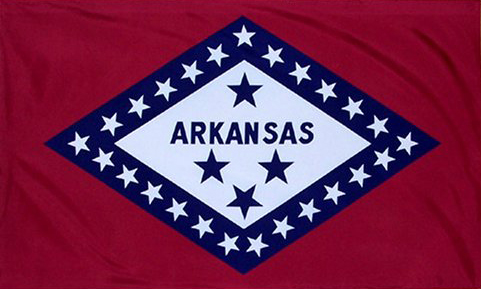
arkansasFlag Flags are symbols, and symbols mean different things to different people – good people.

For some, the Confederate flag represents regional pride, a connection to the ancestral past, and sacrifice. For others, it’s a symbol of oppression and discrimination – long ago, recent, and present. For others, it’s about vague, undefined defiance. And for a small number of people, including that mass murderer in Charleston, it’s an inspiration to do very bad things.

Three out of four of those associations aren’t positive.

You can display almost whatever symbol you want on your car, property or shirt. When it comes to public areas, the Confederate flag has its places – such as in museums and adorning the graves of Confederate soldiers.

But I can’t see a good reason to display at any state Capitol a symbol that makes a lot of people feel bad and is used by a few to promote hatred and bigotry. So I’m glad the governor of Alabama ordered the flags removed from his Capitol. I hope South Carolina legislators do the same. Moreover, I support Fort Smith Southside’s decision to change its “Rebels” nickname and stop playing “Dixie.” If I were an African-American student, I would not like those being associated with my school.

So what about that one star on Arkansas’ flag?

According to the online Encyclopedia of Arkansas, the state did not have a flag until 1913. The Pine Bluff chapter of the Daughters of the American Revolution decided one was needed to fly above the Navy’s new battleship, the USS Arkansas, and initiated a statewide contest to design one. Miss Willie Hocker of Wabbaseka had the winning design.

The flag the state adopted is not just one symbol, but many. The red, white and blue colors represent the United States. The diamond represents Arkansas being the only diamond-producing state. The 25 stars arrayed in the blue diamond represent the fact that Arkansas was the 25th state admitted to the union.

The first flag included three blue stars, two above and one below the word “Arkansas,” to represent the three nations to which Arkansas belonged prior to statehood: France, Spain and the United States. In 1923, the Legislature added a fourth blue star to mark the state’s membership in the Confederacy. At first, there were two stars above the word and two below. The next year, the design was changed so that the Confederate star stands alone on top. In 1987, the Legislature passed a bill, signed by then-Gov. Bill Clinton, that reaffirmed the flag’s symbolism, including the fact that the star’s purpose is “to commemorate the Confederate States of America.”

That star, and that commemoration, has not escaped notice, especially given that Hillary Clinton is running for president and has spoken in support of South Carolina removing the Confederate flag from its Capitol.

The question is, what does it mean to “commemorate”? My online Merriam-Webster dictionary defines it several ways, including “to remind people of,” and “to remember and honor.” Google’s definition includes the word “celebrate.”

Does Arkansas’ flag remember, or does it celebrate the Confederacy? It seems to me to do more remembering – at least, it does for us today. I have no more allegiance to the Confederacy than I do to France or Spain. It’s troubling that the era is marked by the single star above Arkansas rather than one of the three below. I’d rather the top star represent the U.S.A. That could be changed with an act of the Legislature, but I don’t look for that to happen.

The meanings of symbols change over time and often according to circumstance. For example, the dollar bill can represent thrift, industry or greed, depending on how it’s used. The U.S. Capitol dome sometimes appears in political commercials to represent corruption, not democracy.

For enough Americans, the Confederate flag’s meaning has never changed. It has always represented slavery and discrimination. It’s always made some of us feel set apart and looked down upon. So it doesn’t belong amidst the halls of democracy where, ideally, everyone is supposed to be represented equally.

As for Arkansas’ flag, let it be a history lesson, and a reminder of how far the state has journeyed. At one time Arkansas was French. At another, Spanish. And at another, on the wrong side of history. It’s all worth remembering, even if it all shouldn’t be celebrated.

Is being governor easy?

By Steve Brawner
© 2015 by Steve Brawner Communications, Inc.

Maybe being Arkansas’ governor is not that tough a job.

No offense to governors present and past, but that thought occurred to me after seeing a recent poll by Talk Business, Hendrix College and Impact Management Group. Gov. Asa Hutchinson enjoyed a 52-18 percent approval-disapproval rating, which was similar to former Gov. Mike Beebe’s 54-22 rating in a Public Policy Polling survey last year. No incumbent governor has lost a re-election race since 1982, when Bill Clinton beat Frank White two years after White beat Clinton.

Beebe’s numbers remained high throughout his time in office, and he was re-elected with 64 percent of the vote at a time when some other Arkansas Democrats were being swamped by the Republican red tide. The Talk Business poll even found him leading Sen. John Boozman, who hasn’t offended many people, 45-37 in a hypothetical U.S. Senate race.

That’s a Democrat leading an incumbent Republican in a Southern red state while President Barack Obama is still in office and Hillary Clinton is the likely Democratic presidential nominee. Who could do that besides a popular former governor?

That’s not to discount Beebe and Hutchinson as governors or people. It’s early, but so far Hutchinson has exuded calm, self-controlled leadership. Beebe understood state government as well as anyone, and he’s an excellent communicator who speaks plain Arkansan at the lectern and in person. Both have governed from a practical, consensus-building perspective. For what it’s worth, both know how to work the press. Furthermore, and the importance of this cannot be overstated, both married well.

But maybe they’re both good at a job where it’s not difficult to be merely adequate.

Arkansas is a lower income state that’s had its struggles, so most people – Republicans, Democrats, business and community leaders, and even members of the media – are inclined to want the governor to succeed.

The office itself adds to the governor’s personal aura. He lives in the Governor’s Mansion and is escorted by State Police officers. When he walks in the room, people stand and heads turn. He’s the only state elected official who really has a statewide audience, especially given that the other major positions are part-time (lieutenant governor), a lawyer (attorney general), and a bureaucratic administrator (secretary of state). State legislators come and go without capturing the general public’s attention. They have a lot of power during legislative sessions, but when they go home, the governor is still on the job. When a disaster strikes, it’s the governor who takes the helicopter tour, calls out the National Guard, and asks for federal dollars to make it right.

But while he’s treated like royalty, his powers are limited, which relieves some of the pressure that comes with the big title. The Legislature can override his veto with a simple majority, which is the same percentage that passed the bill in the first place. As a result, there’s not much pressure for the governor to veto many bills. Also, these days the most controversial issues are generally debated at the federal level or in the courts, so the governor usually has an alibi. If the Supreme Court declares Arkansas’ gay marriage ban unconstitutional, nobody will be mad at Hutchinson. If the state eventually has to raise some kind of tax to pay for highways, he can say he had no choice because Congress didn’t provide enough federal money.

Finally, the governor is the state’s chief marketing officer, which has its own benefits. On Hutchinson’s first day on the job, he phoned several companies to brag on Arkansas – important but noncontroversial work. He’s already traveled to Silicon Valley and recently returned from Paris and Germany, all in the name of economic development. He was the one who called legislators into special session to try to land a huge defense contract for Camden, and if the effort is successful, he will be standing at the podium accepting congratulations along with company officials.

Maybe most governors will do fine as long as they avoid political or personal scandal, treat legislators respectfully, work within political realties, and don’t say or do anything stupid. Those aren’t easy, but they’re definitely doable. So it’s a job that comes with a high upside, lots of respect, decent perks and reasonable expectations.

Nice work, if you can get it.

The Common Core conundrum

By Steve Brawner
© 2015 by Steve Brawner Communications, Inc.

A lot’s been happening with Common Core this past couple of weeks.

It started June 8, when a panel appointed by Gov. Asa Hutchinson and led by Lt. Governor Tim Griffin recommended that the state dump the end-of-the-year PARCC exam, meant to compare Arkansas with a dwindling number of other states, and instead use one offered by the more familiar ACT. Hutchinson accepted the recommendation, and Education Commissioner Johnny Key and his Department of Education began moving in that direction. After a legislative session in which Hutchinson got almost everything he wanted, it seemed like a done deal.

Only it wasn’t. The actual decision maker, the State Board of Education, which five years ago approved Arkansas’ inclusion in the movement, said no on June 11. Board members said they needed more time and more data before they could approve such a change.

So was that it? No. Legislators, many of whom don’t like PARCC, can use the power of the purse to block future testing contracts. Then on June 22, Hutchinson directed the Department of Education to dump PARCC because Key had found a provision in a five-year-old memorandum which seemed to give him the ability to do that.

So now, we’re back where we started, which is stuck in the middle of a major societal change a lot of people oppose or at least like to complain about.

How did we get here? The Common Core is not a curriculum. It’s a set of common standards in math and English adopted by all but a handful of states – Texas, of course, being one of them. The thinking is that, in a mobile society competing in a global economy, students across America ought to know roughly the same things at roughly the same times.

Birthed by the National Governors Association and the Council of Chief State School Officers, the Common Core partly was a reaction to No Child Left Behind. That’s the law signed by President George W. Bush in 2002 requiring every single American student – regardless of mental ability or English fluency – to be at least average by now, with the federal government empowered to financially punish schools who don’t meet that goal.

Sounds crazy? There’s more. No Child Left Behind let states define their own standards, which resulted, not surprisingly, in a lot of easy ones. In Arkansas, 83 percent of fourth-graders in 2014 tested at least “proficient” on the state’s Benchmark exam, which PARCC replaced this year. But the National Assessment of Educational Progress, another test given to a sample of students nationwide and generally considered trustworthy, found that only 32 percent of Arkansas fourth-graders were proficient.

That’s a 51-point swing. When we test and grade ourselves knowing we have a financial interest at stake, we give ourselves high marks. When an outside source tests and grades us, we do poorly. That’s why we might need some form of common goals measured by an objective assessment.

The conundrum, of course, is how to do that while still maintaining local school district autonomy and independence. Common Core was supposed to be the answer, but people still distrusted it, and then of course the Obama administration started handing out grants, and with grants come rules, and with rules comes control. And that, understandably, concerns a lot of people.

Part of the problem is the way Common Core was adopted – by a little-noticed vote of the State Board of Education in 2010. This was a major change in the way students are educated, and yet few Arkansans had heard much about it until kids started bringing home math problems their parents couldn’t figure out. Some people got concerned and others got plain mad, and political leaders reacted accordingly. The PARCC test became a target, and ending Arkansas’ participation in it might help let off a little steam.

This country is such a mess right now that it can be a little discouraging, can’t it? Many problems are so obvious that we can hardly argue about their existence. We know our schools aren’t good enough. We know our immigration system is a failure. Our health care system has been on an unsustainable path for decades. We know it’s wrong to keep adding to the national debt. And yet we can’t ever seem to decide where we are going, make a plan and get the car in gear.

What gear is Arkansas in regarding Common Core? Stuck in PARCC, for now.

Levees and the era of neglect

By Steve Brawner
© 2015 by Steve Brawner Communications, Inc.

A column with the word “levees” in the headline probably won’t attract a record number of readers. Unless you live in a floodplain, they’re just big piles of dirt, right?

Well, not really.

The recent floods have drawn attention to Arkansas’ deteriorating levees. Really, “forgotten” is the better word. As reported in the Arkansas Democrat-Gazette Sunday and elsewhere, it turns out that, in many cases, no one’s really in charge of maintaining them, or even caring whether or not they exist. They were built when the need was obvious, such as after the Great Flood of 1927, when the overflowing Mississippi River submerged much of the state. Local boards were set up to maintain them, and legislation was passed to ensure their independence. The board members – those with memories of those floods – grew old and died or for whatever reason stopped paying attention. Those big piles of dirt continued to function fine for decades – until, this past spring, when at least a couple of them didn’t.

A levee is just like anything else in that it becomes less effective over time unless it is maintained. Dirt erodes. Vegetation overgrows. Mankind intrudes. As the Democrat-Gazette reported, one levee nearly failed because someone once dug a hole at its base for a construction project.

This spring was a wake-up call, so legislators are scheduled to hold hearings June 24. It helps that one of them, Sen. Jason Rapert, R-Conway, saw his property submerged under water during the flooding. The issues will be the same as they often are in a democracy: Should someone be in charge, and if so, who? And, where will the money come from?

Were this only about piles of dirt, I probably wouldn’t be writing about it, but Arkansas’ levee situation is part of a larger story – in fact, one of today’s biggest.

For centuries, this was the land of sacrificial investment. Immigrants came here knowing it might take a generation for the family to really enjoy the benefits. Wars were fought where more than just a few contributed. Railroads were laid. Roads and bridges were built. Arkansas taxpayers in the early 20th century paid extra so that’s today’s taxpayers would have an extra sturdy State Capitol to conduct the people’s business.

Contrast that with today, when it’s way too much about the present, and we’ll let our children fend for themselves. The obvious example is the $18 trillion national debt – equivalent to $57,000 for every American man, woman and child – almost all of which has been created since 1980.

But there are other less obvious ways in which we’re passing on the costs of the things we take for granted because of misplaced priorities and waste. For example, the nation isn’t properly maintaining its aging transportation infrastructure, much less making significant improvements. Instead of making tough choices and really addressing the deficiencies, Congress patched a hole in the highway budget this past year partly through an accounting gimmick that borrows from the next 10 years. That money has been spent, future taxpayers will be paying, and yet the Highway Trust Fund is nearly insolvent again. Meanwhile, plumbing systems in many cities are aging. In some cases, they’re more than a century old. Few care as long as it goes away when they flush, but someone will have to fix those pipes eventually.

Americans often assign names and characteristics to generations: the baby boomers, Generation X, the Millennials, but it won’t take long for future Americans to lump us all into one category. We think of the 1700s as the age of exploration and the American Revolution, the 1800s as the era of expansion and the Civil War, and the 1900s as the century of American victory and ascendancy. I fear they’ll someday say ours was the Era of Neglect.

It doesn’t have to be this way. We’re still capable of investing. Maybe this recent scare will result in a renewed emphasis on levee maintenance. Everyone recognizes it costs much less to maintain a big pile of dirt than it does to rebuild a flooded community. Meanwhile, Congress at least recognizes the need to invest in the nation’s transportation infrastructure, even if it hasn’t figured out how. Sometimes those old plumbing pipes actually do get fixed.

I’m struggling to come up with something positive to say about the national debt. How about this? Americans have overcome worse.

Let’s just hope it doesn’t take the equivalent of a flood before we’ll try.

Taking stock of third parties, independents

By Steve Brawner
© 2015 by Steve Brawner Communications, Inc.

Three events have occurred the past two weeks that are noteworthy, particularly for the growing number of voters who call themselves independents and the small percentage who actually vote for candidates who are not Republicans or Democrats.

First, on May 29, Gov. Asa Hutchinson signed into law a bill moving Arkansas’ 2016 primary elections from May to March 1. The stated goal was to include Arkansas early with other Southern states in the so-called “SEC primary” so the state would have more of a say in who the Democrats and Republicans nominate for president. It might help Mike Huckabee in his campaign a little by giving him an early state win.

A consequence is that challengers have less time to decide if they want to run against incumbents. That’s particularly the case for independents, who unlike party-affiliated candidates must collect signatures to qualify for the ballot. Under a bill passed in 2013, independents must submit their signatures by the end of the filing period. This election, that would be November, so they must begin collecting signatures in August for an election that won’t occur for another 15 months.

Mark Moore of Pea Ridge, who ran as an independent for the state House of Representatives in 2012, says the 2013 law requiring independents to file so early is unfair and unconstitutional. After all, it gives them the same deadline to qualify for the ballot after collecting signatures that it gives party candidates to merely sign up with their filing fee. When the primary is in May, independents must collect signatures in the dead of winter. The election before the law’s passage, seven independent candidates ran for the state Legislature, including Moore, who won 39 percent of the vote in a two-person race. In 2014 after the law was passed, only one independent ran for that body.

Moore wants a return to the old law, which allowed independents to file first and then collect their signatures. He’s filed a lawsuit and says legal precedents are on his side. His day in court is July 27.

Second, Rep. Nate Bell of Mena, ironically the co-sponsor of the law Moore is suing to end, announced June 2 that he himself is now an independent and no longer a Republican. So now the 135-member Legislature has only 134 Republicans and Democrats.

The third-term legislator, known for being quite outspoken, has not given a reason for his switch other than to say it would enable him to better serve his constituents. He was a strong opponent of moving the primary to March, arguing that it was unfair to candidates and their families.

Finally, just hours after Bell’s announcement, the Libertarian Party of Arkansas submitted 15,709 signatures to the secretary of state’s office, far more than the 10,000 signatures it needed to qualify for the 2016 election as a “new” party. Arkansas law requires it to do so because its candidate for governor did not receive 3 percent of the vote in the last election. Under state law, if the Libertarians’ presidential candidate does not win 3 percent in 2016, they’ll have to collect signatures again for 2018.

Libertarians call themselves the “party of principle,” and that principle is that they want much less government. They would cut all federal government programs significantly if not completely, including Social Security and Medicare, and they also would cut defense spending while legalizing marijuana.

The party’s newly elected chairman, economist Dr. Michael Pakko, points out that every Arkansas voter had at least nine Libertarians on the ballot in 2014, including all congressional races and all state constitutional offices. In the statewide races, no Libertarian candidate won more than 6.4 percent. A numbers guy, Pakko knows the party is not ready to win major elections, but he says the party is growing and will be a viable alternative if enough voters ever decide they’ve had enough of the major parties.

The way the American political system is set up almost guarantees a two-party system, despite the fact that parties are not mentioned in the Constitution and despite George Washington imploring his fellow Founding Fathers not to succumb to party politics.

America’s economic system, meanwhile, is designed to offer unlimited choices. In the cereal aisle I have dozens of viable alternatives.

I don’t want that many choices in the voting booth. But it seems like the political system could learn from the economic system, and give me more than two.