
Category Archives: Politics

Huckabee flies the Millennium Falcon into the asteroid belt

By Steve Brawner
© 2015 by Steve Brawner Communications, Inc.

Do you remember the scene in “The Empire Strikes Back” when C-3PO told Han Solo, “Sir, the possibility of successfully navigating an asteroid field is approximately 3,720 to 1” and Han Solo replied, “Never tell me the odds”?

I bring that up because I’m about to play C-3PO to Mike Huckabee’s potential presidential bid.

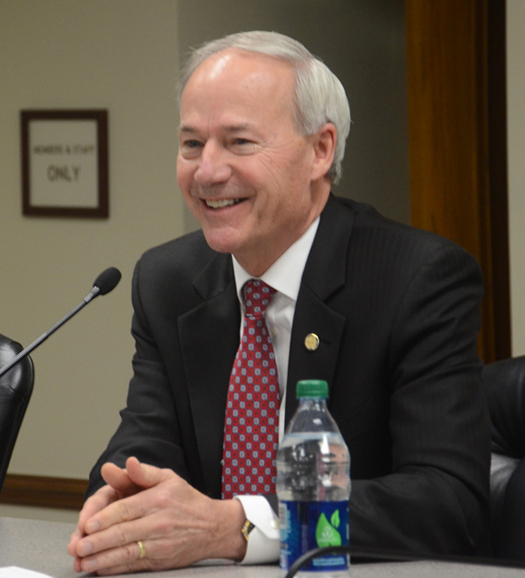
Huckabee announced this past week that he is ending his Fox News television show because he’s seriously considering running for president again. If he runs, he’ll have to get past a lot of asteroids in order to win the election.

The Republican Party coalition is composed of at least four important elements: super-wealthy anti-government activists; middle-class anti-tax tea partiers; social conservatives; and business establishment types.

Huckabee, for whom I worked as a communications aide a long time ago in a galaxy far, far away, has a history of policy decisions and public statements that do not endear him to the first two groups in that coalition. As governor, he helped create a government health care program, ARKids First, and helped pass a one-eighth-cent conservation tax written permanently into the Arkansas Constitution. Those aren’t necessarily bad positions, but they make him vulnerable to attack. The most important super-wealthy anti-government group, the Club for Growth, does not like him at all, and he doesn’t like it, either. In fact, he called it the “Club for Greed.”

Huckabee is solid with the social conservatives, and they will make him competitive in Iowa and other states early during the Republican primaries. But social conservatives are not as powerful as they once were in the party. One of their most important issues, opposition to gay marriage, is no longer the position of a majority of Americans. If Huckabee is the only social conservative in the race, he still might be able to find a niche and be competitive for a while. But if others, such as former Sen. Rick Santorum of Pennsylvania, enter the race, the vote will be divided.

The fourth member of the coalition, business establishment types, will be looking to support one of their own, a Mitt Romney or a Jeb Bush – somebody with a lot of money who can raise a lot more. And that leads us to the really big rock in the 2016 asteroid field.

Hillary Clinton.

Republicans have lost four of the past six presidential elections and lost the popular vote in one of the other two. They need to win this one, or it’s going to start looking bad. They had a shot in 2012, but the Republican primary process was awful. The candidates in a crowded field beat each other up for a year and forced Romney to take positions he obviously didn’t really support. The process moved him too far to the right and made him look like a flip-flopper.

If that happens again, and if Clinton decides to run, Republicans are toast. She can spend a year criss-crossing the country raising money before cheering crowds and looking presidential, while they tear each other down trying to appeal to the various parts of the coalition.

To prevent that, Republicans will try to follow the model from 2000, the last time they won an election following a two-term Democratic administration. As they did with George W. Bush that year, the party’s leaders will try to create a process where everyone coalesces behind a single candidate long before it becomes too bloody. The anointed will be someone like Jeb Bush, Romney, or New Jersey Gov. Chris Christie – someone with the support of the two most important groups in the party’s coalition, the super-wealthy anti-government activists and the business establishment types. Those are the ones with the money.

I started this column by comparing myself to C-3PO for a reason: I’m just the bystander, while Huckabee is the one flying the Millennium Falcon into the asteroid field. Unexpected things happen in presidential campaigns. In 2008, Clinton was the anointed candidate following eight years of a president from the other party, and she didn’t win her party’s nomination. If she doesn’t run this time, it would change the whole dynamic.

Still, the odds are against Huckabee – probably not 3,720 to 1, but steep nonetheless.

Time to renew the Constitution

By Steve Brawner
© 2014 by Steve Brawner Communications, Inc.

Think everything that’s wrong with this country is President Obama’s fault, or the Republicans’, or both? Nah. The real problem isn’t a person or party. The real problem is that America’s political system doesn’t work anymore. If we “threw out all the bums,” pretty soon we’d decide that the new bunch were bums, too.

Let’s illustrate the political system’s problems using Obamacare.

Remember what the health care system was like in 2008? If you were sick, the insurance companies wouldn’t cover you. If you were sick too long, they’d drop you.

The entire system was (and still is) based on compensating medical providers for treating us, not for curing us or preventing illness. As a result, American health care is misdirected and costs far more than it does elsewhere, making the country less competitive and adding to the national debt. People die because it’s based on the wrong incentives.

Such a system did not need tweaking. It needed an overhaul. A lengthy national conversation involving medical providers, insurers and patients should have occurred. Democrats and Republicans should have worked together to create solutions. Reforms should have occurred in stages, with the states serving as laboratories of democracy. It should have taken a decade.

Can you even imagine that? Not only did it not happen, but it could not have happened, for many reasons. Democrats and Republicans had no incentives to work together – except for the good of the country, and that wasn’t enough because playing politics was more important. The job had to be rushed because the 2010 elections began the instant after Obama took the oath of office in 2009. It’s all a big game now.

The system made it impossible to reform health care the way it should have been reformed. And so we got what we got – a law altering American life that was passed quickly without broad support. I don’t hate it as much as some people do, given what it replaced. A lot of people have health insurance that didn’t have it before. But it’s complicated, messy and too centrally directed, and it doesn’t do enough to contain costs. We’re not sure where it’s going, and so people fear it, and understandably so. Now that Republicans control Congress, they’ll pretend to try to torpedo it, but they don’t have anything to offer in its place.

This is no way to run a railroad.

The Constitution has served us well for more than two centuries and is an example for the rest of the world. But the political system can no longer address big problems responsibly. The Founding Fathers created a government. Today’s elected officials can hardly pass a budget.

Meanwhile, the system has not prevented what the Founding Fathers hoped it would prevent. Government has grown far bigger than they intended. Service in Congress has become a career. A political class of lobbyists, campaign professionals and influencers make their livings by extracting taxpayer money and/or sowing discord. A wealthy aristocracy with unlimited resources exerts too much influence over policymakers.

The Founding Fathers anticipated some of this, but they could not have known what life would be like in the 21st century. And so the Constitution needs to be renewed through the amendment process. Examples to be considered should include, among others, term limits, campaign finance reform, and some kind of balanced budget requirement.

It’s hard to imagine Congress making any of this happen, but a movement, the Convention of the States, is trying to amend the Constitution through a states-led process that has never been used before. An Arkansas chapter is trying to pass a resolution through the state Legislature. Because it takes 34 states to call a convention, it will be an uphill battle nationally.

Our political system doesn’t do what it was meant to do and can’t solve new problems, either. The Founding Fathers rightfully made the Constitution difficult to amend. However, the Constitution itself was a revolutionary document written by people who understood that sometimes things need to be shaken up.

By Steve Brawner
© 2014 by Steve Brawner Communications, Inc.

The last gravel stretch of highway in Arkansas, part of Highway 220 in Crawford County, will not be paved for a while, providing the latest example of how uncertainty about the federal government affects so much of everything these days.

Highway Department officials decided not to move forward with that project, along with two others, at its next bid letting Jan. 27 because they can’t count on the feds. The process works like this: The state builds highways, bills the federal government, and then is reimbursed for part of the cost. Federal funding pays for about 70 percent of highway construction in Arkansas.

Highways traditionally have been funded mostly from state and federal motor fuels taxes, which have the advantage of being a user fee. Unlike so much of the government, the person benefitting from the government service at least indirectly pays for it. In Arkansas, the combined taxes are 40.2 cents per gallon of gasoline and 47.2 cents for diesel. At the end of each fill up, drivers can calculate how much they paid the government for their highways without needing an accountant and without fear of the IRS.

But the federal portion of the motor fuels tax (18.4 cents per gallon of gasoline and 24.4 cents for diesel) hasn’t been raised since 1993. Since then, highways have become more expensive to build and maintain, while cars have become more fuel-efficient, which means drivers are buying less fuel and paying less in fuel taxes.

As a result, the federal Highway Trust Fund, which pays for highways, almost dropped to zero in 2014. At the last minute, Congress, as it so often does, patched it with a quick fix funded largely by gimmicks that borrowed from the future and will only provide enough money until the middle of 2015. After that, money will come in and out, but it won’t cover everything, and there will be nothing in the bank. That situation makes it hard for highway departments to plan projects that cost millions of dollars and require years of work.

The quickest solution is to raise the gas tax, but that’s unlikely to happen because voters don’t want to pay more at the pump. So in recent years, money has been shifted to highways from the rest of the federal budget, adding to the national debt. Congress is looking for other solutions, some of which are responsible and some that are, ahem, more creative. Will it decide to do anything, and if so, what will that be? No one knows.

If this were simply about one stretch of gravel road in Crawford County, it wouldn’t be a big deal. Unfortunately, uncertainty about Congress and the federal government pervades the economy – which, it should be pointed out, is doing well right now. Maybe we’re all getting used to it, but these fiscal cliffs and government shutdowns still take a toll.

In December, Congress did pass a $1.1 trillion bill that will fund a big part of the government through the rest of the fiscal year, so there shouldn’t be too big of a crisis for a while. But Congress also kept some of the waters muddied by extending 55 tax deductions retroactive to the beginning of 2014 but not for 2015. The purpose of a deduction is to encourage behavior, but for that to happen effectively, people have to know what the rules will be moving forward. Beneficiaries of those deductions might assume Congress again will extend them retroactively, but they don’t know that with certainty, and that affects how they will plan and invest.

The big national argument is always about the size of the government, and rightfully so. But the truth is that people are resourceful, and if they know the rules, the economy can thrive even when the government is bigger than it should be. Like a tree growing on a rocky mountain, job creators of all sizes will take root and grow in less than ideal conditions.

But that tree only grows because the rules are clear – keep digging to find the nutrients, and reach toward the sun. This can be done even in inhospitable rocky terrain.

It’s much harder to do it in shifting sands.

Make Cuba thirsty

By Steve Brawner
© 2014 by Steve Brawner Communications, Inc.

You can lead a horse to water, but you can’t make it drink. That’s how Manny Scott used to see it.

Scott, a professional speaker, was one of those kids who grew up in a gang-infested inner-city neighborhood and didn’t have much of a future until a caring teacher, Erin Gruwell, came into his life. The movie “Freedom Writers” told the story of Gruwell and her students.

Scott now travels the country telling his story and encouraging audiences to care. Addressing Arkansas school board members Dec. 11, he told of being asked in Texas about what to do with students who refuse help. “You can lead a horse to water,” he had replied, but before he had finished the statement, a lifelong rancher had excitedly corrected him by saying that while it’s true that you can’t make a horse drink, “You sure as blank can slap some salt in its mouth and make it thirsty.”

For 53 years, the United States has tried to make Cuba drink. Actually, it’s tugged that horse by the reins, pushed it from behind, and grabbed it by its mane and pulled. It’s tried yelling at the horse, pleading with it, and reasoning with it. Despite Uncle Sam’s best efforts, the horse has stubbornly refused to comply, growing ever scrawnier in the process.

Earlier this month, President Obama reintroduced the very American concept that if something isn’t working, try something else. It’s why we have light bulbs. He said the United States would open diplomatic relations with Cuba and try to accomplish through engagement what it failed to accomplish by heavy-handedness. In Arkansas, Sen. John Boozman and Rep. Rick Crawford, both Republicans, reacted favorably. The Arkansas Farm Bureau and other state agricultural groups said it was a good idea.

Opponents had a different response: Keep pulling on that rein until that horse does what we tell it to do.

While Obama can re-establish relations, it will be up to Congress to lift the trade embargo that has given the Castro brothers, Fidel and Raul, a convenient villain to blame. Given the partisan makeup of Congress and the reactions of many Republicans, it seems likely that the embargo will remain in place for a while. In Arkansas, Sen.-elect Tom Cotton and Rep. Steve Womack were critical of the announcement, saying or implying that it amounted to appeasement.

The concern is understandable, but if at first you don’t succeed, for goodness’ sake, try something else. The United States tried to outlast Fidel Castro and ended up with his brother, who’s 83. Maybe both will die soon, and a democracy will arise from the grass roots. Or maybe Raul will stick around for another decade and then be replaced by one of the Castros’ sons. North Korea, after all, is now led by the dictatorial grandson of its dictatorial Great Leader.

Instead of the United States trying unsuccessfully to make Cuba become a democracy with a free market economy, wouldn’t it be better to make it thirstier for those things so it would choose them on its own? An end to the embargo would expose Cubans to the freedoms and prosperity that some of their countrymen braved 90-mile raft trips across the ocean to obtain. American businessmen would introduce Cubans to ideas the Castros could not hope to contain. Surely the country has many budding entrepreneurs whose wits enabled them to supplement their incomes amidst the deprivations of communism. The growing free market would require online access, which would further expose Cubans to non-Castro ideas. Missionaries from the States would share their faith and give Cubans something besides the revolution to worship.

Many Cubans no doubt already thirst for freedom and opportunity. The United States should try to make them thirstier. Do that, and eventually the horse will drink. After 53 years, it’s time to let go of the reins and try using some salt.

Congress: Better, sort of

By Steve Brawner
© 2014 by Steve Brawner Communications, Inc.

You could say that what Congress accomplished this month was a vast improvement. You also could say it wasn’t nearly good enough.

On Tuesday, President Obama signed a 1,600-page, $1.1 trillion “cromnibus” bill passed by Congress. The “cr” is an abbreviation for “continuing resolution,” which is a short-term funding mechanism that will be used for the Department of Homeland Security. “Omnibus” is the mechanism funding the rest of the discretionary budget – in other words, not entitlement programs such as Social Security and Medicare, which are on autopilot. Homeland Security is funded only until February so Republicans can try to undo Obama’s immigration order.

This is a step forward because Congress finished this task without a government shutdown, though the deadline for one came pretty close again. Next year will be a circus like always, but at least Congress won’t be playing Russian roulette with the economy for a while.

Unfortunately, important provisions were slipped into this spending bill that weren’t related to the budget. One, written by the big bank Citigroup, amends the Dodd-Frank law passed after the bank bailout and will let banks engage in riskier behavior backed by your tax dollars. If they make money, they’ll keep it. If they lose money, you’ll bail them out. Another provision increases the amounts that big donors can give to the Democratic and Republican National Committees tenfold, from $32,400 to $324,000.

Moreover, Congress relied on a few gimmicks to make the numbers work. The Committee for a Responsible Federal Budget, in fact, has found $30 billion it says violate the spirit of the sequester and the 2013 Murray-Ryan agreement. Without going into too much history, the sequester is a series of automatic spending cuts affecting non-entitlement programs. Murray-Ryan set spending caps for two years and raised spending levels above the sequester.

Google it if you need more. It’s hard to write about this stuff.

Thirty billion dollars is less than 3 percent of $1.1 trillion, so again, it’s not too bad. Still, it’s not great. One provision shifted $7 billion from regular defense spending, which is capped under the sequester and Murray-Ryan, to war spending in Iraq and Afghanistan, which is not.

This is one of many reasons why we should be reluctant to fight all these wars.

In addition to the cromnibus, Congress also passed a one-year bill extending 55 tax breaks retroactive to the beginning of 2014. These were deductions for wind energy production, big business foreign profits, schoolteacher supplies, college tuition, etc.

Some of those may be worthy policies, but there are several problems with doing it this way. First, the tax extenders bill reduces revenues to the federal government by $41.6 billion over 10 years – money future taxpayers will have to cover because Congress didn’t also cut $41.6 billon in spending. Next year, the tax breaks probably will be extended again, further adding to the debt. Also, by extending the tax breaks year after year instead of just cutting taxes permanently, Congress can hide how much these actions actually increase the national debt over time.

“It really is no more complicated than me going home and saying to my kids, ‘I’m going to ask you to pay for this $42 billion because we didn’t want to,’” Maya MacGuineas, CRFB president, said in an interview.

Finally, the whole point of a deduction is to encourage behavior. All of these tax breaks expired at the end of 2013. Waiting until the end of the year and then re-enacting them retroactively created uncertainty and made it harder for businesses to make the investments Congress is trying to encourage. If the credits are a win for the economy, then Congress should have extended them through 2015 so beneficiaries could include them in their plans moving forward. Congress did not do that.

Being a member of Congress often means choosing between two options that are less than ideal. For the record, here’s how Arkansas’ members voted on the two bills. On cromnibus, the yeses were Sen. John Boozman, Sen. Mark Pryor, Rep. Tim Griffin, and Rep. Steve Womack. The no votes were Rep. Rick Crawford and Rep. Tom Cotton. On tax extenders, everybody voted yes except Cotton.