Category Archives: Politics

The ‘What the Heck’s Really Going on Book’

By Steve Brawner
© 2016 by Steve Brawner Communications, Inc.

Rep. Doug House, R-North Little Rock, metaphorically calls it the “What the Heck’s Really Going on Book,” and the thing about that book is that pages are handed out only one at a time, and not necessarily in order. A while back, another page was torn out and handed to him.

“I was ready on the Personnel Subcommittee to start cutting (state) employees,” he said. “And the staff pulled me off to the side, and they said, ‘Mr. Representative, you can do what you want to. That’s what your job is, but understand something: If you do not have more employees coming in, that’s how we fund the public employee retirement system. You stop that inflow of new employees and payments they make, you bankrupt that system.’”

So state government’s labor force won’t be cut much because current and new government employees’ retirement contributions help pay for retired government employees’ benefits. That’s what the heck’s really going on.

Here’s what else is really going on: That “balanced budget” that the state produces every year through a mechanism called the Revenue Stabilization Act – it’s not really balanced.

House has spent the past year-and-a-half researching what the state really owes. It hasn’t been easy to find out – not because things are purposely hidden, but because the debts are strewn out in different places. It’s like my desk: You can find things, but you have to look. Those debts include $1.7 billion in bonds for things like highways and the Big River Steel project, $2 billion in higher education revenue bonds, capital leases and notes payable, and $2.2 billion for “other employee benefits” – mostly liability for health insurance and also for post-employee benefits, such as unused vacation time.

Public schools owed $4.1 billion as of June 30, 2015. As with colleges and universities, the debts are technically the responsibility of the entities, not the state. But if they can’t pay, the state’s taxpayers surely would be expected to pick up the tab, House said.

Meanwhile, the state’s six retirement systems – public employees, teachers, state highway employees, etc. – had $5.95 billion more in liabilities than assets as of June 30, 2015. That would be a problem in itself, but House said the systems assume 8 percent annual growth in their assets. Maybe that’s doable in good times, but it’s now been seven years since the Great Recession ended, and eventually another will come around.

Add it all together, and the state appears to have about $16.75 billion in debts and liabilities (my math, not his). That’s $5,600 for every Arkansan – hardly the $61,000 that is every American’s share of the $19.8 trillion national debt, but it’s money owed nonetheless. While each Legislature goes through the exercise of ensuring a balanced budget under the Revenue Stabilization Act, these other instruments – bonds, pension plans, etc. – are a huge loophole.

“Congress has a balanced budget,” he said. “They spend whatever they want to, and then they go borrow the money to cover their checks … and we’re doing essentially the same thing.”

The news is not all bad. House said interest rates are low, the state’s bankers have treated it fairly, and pension plan managers are very good at what they do. Moreover, much of the state’s debt has produced valuable assets – schools, roads, educated students.

What now? House wants the state to pay off all its bonded debt within 10 years. Also, he would replace lifetime defined benefits with defined contribution pension plans where the state contributes to beneficiaries’ accounts while they’re working. Most private companies and the federal government have already made this switch.

House would like to see the state go from being a debtor to a creditor. Instead of borrowing money that it then loans to a local utility to build a wastewater plant, for example, it could lend the money and keep the interest for the general fund.

So according to the “What the Heck’s Really Going on Book,” the state is in debt, though not nearly as deeply as the federal government is. The good news is that when those pages are torn out, they can be rewritten and replaced.

The challenge is that the Legislature contains 135 authors, and state government has a lot of editors.

Private option water torture

By Steve Brawner
© 2016 by Steve Brawner Communications, Inc.

Voting for the private option was hard for many Arkansas Republican legislators, and every month – every dang month – it becomes harder to keep supporting it.

That’s because every month the number of Arkansans being served by the program continues to rise – past the 250,000 that was originally forecast, and now, as of the end of September, past 324,000 who are either enrolled or have been deemed eligible, or have been placed in traditional Medicaid because they were considered “medically frail.”

The private option is the health care program created by the Legislature in 2013 after the U.S. Supreme Court ruled the Affordable Care Act – that’s Obamacare – was constitutional but that states were not required to expand government-run Medicaid to serve individuals with incomes up to 138 percent of the poverty level. Given the choice, most Republican-leaning states said no to a lot of federal dollars, but Arkansas said yes, with a twist: Instead of simply expanding Medicaid, it bought those folks private insurance.

By many measures, the private option has been a success. Arkansas is a national leader in reducing its uninsured population. Without it, most beneficiaries would not have health insurance, but some still would have health problems, which they would wait to address until they were very sick by showing up at emergency rooms and being treated for free. Meanwhile, the huge pool of private option customers has kept insurers in the state and competing against each other, holding down rates for other individual buyers.

But all that government-paid health care isn’t free. The federal government is sending the state $1.6 billion in taxpayer dollars this year and paying 100 percent of the cost. Starting next year, the state chips in 5 percent, a number that rises to 10 percent by 2020.

For Republicans who have supported the program, it’s been a conundrum. Most if not all would say government benefit programs invariably create ever increasing numbers of beneficiaries – which is exactly what has happened. They went against their own instincts to vote yes because Arkansas is a poor state that needed the money, and local hospitals can’t keep providing all this free emergency room care. Also, frankly, there aren’t a lot of better ideas out there. Health care is hard.

Each legislative session has hinged on whether enough legislators could be found to overcome the objections of diehard opponents. The program barely passed in 2013 and barely passed again in 2014. It survived 2015 because Gov. Asa Hutchinson promised changes in the form of Arkansas Works, his renamed version that requires higher-income recipients to contribute $13 to their monthly premiums and makes other minor changes. Hutchinson wanted more, including a work requirement, but the Obama administration didn’t agree. So he took what he could get hoping the next administration will be more flexible.

Now here we are at 324,000 counting those deemed eligible but not yet enrolled, which is 7,000 more than last month and 16,000 more than the month before that. Department of Human Services Director Cindy Gillespie says there’s still a backlog of applications. Each month, the diehard opponents get a fresh chance to say “I told you so” (without offering much of an alternative), and each month the state draws nearer to when it must pay part of the cost. For Republican supporters, it’s like Chinese water torture: drip, drip, drip.

When the Legislature meets in 2017, those Republican lawmakers will face the same difficult choice they’ve faced every year since 2013: Keep a program that’s growing unsustainably, or … what?

Eventually, those supporters will become opponents unless the next administration gives states more flexibility. For them to keep voting yes, recipients must have more skin in the game. The rules will have to push recipients into jobs, and then into better paying jobs, and eventually out of the program entirely. And if able-bodied recipients don’t move along that path, then they’ll have to lose their benefits.

Of course, doing that – or getting rid of the private option entirely – would put us right back where we were before it existed: sick, uninsured people showing up at the local hospital seeking care, and then what should be done? Treat them for free and then shuffle the costs around, or turn them away because they don’t have insurance?

Did I mention health care is hard?

Where your vote really counts this year

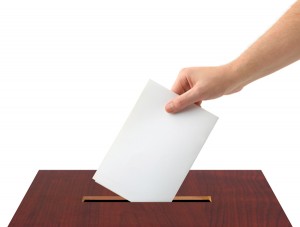
Hand with ballot and boxBy Steve Brawner
© 2016 by Steve Brawner Communications, Inc.

This year’s big races in Arkansas were decided long ago, when incumbents decided to run for re-election and when candidates decided which letter – “R,” “D” or something else – would be beside their name. Statewide, the “Rs” have it.

So even though you’re probably focusing most of your attention on the presidential race, your votes will count the most in local races and in the four ballot initiatives remaining on the ballot.

Those initiatives are where America stops being a republic governed by elected leaders and instead becomes a direct democracy – where you, Mr. and Mrs. Responsible Citizen, decide the law of the land.

Issue 1 is a constitutional amendment extending the terms of nine county officials – county judge, sheriff, etc., but not justice of the peace – from two years to four years. Secondarily, it would prevent county officers from being appointed or elected to another civil or elected office (school board, for example) while serving their terms; take their names off the ballot if they don’t have an opponent; and define the previously undefined “infamous crime” that warrants their removal from office.

Passage of the amendment would give elected officials more time to settle into their offices and govern instead of having to return to the campaign trail so soon after being elected. If you think that’s a good thing, vote yes. If not, vote no.

Issue 2 would allow the governor to maintain his or her powers when leaving the state. Under the Constitution, if Gov. Asa Hutchinson drives into Memphis or crosses the border separating Texarkana, Ark., and Texarkana, Tex., Lt. Gov. Tim Griffin becomes not just the acting governor but the actual governor. If Griffin is also out of state, then the Senate president pro tempore, Sen. Jonathan Dismang, R-Searcy, becomes the actual governor. Issue 2 would end that practice.

The pros? Governors travel a lot for legitimate reasons. Hutchinson, in fact, is in China this week meeting with business leaders he hopes will invest in Arkansas, and with government officials to promote Arkansas agriculture exports. In the past, replacement governors have taken advantage of their moment in the sun to sign a bill the governor didn’t like, or let people out of jail, or temporarily fire the governor’s chief of staff. On the con side, if the governor is out of state during an emergency – as occurred on Sept. 11, 2001 – current law ensures Arkansas still has a governor at home.

Issue 3 would allow the state to issue bonds for economic development projects in unlimited amounts. Currently, those bonds must equal no more than 5 percent of state general revenues. That provision would let the state go into more debt in order to attract a really big employer, such as an auto plant. The amendment also would allow cities and counties to provide economic development money to private entities, such as the local Chamber of Commerce. It also would let cities and counties sell bonds to private individuals rather than through a public sale.

Why vote yes? Because Arkansas is still a poor state, and it competes with other states that also use taxpayer funds to attract employers and spur economic development. Vote no if you’re concerned about how those funds are used, who benefits, and how much debt the state would incur.

The other initiative has attracted the most attention. Issue 6 is the Arkansas Medical Marijuana Amendment, which would legalize medical marijuana through a constitutional amendment. It would allow marijuana to be distributed through for-profit dispensaries and lists medical conditions that would qualify.

If you want more information, the Cooperative Extension Service has an excellent, unbiased voter guide at its website, www.uaex.edu. I used it for this column.

State Republican leaders stumped by Trump

By Steve Brawner
© 2016 by Steve Brawner Communications, Inc.

I tried to write about something besides the presidential campaign, and just can’t. I apologize. I’ve covered other things this past week but can’t look away from this train wreck, even when I want to.

Arkansas’ top Republican elected officials probably feel the same way.

After Donald Trump’s 2005 recordings were made public, a number of them made their strongest statements yet against the candidate whom none of them wanted to be the nominee. But so far, they have not joined others across the country who withdrew their support, including both senators from the states of Alaska, Nebraska and Arizona, including Sen. John McCain. Speaker of the House Paul Ryan has all but disowned Trump.

Well, Rep. Bruce Westerman did say after the recordings that he would support letting the party’s vice presidential nominee, Gov. Mike Pence, take the top spot. However, on Monday, he told reporters that Trump did OK in Sunday’s debate and still has his support.

Sen. Tom Cotton made a strong statement while in the middle of a four-day trip to Iowa, where his appearances included the main address at the big-deal Reagan Dinner in Des Moines. Yes, that’s the same Iowa that hosts the nation’s first presidential caucus three-and-a-half years from now, so Cotton may be spending a lot more time there soon. According to his prepared remarks, Cotton said Trump had to ask for forgiveness in the debate and make the case that he was better than Hillary Clinton. If not, he should step aside. After the debate, Cotton said Trump had successfully made that case, but it’s a safe bet he won’t be walking door to door on Trump’s behalf. He’s got other doors to knock.

Sen. John Boozman released a statement saying that if anyone ever spoke about his wife, daughters or granddaughters the way Trump had spoken about women in that video, “they would be shopping for a new set of teeth.” He deplored the state of the campaign but did not rescind his previous support of Trump.

Gov. Asa Hutchinson said Trump’s conduct in 2005 was “reprehensible and cannot be justified” but he said the election should be about national security, the economy and the Supreme Court. Asked if still supports Trump, Hutchinson said his statement stood as it was, which means yes.

The rest of Arkansas’ Republican leadership released similar statements condemning Trump’s remarks but not calling for him to leave the race. Those included Rep. Rick Crawford, Rep. French Hill, Rep. Steve Womack, Lt. Gov. Tim Griffin and Attorney General Leslie Rutledge, who had begun making national TV appearances on Trump’s behalf before the recordings were released.

The highest profile state Republican to call on Trump to withdraw was the Speaker of the Arkansas House of Representatives, Jeremy Gillam, who said in a statement, ”Although I have not been a supporter of Mr. Trump in the past, I have remained hopeful that he would give me a reason to vote for my party’s nominee. I no longer have that hope. I believe he should withdraw from the race immediately.”

Gillam is a huge “Star Wars” fan, which may not be a coincidence. The saga’s most important characters are imperfect individuals who overcome their personal flaws and eventually triumph in a galactic confrontation of good versus evil. Even the villain, Darth Vader, becomes the hero in the end. But some characters never redeem themselves and never earn the audience’s support.

This presidential election has been a tough one for many in the state party’s leadership. None of them endorsed Trump initially. Most first supported Gov. Mike Huckabee, who never had any traction, and then many transferred their support to Sen. Marco Rubio, who was steamrolled by the Trump juggernaut. Trump’s lifestyle, personality, and personal history aren’t good fits for them, nor are his policies. He’s not really a conservative, and they are.

But they made the rational calculation that Trump was their party’s nominee, he’s better than the alternative, and he has the support of a lot of Republican primary voters. He will win Arkansas in November, big.

It looks like he will lose the election, though. If that happens, Republican elected officials will try to return to the days of nominating candidates they can fully support, like Cotton or Pence or Ryan. We’ll see if Republican primary voters will let them.

Related: Trump played checkers and they played chess – in a checkers year.

A husband first, and then a candidate

Frank Gilbert

Frank Gilbert

By Steve Brawner
© 2016 by Steve Brawner Communications, Inc.

Frank Gilbert looked kind of sheepish last Friday when I asked for his new phone number and instead he gave me his old one. I told him that when I had tried to call that one earlier, the recording had said it had been disconnected.

“The truth is, I let it lapse for a few days,” he said to the best of my recollection. “Teresa always took care of the bills.”

Frank is the jovial Libertarian candidate for U.S. Senate and the former mayor of Tull. Teresa, until Aug. 15, was his wife of 45 years.

The two were not exactly the classic political power couple. She registered to vote only once – in the 1990s in order to vote for him – and then de-registered after she was called for jury duty. As a Libertarian, Frank believes in as little government as possible. Teresa was socially conservative and not afraid of government enforcing traditional behavior. She called politics Frank’s “expensive hobby.”

Yeah, there were arguments in the early years, and then they put those aside. They were too busy raising three sons and later having four grandchildren, who called her “Moomaw,” to let politics get in the way.

“You know, it’s one of those things that you figure out it’s not going to change, and it’s so unimportant in the scope of what you’re doing as a family that it became a running joke,” he said.

One other thing about Teresa was she was kind of stubborn about going to the doctor, right up until June 5 when the pain in her stomach became so unbearable that she let Frank drive her to the hospital. A CT scan at 10 p.m. that night revealed she had a golf ball-sized mass at the base of her pancreas that had metastasized to 20-30 spots on her liver. The doctor didn’t offer a prognosis, but they understood.

“Of course we all Googled it, and when you Google pancreatic cancer, you know you’re praying for a miracle,” he said.

After further tests, Frank and Teresa were told she had six months to two years to live. She actually had 10 weeks. During that time, Frank dropped off the campaign trail. About a week after she died, he was back at work at the Bauxite School District, where he’s an in-school suspension officer, and he restarted his campaign.

“That week in between made me understand that I needed some normalcy. … I’ve heard people talk about compartmentalizing, and I can’t do it,” he said. “She’s on my mind all the time.”

He and the Democratic candidate for Senate, Conner Eldridge, have debated twice. On Tuesday, Frank will take off work to participate in a third debate that will be televised that night on AETN – the only one that will include the incumbent, Republican Sen. John Boozman.

At one time, Frank was actually a Republican himself – the party’s second vice chairman. But he does not fit into that party, and he’s not a Democrat.

“The difference I saw when Republicans started winning elections was that we ran those Democrat Hogs away from the public trough and ran those Republican Hogs up there to replace them,” he said.

At the AETN debate, he’ll argue positions from a Libertarian perspective that wouldn’t always be an easy sale with voters. Because he believes in limited government, he favors privatizing Social Security and Medicare some time in the long-term future. He’d fight no drug war and very few overseas ones. In a debate with Eldridge, he asked how Americans would feel if their child were killed in a drone strike and said the United States had engaged in imperialism, adding, “When you sow the wind, you reap the whirlwind.”

Running for governor in 2014, Frank won less than 2 percent of the vote. He knows the best he can hope for is 3-5 percent this year. He’s running because he believes in the cause and because he’s hopeful Libertarians may have an impact on state and national politics in his grandchildren’s day.

So he’s either Abraham Lincoln helping start a movement, or he’s Don Quixote tilting at windmills. Still, he doesn’t plan to quit running for office.

“I may grab my heart and go see Teresa, but until that happened it’s physically impossible,” he said. “I enjoy it enough that I’ll keep doing it and hopefully not spend quite as much money in the future.”

Related: Libertarians, Greens better choice than death.