Category Archives: Independents and third parties

Virus is messing with this election, too

March 31, 2020

By Steve Brawner
© 2020 by Steve Brawner Communications, Inc.

We’re experiencing first and foremost a public health crisis and also very much an economic one. Secondarily, but not irrelevantly, the COVID-19 coronavirus pandemic is also messing up this election year, as Daniel Whitfield and others know too well.

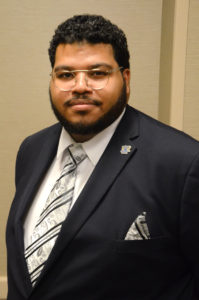
Whitfield, 33, is trying to mount an independent U.S. Senate campaign, which is never easy under any circumstance but is nearly impossible under the present one.

Independent Senate candidates have between Feb. 1 and noon May 1 to submit at least 10,000 valid registered voter signatures. Because so many of those will be disqualified, he must collect many more. His initial goal was 17,500.

Whitfield last year laid the campaign’s groundwork and amassed volunteers. Two months into his three-month signature collection effort, he says he has about 4,500 signatures in hand.

But, married to a wife with asthma, he’s self-quarantined at home and unable to attend the events that would help him collect more. Continue reading

Another Senate candidate – maybe

Ricky Harrington is the Libertarian nominee for Senate.

By Steve Brawner, © 2019 by Steve Brawner Communications, Inc.

Sen. Tom Cotton has another opponent as of Saturday – maybe.

The Libertarian Party of Arkansas held its convention that day and nominated Ricky Harrington, 34, of Pine Bluff to run against Cotton and the only announced Democrat, Josh Mahony.

Libertarians support very limited government. They are to the right of Republicans on tax and spending issues. They are to the left of many Democrats on some other issues, such as opposing the drug war and the use of force in general.

Prison reform is one of Harrington’s biggest concerns. An employee of the prison system, he supports reducing the size of Arkansas’ inmate population, particularly with respect to nonviolent offenders. During a brief interview, he said he supports abolishing the Department of Homeland Security, repealing the Patriot Act, ending “endless” wars, and protecting gun rights.

He says he was inspired to enter the race by several events, including this year’s passage of Act 164. (More on that subject in a few paragraphs.) The Harding University graduate was working as a missionary in China in 2016 and was dismayed by what he saw happening in the U.S. presidential campaign. He’s African American, and when he returned to Arkansas, he said he was stopped by police for driving 35 miles per hour in a 40 mph zone. That was a frustrating moment for someone who had just spent two years in a communist country. Continue reading

Perot a force from the outside

By Steve Brawner, © 2019 by Steve Brawner Communications, Inc.

A man for whom I cast two votes for president died Tuesday.

Ross Perot ran for president as an independent in 1992 and as the nominee of his Reform Party in 1996. His temperament was not a good match for the presidency. But especially in that 1992 campaign, he did something no other major candidate in my lifetime has done: He made the national debt a major campaign issue, successfully educated Americans about it, and offered real solutions to solve it and other problems.

At the time, the debt was a little more than $4 trillion, or about $16,000 for every American. Today, it’s $22 trillion, or about $66,900 for every American. It will grow roughly $1 trillion this year, and that’s in a good economy.

Perot, the billionaire businessman born to modest circumstances in Texarkana, Texas, could not abide such irresponsibility. And while other candidates try to manipulate us with slick ads, divisive rhetoric and poll-tested sound bytes, he ran substantive 30-minute television commercials where he explained problems and offered solutions.

One of those attracted 16.5 million viewers. Imagine that. A man discussing politics with hand-held charts had almost as many viewers as this year’s “Game of Thrones” series finale (19.3 million), supposedly a national event. And Perot’s were broadcast when there were 74 million fewer Americans. Continue reading

An interesting week for non-Republican-Democrats

By Steve Brawner, © 2019 by Steve Brawner Communications, Inc.

There are few encouraging weeks for Americans who don’t fit into the two-party system. Last week was at least interesting.

On July 3, District Judge Kristine Baker issued a preliminary injunction blocking enforcement of a new law that makes it harder for third parties to qualify for the Arkansas ballot.

The injunction means the law won’t take effect while Baker considers the case’s merits. It was brought by the Libertarian Party, the state’s only really active third party.

Under previous law, parties have qualified for the ballot if they won 3% in the preceding presidential or gubernatorial election. Otherwise, they’ve had to collect 10,000 valid signatures over a 90-day period.

The Libertarians fell just short of that 3% in the 2018 governor’s race, so they must collect signatures for 2020. A few months later, legislators and the governor passed Act 164. It increased the required number of signatures to 3% of the votes cast in the last gubernatorial election. The Libertarians would have to collect 26,746 valid signatures in 90 days rather than 10,000. They sued, and meanwhile on June 28 submitted 18,667 signatures to the secretary of state’s office. Continue reading

Seeking signatures, not funnel cakes, at Toad Suck Daze

Michael Pakko

Dr. Michael Pakko, right, and Joe Swafford, left, seek signatures at Toad Suck Daze.

By Steve Brawner, © 2019 by Steve Brawner Communications, Inc.

Dr. Michael Pakko doesn’t have a problem getting people’s attention when he stands before Arkansas business leaders to give his annual state economic forecast. Last Saturday was a little harder.

On that day, he was asking voters to sign a petition qualifying his Libertarian Party for next year’s ballot while standing in front of a vendor that was selling funnel cakes and other items at Toad Suck Daze in Conway.

Pakko is chief economist and state economic forecaster at the University of Arkansas at Little Rock’s Arkansas Economic Development Institute.

He’s also the state Libertarian Party chairman, which became harder this year with the passage of Act 164. It increased the number of signatures third parties must collect for ballot access from 10,000 to almost 26,750 in a 90-day period. Continue reading