Category Archives: State government

2016 wasn’t so bad

By Steve Brawner
© 2016 by Steve Brawner Communications, Inc.

More than a few people are expressing their hopes for a happy new year by saying good riddance to the old – the basis being that they aren’t happy with the presidential election, along with the fact that a lot of famous people died in 2016, especially lately.

The truth is that famous people die every year, and it’s not the year’s fault. Also, whatever you think about the election, the good news is that we had one.

Consider that on March 1, almost 632,000 Arkansans went to the polls to help select the two major party candidates. Then in November, about 1.13 million Arkansans voted in the general election for one of those two candidates or for one of six others. In January, the current president will peacefully hand the Oval Office’s keys to his successor and become a private citizen, while the new president takes the reins of power only temporarily.

This process is fairly common around the world these days but rare throughout history, when power has often been transferred through war or intrigue or birthright. George Washington came along and just gave power up. As flawed as it was, the 2016 presidential election was a blessing, not a curse, when you consider many of the possible alternatives. As Winston Churchill once said, “Indeed it has been said that democracy is the worst form of government except for all those other forms that have been tried from time to time.”

In fact, the 2016 campaign in some ways was remarkably open and democratic. The Republicans offered 17 candidates for president, each of whom had ample opportunities to make their case to the voters. Donald Trump won in part because he inspired first-time or infrequent voters to go to the polls. The Democrats offered the first female major party nominee, and her gender was not the defining issue. Third party candidates were treated, at least for a time, as candidates, not asterisks.

The campaign gave a shot of adrenaline to a political process that has grown predictable and stale. This time, the usual left-versus-right narrative simply didn’t apply. Both Trump and Bernie Sanders gave voice to legitimate concerns about global trade and the unevenness of the economic recovery. Moreover, they made their cases largely through oratory and direct communication rather than formulaic 30-second television advertising, which has been the norm. In November, the candidate who raised a lot less money and ran far fewer ads won by using tools that are at least theoretically available to others: a message that drew crowds and media attention, and social media.

Here’s where some of you say, “But Trump …”

I know, and I share many of your concerns. I voted for John Kasich in the Republican primary and the independent Evan McMullin in November – two candidates I believed offered positive, unifying visions. But, for one column, let’s look on the bright side, or at least all sides. It’s wrong to look at the world through rose-colored glasses, but it’s also a mistake to reach for the gray ones instead. In fact, it’s worse.

It wasn’t just in national politics where 2016 wasn’t so bad. In Arkansas, the Legislature met three times and along with Gov. Hutchinson produced tangible results in health care and highway funding. The unemployment rate in Arkansas is about 4 percent, which is far below the national average. Granted, that’s partly a result of the high number of former workers who have dropped out of the labor force, but clearly things are better than they were.

The Charles Dickens novel, “A Tale of Two Cities” begins with the words, “It was the best of times, it was the worst of times.” Based on the way so many people talk these days – and have been for the past decade or two – you’d think these are just the worst of times. Let’s be realists, not cynics. By many measurements, Americans live better than 99 percent of all people who have ever lived.

So may we each have a happy new year while keeping the right perspective on the old one. Maybe it wasn’t the best of times, but the times certainly weren’t the worst.

Bathrooms at the Capitol

CapitolBy Steve Brawner
© 2016 by Steve Brawner Communications, Inc.

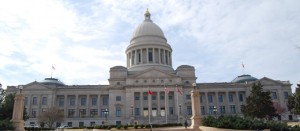
When the Legislature meets in regular session starting in mid-January, Gov. Asa Hutchinson wants to cut taxes, increase funding for the state’s foster care system, and change the way colleges and universities are funded.

What he does not want is a bathroom bill.

Hutchinson does not want Arkansas to have the same experience as North Carolina. There, the city of Charlotte passed a broad gay rights ordinance which included a provision allowing individuals to use bathrooms based on their gender identity. The state Legislature then passed a bill repealing it and prohibiting all other cities from enacting their own local gay rights ordinances. Attracting the most attention was a provision whereby the state became the first to require individuals to use bathrooms corresponding to the gender listed on their birth certificate, a listing the legislation allowed those individuals to change.

That law made North Carolina ground zero for this latest culture war battle. Entertainers and, more importantly, big businesses expressed their disapproval. The NCAA pulled championship tournaments, the NBA cancelled an All-Star Game, and the company Paypal scuttled a plan to expand there. The Republican governor in November lost to his Democratic challenger – which didn’t happen in many places. A deal was made with the city of Charlotte where both the local ordinance and the state law would be repealed, but the Legislature voted Dec. 21 to keep the law in place.

While all of this was going on, the Obama administration released a heavy-handed “guidance” to every public school in the nation strongly encouraging them – underline “strongly” – to allow students to use restrooms and locker rooms conforming to their gender identity.

When that guidance was released, Hutchinson reacted by telling schools they should ignore it and make their own decisions. But he does not want Arkansas to become embroiled in a North Carolina-like controversy while he’s trying to court businesses from elsewhere.

He said in a press conference Dec. 20 that he has had “a lot of discussion” with legislators in hopes of keeping the focus on other areas. His view is that the issue is now being considered by the court system, that the Trump administration should be less intrusive than President Obama’s, that Arkansas doesn’t seem to have a big problem with bathroom controversies at the moment, and that, when it comes to schools, local administrators and school boards can handle this kind of thing without any edicts from above.

If anyone were to sponsor a bathroom bill, it would seem to be Rep. Bob Ballinger, R-Hindsville. The legislator sponsored the controversial Religious Freedom Restoration Act in 2015. Supporters said it was meant to protect business owners from having to violate their consciences by requiring them, for example, to participate in a gay wedding. Opponents said it allowed more discrimination.

Ballinger said recently that he does not intend to file a general bathroom bill and does not know of anyone who does, but he can’t speak for 134 other legislators. Instead, he’s looking at more specific bills – for example, one that targets acts of indecent exposure in bathrooms, and one that increases the penalties for taking photographs of victims in stalls.

“There’s some things like that, that I expect that we’ll probably address simply because we have a change in culture, and with a change in culture you’ve got to have laws that are consistent with it in order to protect the public,” he said.

That’s a better way to handle it, at least for now, than some far-reaching bill. Address harms on which most of us should agree. Anyone want to defend indecent exposure and unwanted picture-taking in the bathroom? Meanwhile, avoid a humongous controversy until one might be necessary.

The whole bathroom debate took an ugly turn in 2016 and played a bigger role in the elections than it’s being given credit for. Maybe 2017 will offer more clarity through the new presidential administration or a court decision. Maybe society will come to a reasonable consensus that respects everyone’s vulnerabilities without the federal government telling every establishment in the land what their bathrooms have to look like – and without any level of government adding “patrol bathrooms” to the list of police officers’ duties. Maybe it will become more commonplace for establishments to have only single-toilet, gender-neutral restrooms with locking doors. We’ll have to stand in line longer sometimes, but we’ll have more privacy.

Whatever happens, may we all just go to the bathroom in peace. Happy 2017.

Electing judges: Is it the people’s will, or politics?

golden balanceBy Steve Brawner
© 2016 by Steve Brawner Communications, Inc.

Should judges in Arkansas be democratically elected after collecting campaign donations from the same lawyers and corporate interests that bring cases before them? Or should an appointment process be created, reducing the influence of money but also the role of the voters?

Because we already use deeply flawed process number one, we probably will not open up the can of worms that would accompany flawed-in-other-ways process number two.

The past few years have demonstrated some of the challenges with electing judges. In one case, a circuit judge reduced a jury’s verdict in a nursing home case from $5 million to $1 million after receiving campaign money from the nursing home’s owner. That judge pled guilty to bribery, was sentenced to 10 years and has since appealed. Meanwhile, the past few Supreme Court races have sunk beneath the dignity of the office because of ad campaigns run by anonymously funded, independent political action committees, otherwise known as “dark money.” One losing candidate, Tim Cullen, was dragged through the mud because he had once been appointed by a judge to represent a convicted sex offender – a distasteful assignment to be sure, but in America, unlike in some other places, we try to guarantee the right to a fair trial.

In addition to the corrupting influence of money, the other problem with electing judges is that voters have limited information. Candidates aren’t supposed to tell us how they’ll vote on cases because they should remain neutral until they hear the facts in court. Also, judicial elections are nonpartisan, so voters can’t use party labels as a guide. Ironically, the other problem with judicial campaign donations is that candidates don’t collect enough to purchase a big ad campaign that would really introduce themselves. The whole process results in many voters picking a name on a list.

But for all their messiness, elections are the way we do things in America. It’s how we imperfectly keep small groups of individuals from amassing power and acting contrary to the people’s will from behind closed doors.

The difficulty of coming up with a better system was demonstrated Friday during a meeting of the Arkansas Bar Association’s House of Delegates, the attorney group’s policymaking body. A task force had submitted a plan for electing Supreme Court justices where an appointed commission would offer three names to the governor, who would then choose one. According to the proposal, 22 states use that kind of process. If it passed, the Bar would find a legislator sponsor who would try to get it referred to the voters in 2018 as a proposed constitutional amendment.

The vote was 34-20 in favor, which was short of the required three-fourths majority, so it died. During the debate, a couple of the delegates said their lawyer constituents overwhelmingly oppose ending elections. Another delegate relayed a message from the five returning Arkansas Supreme Court justices and the two recently elected ones revealing that they unanimously support keeping elections. By voting for the proposal, the attorneys would be at odds with the justices before whom they may someday appear.

There are lots of ways to select judges. In some states, including Missouri, a commission presents nominees, the governor appoints one, and then, after a probationary period, the judge stands before voters in an up-or-down retention election with no other candidates on the ballot. But in the spirit of this glass-half-empty column, retention elections have the same issues as the current system – money and politics.

Even without the Bar’s support, some legislator next year probably will propose a constitutional amendment for appointing rather than electing judges. Gov. Asa Hutchinson favors some kind of change. However, there’s not widespread support in the Legislature – not enough to make it one of two or three issues referred to the voters. As another solution, Democrats have introduced a bill that would require dark money groups to disclose their donors. However, there aren’t many Democrats left in the Legislature, and besides, an argument can be made that people have a right to donate anonymously to groups that align with their beliefs.

So in 2018, we’ll probably be electing judges and justices pretty much like we have in the past. It’s not perfect, but, as is often the case, we’ll choose the problems of the current system over different problems that would come with a new one.

Here are my Arkansans of the year. Who are yours?

By Steve Brawner
© 2016 by Steve Brawner Communications, Inc.

Recently, Time magazine announced its “Person of the Year,” based on who its editors believe had the most impact, for good or bad, in 2016. It’s choice was President-elect Donald Trump.

Based on that criteria, who would be the Arkansans of the Year?

The list would have to include David Couch, the attorney who – basically by himself with the financial support of two donors – legalized marijuana for medicinal use in Arkansas. Couch proposed the amendment and qualified it for the ballot in a way that it survived a Supreme Court challenge when all the other voter-initiated proposals were declared invalid. He helped engineer the removal of a rival medical marijuana proposal. Then he ran just enough of a campaign to pass the measure with 53 percent of the vote.

As a result, Arkansans will have greater access to a natural remedy that clearly helps some patients. Sick people will have an option other than manufactured chemicals produced by industrialized, bottom-line-focused pharmaceutical companies. For some, marijuana will replace opiates, which, though legal, potentially are far more addictive and dangerous, even deadly. At least for now, no longer will otherwise law-abiding citizens be forced to sneak around state and local authorities to help themselves or their loved ones.

At the same time, the drug inevitably will find its way into the hands of people who are not sick, including curious young people using it for experimentation, not medicine. The state has taken a step in the direction of full legalization – the potential destination being Denver, where marijuana stores are more common than McDonald’s restaurants. The medical profession must now incorporate a treatment process it doesn’t fully understand. Employers must now negotiate a regulatory minefield using maps that keep changing.

In the upcoming legislative session, medical marijuana will command the attention of legislators who, in many cases, voted against it. Policymakers must now create a system legalizing a substance in Arkansas that’s still illegal in America, while keeping an eye on an incoming U.S. attorney general who has indicated strong opposition to the drug.

How’s that for impact?

Right up there with Couch is Cindy Gillespie, the state’s new director of the Department of Human Services. While so many others argue about past and future health care systems, she is in charge of administering much of the one we’ve got.

What has her job been like this year? In March, she took over an $8.4 billion agency that was a mess, and began cleaning it up. As of May, there was a backlog of 146,000 Medicaid applications, some dating back to 2013. Now there are less than 9,000, and probably none by the end of December. Her agency is in charge of the controversial private option, soon to be Arkansas Works, where the state buys private health insurance for more than 300,000 Arkansans – more than a tenth of us. Medicaid pays for nursing home patients and children’s health care. It also is responsible for finding temporary and at times permanent homes for the state’s foster children – yet another systemic crisis she is tasked with taming.

Two others would qualify for my list. Sen. Tom Cotton increased his national profile through his forceful denunciation of the Obama administration’s Iran deal and further positioned himself as a future presidential contender. If Hillary Clinton had won, he’d be running for president in 2020. (Bonus points for him for becoming a father for the second time this month.) Christie Erwin’s Project Zero organization this year connected 113 children with their adoptive families. What a huge impact she had on all of them.

Finally, it must be said that “impact” is impossible to measure. Seemingly earth-shattering people and events are soon forgotten. What happens in obscurity can set in motion world-changing chains of events. We must place little stock in journalists, or anyone, trying to explain The Meaning of It All. After all, a baby born in Bethlehem at most would have merited a few lines in the birth announcements at the time.

David Couch, Cindy Gillespie, Tom Cotton, and Christie Erwin – those are my Arkansans of the year. Who would be yours?

Drinking from a fire hose to set pot rules

By Steve Brawner
© 2016 by Steve Brawner Communications, Inc.

When you go to school to be a doctor or a pharmacist or a lawyer, you have to learn how to drink from a fire hose – do a lot of work and absorb a lot of information quickly while bearing important responsibilities.

Good thing that pretty much describes the Arkansas Medical Marijuana Commission, the appointees who will have a little more than a month to create rules for the growers and dispensers authorized by the Medical Marijuana Amendment, which voters passed in November.

The five members of the commission – which includes two doctors, a pharmacist and a lawyer – held their first get-to-know-each-other meeting Dec. 12. About all they otherwise accomplished was electing a chairperson, Dr. Ronda Henry-Tillman, a surgical oncologist, and agreeing to meet again on Dec. 20.

They agreed on that date remarkably fast, which is a good sign because the amendment legalizing medical marijuana doesn’t allow much time for fruitless debate. Rules must be in place 120 days from the Nov. 8 election, which would be March 9. But because a public comment and legislative review are required, the rules must actually be drafted by late January – in other words, a little more than a month from the commission’s next meeting.

Meanwhile, the Department of Health and the Department of Finance and Administration are drinking from their own fire hoses while crafting their own rules and regulations. And when legislators go into session early next year, they’ll be reviewing those rules and passing their own laws to alter the amendment, which they can do with a two-thirds vote. One pre-filed bill by Rep. Doug House, R-North Little Rock, would add 60 days to the timeline. But the Legislature doesn’t go into session until mid-January, and the commission and the affected agencies can’t assume House’s bill will pass.

There’s never been an issue like this in state history. As Gov. Asa Hutchinson’s spokesperson, J.R. Davis, often says, Arkansas is in the process of creating a miniature Food and Drug Administration. And let’s not forget that while marijuana is legal at least medically in 29 states and the District of Columbia, it’s still illegal in the United States of America. The only reason states are passing these laws is the Obama administration made it clear it would look the other way, but President Obama is leaving office next month. President-elect Donald Trump has said he favors medical marijuana, but his pick for attorney general, Sen. Jeff Sessions of Alabama, is a staunch opponent.

So that means that Hutchinson, at one time the head of the federal Drug Enforcement Administration, is leading a state government trying to quickly legalize a drug that’s still completely illegal under federal laws – laws that soon may be enforced again. He’s also trying to administer a program he campaigned and voted against. At least two of the Medical Marijuana Commission members also are known to have voted no.

Eighty-four of the state’s then-135 legislators publicly expressed their opposition prior to the election, though some of them won’t be returning to office. That’s almost two-thirds, and with a two-thirds vote the Legislature can change the amendment so much as to make it virtually meaningless – for example, by tacking on such high fees that few could afford the drug. But that probably won’t happen because there’s another number that will be hard to ignore: 68,505, which is how many more Arkansans voted for the Medical Marijuana Amendment than voted against it.

One other thing that’s kind of interesting about Arkansas’ passage of the amendment: If you look at the map, the states that have legalized marijuana for medical or recreational purposes mostly are on the coasts and along the country’s northern and southern borders. Arkansas is the first Bible Belt state to say yes unless you count Louisiana and Florida, which probably would be a stretch in both cases.

If a conservative state like Arkansas will vote to legalize medical marijuana, then perhaps any state will next. Well, perhaps any state except Utah, home to a large Mormon population, and maybe Alabama, home of Sen. Sessions. He’s soon to be attorney general of the United States, the nation’s top law enforcement official. Did I mention he’s really opposed to marijuana?

Steve Brawner is an independent journalist in Arkansas. Email him at brawnersteve@mac.com. Follow him on Twitter at @stevebrawner.