Category Archives: Politics

New law saves good small schools

By Steve Brawner
© 2015 by Steve Brawner Communications, Inc.

Bruce Cozart sponsored Act 377.

Bruce Cozart sponsored Act 377.

Sometimes the Legislature gets it wrong, sometimes it gets it right, and sometimes it gets it right after getting it wrong for a while.

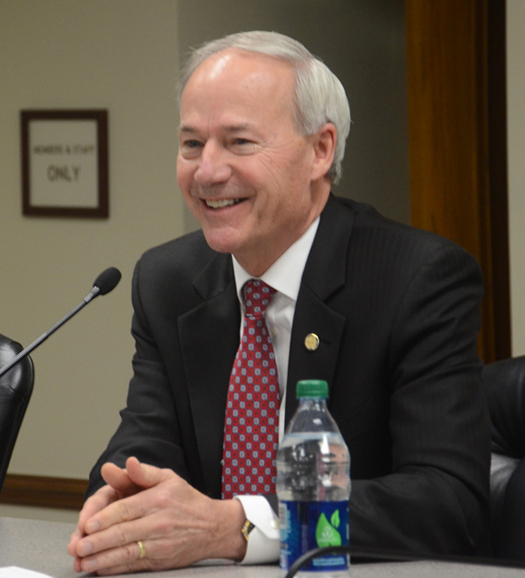
The last was the case with Act 377, signed last week by Gov. Asa Hutchinson, which lets the Arkansas State Board of Education grant waivers from consolidation to school districts that fall below the usual 350-student threshold. As a result of that bill by Rep. Bruce Cozart, R-Hot Springs, a school district can remain open if it is not in fiscal, academic or facilities distress, and if keeping it open is in the best interest of students because of long bus rides.

The 350-student minimum was created in 2003 in response to court rulings in the Lake View case that put the state and its taxpayers firmly in charge of ensuring all students’ education opportunities are “adequate” and “equitable.” (The Arkansas Constitution uses the words “general, suitable and efficient.”)

The thinking was that districts must have at least that many students to provide the necessary economies of scale to accomplish those objectives, which is usually true. Generally, districts with less than 350 students cannot cost-effectively provide high-level math and science courses and other opportunities students need. Those districts typically are in declining communities that the rest of the state’s taxpayers are not responsible for propping up. Above all, policymakers feared that messing with the funding formula would land the state back in court. Every major education decision is made with that firmly in mind.

The result of all this is that, according to the Arkansas Rural Community Alliance, 53 high schools and 48 elementary schools have been closed. For the sake of both students and taxpayers, many of them probably should have been.

The problem with that arbitrary 350-student minimum is it confuses “impossible” with merely “difficult.” Against the odds, the Weiner School District was doing well. Its academics were among the best in the state. Its facilities were good. Its finances not only were sound, but its citizens recently had voted to raise their own taxes.

It didn’t matter. Because it fell below that magic number, it was forced to consolidate in 2010 with its larger neighbor, Harrisburg, whose students were not achieving at the same levels as students in Weiner. There’s still a Weiner Elementary School, but older students travel to Harrisburg now. To this day, taxpayers who live in Weiner pay higher millage rates than those who live in Harrisburg. So far, the district’s patrons have voted not to change that situation.

Michelle Cadle stood behind Hutchinson as he signed the bill into law and was handed one of the pens he used. Her family lives in what once was the Weiner School District. Her youngest child attends Weiner Elementary, but she drives her oldest to the Valley View School District 20 miles away.

The loss still stings, but she has chosen to channel her emotion into becoming an advocate for small schools. “We always said it was never about Weiner,” she said. “It was about doing what was right for all schools across Arkansas, so this was a victory day for us.”

Hutchinson made it clear that the law is “forward looking.” In other words, it can’t be used to reopen the Weiner district. Still, Cadle said the community is looking for alternatives.

There wasn’t strong opposition to this bill. It doesn’t do away with the 350-student minimum. It merely gives the State Board of Education a tool to use when there’s an exception to the rule, like Weiner. Districts in decline still will be consolidated.

More generally, education policymakers are concerned about the lack of institutional memory in the Capitol. Because of term limits, very few legislators were in office when the Lake View case was decided. The more the case shrinks in the rearview mirror, the more it will be forgotten – until somebody sues again.

That’s a valid concern. However, the fear of that happening shouldn’t lead the state to repeat a past mistake – or put more and more kids on long bus rides unnecessarily. Regardless of its size, if a district’s students are performing well, if its finances are sound, and if its facilities are in good shape, it shouldn’t be consolidated. It should be duplicated.

That letter to Iran

By Steve Brawner
© 2015 by Steve Brawner Communications, Inc.

We may have reached the point where the U.S. government has moved past “does not work” to “cannot work” – not in the current environment, anyway, and we need to decide what to do about that.

A couple of recent examples illustrate.

One is Congress’ inability to respond to President Obama’s decision not to enforce part of immigration law. When that kind of thing happens, Congress must reassert itself. Instead, it did nothing because congressional Democrats placed party loyalty over their branch of government’s responsibility.

The second is that letter sent to Iran’s leaders by 47 Senate Republicans that was initiated by Sen. Tom Cotton and signed by Sen. John Boozman. The letter said that any nuclear arms deal will constitute only an executive agreement unless it is approved by Congress, and that it can be rescinded by the next president, anyway. “President Obama will leave office in January 2017, while most of us will remain in office well beyond then – perhaps decades,” wrote the party that used to be for term limits.

The Constitution in Article II says, “The President… shall have Power, by and with the Advice and Consent of the Senate, to make Treaties, provided two thirds of the Senators present concur …” Obama says this is not a treaty, but whatever you call the paper that eventually is signed, the Senate is supposed to have a major role in determining foreign policy.

The president has not successfully sought the advice and consent of the Senate. He should. But if he did, nothing short of killing Osama bin Laden would get two-thirds agreement these days – another reason to wonder if we’re moving from “does not work” to “cannot work.”

Traditionally, politics has stopped at the water’s edge, but then, traditionally, the parties have seen each other merely as opponents. The real enemies were only outside the border, like the Soviet Union. Surely there are other ways for our system to work than for one branch of government to be communicating one message to a dangerous foreign power while another branch communicates something else. Can you imagine any other walk of life where this kind of squabbling would lead to a good result?

There are other ways of doing democracy. In a British parliamentary system, the prime minister is always a member of Parliament’s ruling party. That party calls all the shots, and it’s the loyal opposition’s job to loyally oppose. If the prime minister loses the support of the party, Britain gets a new prime minister.

Great Britain’s system is not necessarily better, but it is different, and our system does not work/cannot work if our elected officials act like we’re British. Their system is designed with parties in mind, Ours is based on a system of checks and balances where party loyalty is second to branch responsibility, and where the parties govern together when possible.

Some members in Congress are trying to pass a bill that would require congressional approval of any nuclear deal with Iran. The sponsor, Tennessee Sen. Bob Corker, is a Republican who did not sign the letter. Obama says he will veto the bill if it ever makes it to his desk. If he does, that veto should be overridden by congressional Republicans and Democrats fulfilling their duty – by writing legislation as a body, not letters to the ayatollah as a party. That bipartisan legislation is now less likely because of this letter.

Can that kind of responsible governance happen these days? The writers of the Constitution could not have anticipated how democracy and technology would evolve – that billions of dollars would be spent on campaigns, that 24-hour news stations and the internet would let normal people obsess over politics nonstop, and that our personal data would be used to manipulate us. Meanwhile, other things they did fear – a semi-permanent ruling class, a large federal government – have not been prevented.

In other words, is it that the system does not work, or that it cannot work? Can American democracy function in its current form, or does it need a tweak, or does it need a complete overhaul? Have times changed, or have flaws in the foundation been revealed, or can we work with what we have?

We’d better decide, because we really must fix our immigration system, and we certainly can’t let Iran get a nuclear bomb.

Can states save the federal government?

By Steve Brawner
© 2015 by Steve Brawner Communications, Inc.

Common Core cover cutoutThe thing about human nature is that we resist the big change until there’s a crisis, even though we know a crisis is inevitable if we stick with the status quo.

It often takes a diagnosis for us to quit smoking or change our diets. Some alcoholics must lose everything before they’ll finally seek help.

On the other hand, some people do make lifestyle changes before they absolutely must. Can a society do the same?

On March 2, the national debt stood at $18,149,954,531,765.07, according to the U.S. Treasury Department’s website. That’s $57,000 per American.

The government has been in debt since 1835, but the numbers have been soaring lately. It took two centuries to reach $1 trillion in 1980 and then 35 years to add $17 trillion to that.

There have been a few years when the government did not add to the debt, but not many. Debt has been an ever-present part of America’s past – and unfortunately, its foreseeable future. The federal government’s own Congressional Budget Office predicts the debt will increase $7.7 trillion over the next 10 years. The debt then will continue to rise because of the government’s many unfunded promises.

Someday there will be a reckoning. You can’t keep adding debt forever. And yet Washington seems incapable of stopping this train wreck from happening. So can the states do it?

In the State Capitol on Wednesday, the House of Representatives voted to advance the Compact for a Balanced Budget, a national effort to amend the U.S. Constitution. It now goes to the Senate.

The Constitution has been amended 27 times, the first 10 amendments being the Bill of Rights. With each amendment, Congress has initiated the process.

However, under the Constitution’s Article V, the process can be initiated by states instead of Congress. Thirty-four states must agree to a call, Congress must make the call, the delegates must meet to propose amendments, and then 38 states must approve those amendments. It’s never been done before.

The Compact for a Balanced Budget spells out exactly what the convention would do and how it would do it. Delegates would vote for a single amendment saying the government cannot spend more than it collects unless it borrows under a debt limit that can be increased only with approval by state legislatures. It also requires a two-thirds vote by Congress for most tax increases.

The previous day, the House voted against a resolution advancing the Convention of the States, another national effort to amend the Constitution through the Article V process. That effort would let delegates consider a balanced budget amendment but also others that would limit the government’s power and scope. Supporters tried again on Friday and narrowly passed it through the House. It now goes to the Senate as well.

I like the Compact’s approach much better, but I understand why people are opposed to both. A balanced budget amendment could rob Congress of the flexibility it needs in a crisis. It could be ignored. Or it could give the Supreme Court an outsized say in taxing and spending matters. Clearly, the Convention of the States is a conservative movement meant to reduce the size of the federal government, which many Americans don’t really want to do.

Other arguments against the Article V approach are not as persuasive. Some fear a “runaway convention” where delegates make scary changes to the Constitution. That’s hard to imagine. Remember, whatever the convention proposes must then be ratified by 38 states, one at a time. It’s far more likely the process either would produce nothing, or something so watered down as to be meaningless.

Some are opposed to amending the Constitution because they say it is just fine like it is. Thank goodness that argument didn’t carry the day before passage of the 13th Amendment, which abolished slavery, or the 19th, which ensured women have the right to vote.

The framers of the Constitution gave us a wonderful document, but it has become increasingly obvious since 1835 that it contains a flaw: The government has many incentives to create debt without a mechanism to discourage it. Thomas Jefferson recognized that flaw in 1798.

The framers also understood their own imperfections, and humanity’s, as well as the fact that times change. That’s why they made it possible to amend the Constitution, with great difficulty.

They wisely included the Article V provision. Congress can’t always be trusted, so a democratic process was needed to bypass it – before a crisis occurs, preferably.

Is America governable?

By Steve Brawner
© 2015 by Steve Brawner Communications, Inc.

U.S. Capitol for blogThe American republic has limped past being dysfunctional and stumbled into being ungovernable. Even if you hate the government, this situation should concern you because it means big problems aren’t being addressed, while new ones are being created.

Two current legislative fights illustrate this reality – No Child Left Behind and the broken immigration system.

Congress has yet again stalled on its long overdue reauthorization of No Child Left Behind. That’s bad, because this law is completely unworkable. Signed by President George W. Bush in 2002 and passed with bipartisan support, it required that 100 percent of American students in grades 3-12 test at their grade level by the end of the 2014 school year, or the federal government would punish the schools where they didn’t. That’s every single child, regardless of language difficulty or intellectual challenge – a requirement so ridiculous that Congress ought to fix it, but it can’t. As a result, the Obama administration has been granting waivers to states telling them how they can disobey the law.

The president is supposed to enforce the law, and Congress is supposed to write laws that make sense, right?

The same applies to immigration. The president wants to ignore the laws Congress has passed, and Congress can’t agree on how to fund the Department of Homeland Security in response. Meanwhile, the border remains porous, and millions of people live in the shadows among us. Children brought here by their parents basically have no home country. Meanwhile, the United States quite effectively limits the influx of skilled overseas workers – exactly the people we need.

If these two issues were outliers, we could deal with them. Unfortunately, they’re the norm. A few other examples …

The national debt. Uncle Sam now owes $18 trillion, or the equivalent of $57,000 for each American. The debt has doubled since 2007 and tripled since 2001, and it’s still rising. The only possible solution is to reduce spending substantially while collecting more revenues somehow. There’s not a remote possibility that Republicans and Democrats in Washington will agree to do that.

Health care. Prior to the Obama administration, the United States already had the world’s most expensive health care system. It denied insurance because of pre-existing conditions and stopped paying for patient claims if they became too expensive. Then the Affordable Care Act was rushed through Congress, causing its own problems and leading to who-knows-what. Now the act faces a serious Supreme Court challenge over its wording regarding federal exchange subsidies. Pulling this leg from the stool could cause Obamacare to collapse. Lots of people would be happy about that, but … what’s the plan after that?

Infrastructure. The gas tax, which funds highways, has not been raised at the federal level since 1993. It is destined to produce less and less revenue because cars are becoming more fuel efficient through both market and government demands. Everybody knows the model is unsustainable, but there’s no agreement on its replacement.

It won’t be enough to vote for different people in 2016. Washington simply doesn’t work any more, regardless of who is in office.

That’s because Washington reflects American society, which itself is marked by contradictions and divisions. We simply don’t agree on how to solve problems, or even about what the problems are. We’re deeply divided culturally, morally, about what we want this place to look like, and about what we think it once was. That lack of consensus makes it very hard to solve difficult issues. Moreover, Americans say they don’t trust government but then choose to be profoundly dependent upon it, rarely recognizing the irony. The result is that we grow government without paying for it.

This is a depressing column, so let’s close with solutions. Congressional term limits? A balanced budget amendment? Campaign finance reform? All could help.

Meanwhile, many decisions should be returned to the state level, where democracy still manages to work sometimes. Red, blue and purple states could solve problems in their own ways, often learning from each other. Americans would be free to settle in states where they felt most comfortable.

This could cause its own problems, including irreconcilable legal definitions of discrimination and a race to the bottom on environmental regulations. A poor state like Arkansas might find its niche, or it might just get poorer.

Something big has to happen – bigger than the next election. When a country becomes ungovernable, problems can’t be solved simply by electing different people to that government.

Hutchinson has rookie’s enthusiasm – but not about highways

By Steve Brawner
© 2015 by Steve Brawner Communications, Inc.

Asa for web

Being governor is not a job where practice makes perfect. In fact, in many ways, a governor is at his or her best as a beginner.

A new governor is fresh off the victory speech and is running off the adrenaline from the transition to power. He has a new title that carries with it an air of authority. He has ideas he can’t wait to implement. He hasn’t grown cynical from lost battles or grown paranoid from all the criticism. He’s younger than he’ll ever be again.

Circumstances can serve to magnify those early advantages. Gov. Asa Hutchinson came into office as the first Republican governor with a Republican Legislature since shortly after the Civil War. His predecessor, Gov. Mike Beebe, entered office after a landslide victory (over Hutchinson). Beebe’s predecessor, Gov. Mike Huckabee, became governor after demonstrating firm leadership amidst Gov. Jim Guy Tucker’s last-minute indecision about resigning.

Some of Huckabee’s and Beebe’s most notable policy accomplishments came early in their administrations. For Huckabee, it was ARKids First and the conservation tax. In his first session, Beebe and the Legislature increased school funding and cut the grocery tax in half.

They both were fine governors, but as would be the case with anyone, we’re better off that the Arkansas Constitution ensures we get some fresh blood in there after a while.

A good example of this is prison reform. This was not a focus of Hutchinson’s during the campaign, but it has become one now, and it may be the issue that most defines him when it’s all said and done. The state’s prisons are currently so overcapacity that 2,500 inmates are being housed in county jails. However, the state can’t afford to keep building cells, and simply letting inmates out of jail isn’t the best solution because many have a drug or alcohol problem, and 43 percent return to prison soon after being released. The only long-term solution, Hutchinson said, is to change inmates’ behavior, so his prison reform plan would create transitional centers to help parolees re-enter society.

Hutchinson was his usual reserved self when announcing his plans, but there was a fire in his eyes that I suspect won’t quite be there seven years from now. Again, fresh blood is a good thing.

Which brings us to highways. Last Feb. 19, Scott Bennett, director of the Arkansas Highway and Transportation Department, testified before a House panel in favor of House Bill 1346 by Rep. Dan Douglas, R-Bentonville, which would dedicate for highways sales tax revenues from the purchases of new and used cars and car parts.

Bennett has given this presentation so many times that he probably could do it in his sleep. The state has $20.3 billion in highway needs over the next 10 years but only $3.6 billion in expected revenues. While construction costs are rising, the primary means of funding highways, federal and state motor fuels taxes, have not been increased for decades and are producing less revenue because cars are becoming more fuel efficient. Yes, Arkansas voters passed an interstate bond issue in 2011 and a half-cent sales tax for highways in 2012. Together, those will affect less than 4 percent of the state’s roadways.

Bennett has been in his position long enough that the fire in his eyes that day was accompanied by a hint of desperation and frustration in his voice. Two years ago, a similar bill started out with broad support, but it failed under opposition from competing interests who feared highways would take a bigger slice of their pie. Gov. Beebe was adamantly opposed, and it failed.

Douglas’ bill did pass out of the committee, but, near the end of the meeting, Hutchinson’s Department of Finance and Administration director, Larry Walther, testified against it, saying it would create holes in the state budget. That was an ominous sign for the bill’s supporters: It meant Hutchinson is opposed. Highways at this point are not his thing – not at the expense of other things, anyway. This week, Douglas announced that, because of the governor’s opposition, he was putting the bill on hold for a while.

The funding model for highways is not sustainable, at the state or national levels. Highways and bridges that aren’t properly maintained now will have to be replaced later, at much higher costs.

How soon the problem is addressed matters. A lot more gets done when there’s fresh blood in the Governor’s Mansion and the governor still has fire in his eyes.