Category Archives: Independents and third parties

A husband first, and then a candidate

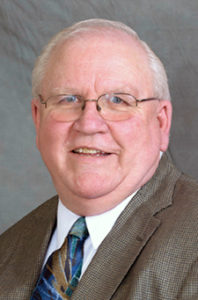
Frank Gilbert

Frank Gilbert

By Steve Brawner
© 2016 by Steve Brawner Communications, Inc.

Frank Gilbert looked kind of sheepish last Friday when I asked for his new phone number and instead he gave me his old one. I told him that when I had tried to call that one earlier, the recording had said it had been disconnected.

“The truth is, I let it lapse for a few days,” he said to the best of my recollection. “Teresa always took care of the bills.”

Frank is the jovial Libertarian candidate for U.S. Senate and the former mayor of Tull. Teresa, until Aug. 15, was his wife of 45 years.

The two were not exactly the classic political power couple. She registered to vote only once – in the 1990s in order to vote for him – and then de-registered after she was called for jury duty. As a Libertarian, Frank believes in as little government as possible. Teresa was socially conservative and not afraid of government enforcing traditional behavior. She called politics Frank’s “expensive hobby.”

Yeah, there were arguments in the early years, and then they put those aside. They were too busy raising three sons and later having four grandchildren, who called her “Moomaw,” to let politics get in the way.

“You know, it’s one of those things that you figure out it’s not going to change, and it’s so unimportant in the scope of what you’re doing as a family that it became a running joke,” he said.

One other thing about Teresa was she was kind of stubborn about going to the doctor, right up until June 5 when the pain in her stomach became so unbearable that she let Frank drive her to the hospital. A CT scan at 10 p.m. that night revealed she had a golf ball-sized mass at the base of her pancreas that had metastasized to 20-30 spots on her liver. The doctor didn’t offer a prognosis, but they understood.

“Of course we all Googled it, and when you Google pancreatic cancer, you know you’re praying for a miracle,” he said.

After further tests, Frank and Teresa were told she had six months to two years to live. She actually had 10 weeks. During that time, Frank dropped off the campaign trail. About a week after she died, he was back at work at the Bauxite School District, where he’s an in-school suspension officer, and he restarted his campaign.

“That week in between made me understand that I needed some normalcy. … I’ve heard people talk about compartmentalizing, and I can’t do it,” he said. “She’s on my mind all the time.”

He and the Democratic candidate for Senate, Conner Eldridge, have debated twice. On Tuesday, Frank will take off work to participate in a third debate that will be televised that night on AETN – the only one that will include the incumbent, Republican Sen. John Boozman.

At one time, Frank was actually a Republican himself – the party’s second vice chairman. But he does not fit into that party, and he’s not a Democrat.

“The difference I saw when Republicans started winning elections was that we ran those Democrat Hogs away from the public trough and ran those Republican Hogs up there to replace them,” he said.

At the AETN debate, he’ll argue positions from a Libertarian perspective that wouldn’t always be an easy sale with voters. Because he believes in limited government, he favors privatizing Social Security and Medicare some time in the long-term future. He’d fight no drug war and very few overseas ones. In a debate with Eldridge, he asked how Americans would feel if their child were killed in a drone strike and said the United States had engaged in imperialism, adding, “When you sow the wind, you reap the whirlwind.”

Running for governor in 2014, Frank won less than 2 percent of the vote. He knows the best he can hope for is 3-5 percent this year. He’s running because he believes in the cause and because he’s hopeful Libertarians may have an impact on state and national politics in his grandchildren’s day.

So he’s either Abraham Lincoln helping start a movement, or he’s Don Quixote tilting at windmills. Still, he doesn’t plan to quit running for office.

“I may grab my heart and go see Teresa, but until that happened it’s physically impossible,” he said. “I enjoy it enough that I’ll keep doing it and hopefully not spend quite as much money in the future.”
Related: Libertarians, Greens better choice than death.

One way to vote your conscience

Hand with ballot and boxBy Steve Brawner
© 2016 by Steve Brawner Communications, Inc.

You know how you’re always told that if you vote for a third party, you’re taking a vote from the major party candidate you’d otherwise support? Sam Husseini, a D.C.-based writer and activist, has a simple solution for that conundrum, “Vote Pact,” but it’s going to require a civil conversation with someone with whom you disagree politically.

The idea, basically, is to swap votes. Say you lean Republican but don’t want to vote for Donald Trump. You’re considering voting for the Libertarian, former New Mexico Gov. Gary Johnson, or independent candidate Evan McMullin, but you’re afraid not voting for Trump helps Hillary Clinton. Using the Vote Pact strategy, you team up with someone who feels pressured to vote for Clinton but would rather vote for the Green Party candidate, Jill Stein. Then you can both vote your conscience. Instead of voting for someone you don’t support, your Vote Pact took a vote from someone you completely oppose.

A group supporting Johnson is making the same argument and has created a structure, Balanced Rebellion, that will pair a Republican and a Democrat who both want to vote for Johnson.

Husseini starting pushing the idea in 2000, when the race between George Bush and Al Gore also featured two well-known third party candidates, Pat Buchanan and Ralph Nader. It didn’t gain much traction then. In later elections, the major parties produced relatively acceptable candidates while third parties didn’t produce many credible alternatives.

This year, Trump and Clinton have historically high unfavorable ratings, and some Americans are looking elsewhere. In Arkansas, six other candidates are on the ballot. But Husseini said voters are trapped by their own fears into voting for the lesser of two evils.

The idea resonates more in swing states than in Arkansas, where Trump seems all but certain to win the state’s six Electoral College votes.

Still, it’s not inconceivable that the race could at least become interesting here. Clinton, Arkansas’ former first lady, is competitive in some surprising states, including Georgia and Arizona. Evan McMullin, a traditional Republican, qualified for the Arkansas ballot Aug. 24 as the Better for America candidate, and he’ll pull votes from Trump, as will Johnson, who also pulls from Clinton. Two of the other candidates, the Constitution Party’s Darrell Castle and America’s Party co-founder Tom Hoefling, are also more conservative than Trump and could attract unhappy Republicans.

Nahh, Trump will win here.

Here’s the thing about the Vote Pact strategy: It requires participants to step out of their comfort zones. You know that old saying, “Never talk about politics in polite company”? Unfortunately, these days it’s, “Never talk about politics unless you’re sure the other person agrees with you, and then talk a lot about it.”

The structures of American society are sowing a lot of division these days. We have significant ideological, political, religious and regional differences anyway. These are heightened by the fact that we tend to live near, work alongside, and socialize with people who look like us, believe like us, and make roughly the same amount of money. Regardless of our political beliefs, it’s easy to find media outlets to reinforce our persuasions and paint others as foolish and ill-intentioned. Others therefore become aliens.

When we express our political opinions, it’s often in completely safe situations, or online, where old rules about civility and respect don’t seem to apply. There, political arguments are so ugly and pointless that we end up “unfriending” those with whom we disagree.

This creates a destructive cycle that entrenches our beliefs and makes us more extreme. Within a cocoon of like-minded individuals, in one conversation President Obama can go from being too liberal to being a communist to purposely helping the terrorists to win, with no one ever backtracking to him just being too liberal. In somebody else’s cocoon, Republicans become the mortal enemy.

Vote Pact creates an opportunity for civil discourse and transforms opponents into allies. The other voter is no longer part of the Left or Right. They’re just a fellow human being trying to vote their conscience. And we’re going to help them do that, while they help us.

Vote Pact won’t change this election’s outcome. But elections aren’t just about picking the winner in a two-person beauty contest, or “less ugly” contest. They’re about letting voters express their beliefs. The two-party, winner-take-all system pressures voters to compromise. With Vote Pact, they can vote with no regrets while bridging the gap with someone with different beliefs but the same desire for their vote to count.

Isn’t that better than another pointless online argument?

One of us for president?

Elections aheadBy Steve Brawner
© 2016 by Steve Brawner Communications, Inc.

What would happen if the president were an average person, not a member of the country’s political and wealthy elite? Matthew O’Connor would like to give Americans a chance to find out.

The Ohioan is trying to mount an independent presidential campaign and wrote me recently looking for someone in Arkansas to collect signatures. Prospective presidential candidates in this state must collect only 1,000, which is pretty doable, but the deadline is August 1.

What led a father of three with no real political experience, no support and no name recognition to run for president? His big issues are corruption, the national debt, and the failure of the country to produce the right kind of candidate. His website is www.darkhorse2016.com.

“I just felt like no one was doing it for the right reason,” he told me. “I felt that a lot of people felt like … either they deserved it, or it was their turn, or they could buy it, and I thought it was about time that somebody did it because they wanted to serve the country and serve the people.”

A lot of Americans are looking for the same thing right now, considering the two major party nominees, Hillary Clinton and Donald Trump, have historically high unfavorable ratings. It seems the current system is not producing humble, service-oriented candidates like the famed Cincinnatus, who in 458 B.C. left his small farm to lead Rome through a crisis and then returned to the farm.

O’Connor won’t get very far in 2016. While the bar for making the ballot in Arkansas and some other states is low, in many states it is impossibly high for all but the best-connected candidates.

Maybe it should be. Every walk of life includes a system for winnowing out the wannabes. In business, you move up the corporate ladder. In sports, you prove yourself in college and in the minor leagues. And in politics, candidates are elected to something less than president, make a name for themselves, and then run for the nation’s highest office. On rare occasions, someone with success in another walk of life – Trump, President Dwight Eisenhower, President Ulysses S. Grant – has gotten a shot at the title. There’s no “American Idol” for presidents, and thank goodness.

O’Connor is not a billionaire business mogul or a famous general. He says he’s been able to balance life’s important areas – as an information technology professional, a father of three and a happily married husband who the day after our interview was planning to celebrate his 20th wedding anniversary.

“I know that sounds like a strange thing to say, but there’s a lot of success in that,” he said. “A lot of people don’t manage those things.”

Could someone like that be president? Could America benefit from leadership by competent, moral persons plucked temporarily from Main Street? Would those people be better at balancing budgets and serving the people than the political and cultural elite? Or would Main Street Americans be like decent high school baseball players suddenly facing Major League pitching? A lot of us probably could read a speech off a teleprompter. Could we sit across the table from Vladimir Putin?

If you’re thinking you’d like to write in O’Connor as a protest vote on Election Day, you can’t. There is no provision in Arkansas law for write-in presidential candidates. He must collect 1,000 signatures, which is a steep hill to climb for someone without Arkansas roots or campaign donations.

If he doesn’t, there’s still enough time for Arkansans to qualify a favorite son or daughter for the ballot. They wouldn’t win, of course, but at least they would offer another choice.

Some suggestions?

– Sam Sicard, president of the First National Bank of Fort Smith. In an age of self-promoters, he cares about ideas and doing the right thing.
– Kevin Kelley, head coach of the Pulaski Academy Bruins, the high school football team that doesn’t punt. He’s a creative, data-driven thinker.
– Mark DeYmaz, pastor of Little Rock’s Mosaic Church, where people of all races and income classes worship under one roof. He brings people together.
– Mary Carol Pederson, founder of The CALL in Arkansas, which recruits families to foster and adopt children. She focuses on kids and the future.

Want to vote for one of those people, or Matthew O’Connor, rather than Clinton, Trump, or one of the third party candidates? The deadline for collecting signatures is August 1.

Related: It’s OK to vote for someone else.

It’s OK to vote for someone else

Hand with ballot and boxBy Steve Brawner
© 2016 by Steve Brawner Communications, Inc.

Voters complain each presidential election about their choices, but that’s especially true this year. According to Real Clear Politics’ compilation of polls, Hillary Clinton is viewed unfavorably by 55.5 percent of voters and favorably by only 39.7 percent, while Donald Trump’s numbers are worse: 61.1 percent to 33.4 percent unfavorable to favorable.

These are historic numbers, and they could get worse. When candidates’ negatives are so hopelessly high, they respond by trying to drive up their opponents’ unfavorables and, if necessary, win by becoming the lesser of two evils. Both campaigns will unleash a torrent of negative ads. Both have plenty to work with.

If you’re like many Arkansas voters, you may have said you’ll just write in somebody else’s name. Unfortunately, there is no provision in the law for you to do that in the presidential race.

However, there will be other candidates on the ballot: the Libertarians’ Gary Johnson, the Greens’ Jill Stein, the Constitution Party’s Darrell Castle, and possibly others. The bar for running for president in Arkansas as an independent is remarkably low: Just collect the signatures of 1,000 voters, which is much less than the 10,000 required to run for statewide offices. Candidates have until August 1 to submit those signatures.

This is the part where somebody always says, “Don’t waste your vote. If you don’t vote for one of the two major party candidates, you’re helping the other one” – the one they don’t want to win.

I respectfully disagree with that kind of thinking. An election is not just a process for picking winners and losers. It’s an opportunity for voters to express their beliefs about the country’s direction. Many voters strongly oppose both Clinton and Trump and do not want to affirm either candidacy on Election Day.

If your beliefs more closely align with one of those third parties, then vote your conscience and encourage others to do the same. That’s how the Republican Party came into existence. On March 20, 1854, a small group of idealists met in a Wisconsin schoolhouse to form a new party that would be based on their anti-slavery convictions, not raw political calculations about who might win the next election. Instead of holding their nose and voting for the lesser of two evils, they took the long view and stayed true to their beliefs. Six years later, Abraham Lincoln was elected president.

No matter how you vote, you won’t change the results in Arkansas. The United States does not have national elections where everybody’s vote goes into a big pot. It has individual, winner-take-all state elections that feed into the Electoral College. Arkansas has six votes, and we already know who will win them. In a recent Talk Business & Politics poll, Trump leads Clinton, 47-36 percent, and nothing will turn those numbers around. Clinton’s 36 percent is consistent with recent election results: President Obama won 37 percent in 2012; while in 2014, Sen. Mark Pryor won 39 percent in the U.S. Senate race while Mike Ross won 41 percent in the governor’s race. Somewhere in those numbers is the Democrats’ ceiling.

Regardless of what you as a voter do, Arkansas will be part of a large red splotch in the middle of the country on your television screen on Election Night. The state will be called for Trump immediately after the polls close, and then the attention will turn to the states that are actually up for grabs: Florida, Ohio, Pennsylvania, etc.

In other words, because Arkansas is blood red, your vote essentially has become meaningless as an election-deciding tool. However, as with those idealistic Republican reformers in 1854, it has great meaning as a form of political expression. This is when your voice really counts.

The best vote I ever cast was in 1992 for independent candidate Ross Perot. I believed he was not temperamentally suited to be president, but he campaigned on political reform and on balancing the budget and ran 30-minute infomercials explaining the national debt. On Election Day, he won 19 percent of the vote. Not coincidentally, President Clinton and the Republican Congress began working on balancing the budget. They couldn’t ignore Perot’s voters.

So do you really want to avoid wasting your vote? Vote your conscience.

Related: Independents, Greens better choice than death

Libertarians, Greens better choice than death

Hand with ballot and boxBy Steve Brawner
© 2016 by Steve Brawner Communications, Inc.

The first line of an actual recent obituary reads, “Faced with the prospect of voting for either Donald Trump or Hillary Clinton, Mary Anne Noland of Richmond (Virginia) chose, instead, to pass into the eternal love of God on Sunday, May 15, 2016, at the age of 68.”

If only she had known she had other choices.

Those would include the Libertarian Party, the Green Party, and assorted others.

Let’s focus this column on the Libertarians, Arkansas’ most active third party. If you’re not familiar, it’s the one that says it’s for less government and actually, really, really means it. The Libertarians would cut social programs, including the popular ones, and they support gun rights. But cutting government also means shrinking the military, and they also would remove government from people’s personal decisions, which means they’d legalize marijuana and end the drug war. The party’s chairman in Arkansas, economist Dr. Michael Pakko, describes the party as a combination of small government constitutionalists, anarchists who want virtually no government, and “minanarchists” who fall somewhere in between.

The Libertarians this year are running 23 candidates in Arkansas, including likable party veteran Frank Gilbert for U.S. Senate and candidates in all four congressional races: Mark West in the 1st District; Chris Hayes in the 2nd; Steve Isaacson in the 3rd; and Kerry Hicks in the 4th.(Democrats could muster a candidate only in the 2nd District.) Eleven Libertarians are running for the state Legislature. And the party is doing this despite the fact that, under a law passed by Republicans and Democrats, it had to select its candidates a year before the election.

For Libertarians, this year represents the party’s best hope to ever make a splash. Their two-time presidential candidate, former Republican New Mexico Gov. Gary Johnson, won only 1.5 percent of the vote in Arkansas in 2012, but a recent Fox News poll showed him with 10 percent support in a hypothetical matchup with Trump and Clinton, and his running mate, former Republican Massachusetts Gov. William Weld, is an effective fundraiser.

The Libertarians won’t get 10 percent. Republicans and Democrats are highly skilled at painting each other as so terrible that many voters will decide they must pick one to save the country from the other. So don’t look for the United States to produce its third President Johnson.

But if Johnson can win 3 percent of the vote in Arkansas, it would be a big win for the state party. That’s the threshold it needs to qualify for the ballot in 2018 without having to collect 10,000 voter signatures, a task that Pakko said cost $34,000 this year as well as a lot of legwork.

How doable is 3 percent? The Libertarians’ top vote-getter in 2014, Hayes, won 6.36 percent in the treasurer’s race. Some conservative Republicans won’t vote for Trump, and they’re certainly not going to vote for Clinton, so they’re looking for an alternative. Gilbert said some Republicans won’t forgive Gov. Asa Hutchinson and legislative Republicans for Arkansas Works, which is the state program that uses Obamacare dollars to purchase private health insurance for Arkansans with incomes up to 138 percent of the federal poverty level. Meanwhile, maybe the Libertarian nominee could pull votes from disaffected Bernie Sanders supporters who see Clinton as part of the problem. Some Sanders voters will vote for the Green Party candidate, presumably Jill Stein, who won .9 percent of the Arkansas vote in 2012.

If the Libertarians do win 3 percent, the next question is, so what? Probably the party takes more votes from the Republicans than the Democrats, but that won’t matter in most races in a state as red as this one is becoming. Libertarians are a long way from actually winning races for important offices. The party wants a much smaller government than most Arkansans would support. To win, Libertarians would have to moderate, but if they do that, would they become what they’re fighting against?

For now, Libertarians, Greens, and other parties offer this – a choice, one that Mary Anne Noland’s son, who wrote her obituary in honor of her sense of humor, didn’t take into account.

Related: Trump played checkers and they played chess – in a checkers year