Category Archives: Business and economics

Cuba: trade embargo, or free trade?

Rick Crawford

Rick Crawford

By Steve Brawner
© 2016 by Steve Brawner Communications, Inc.

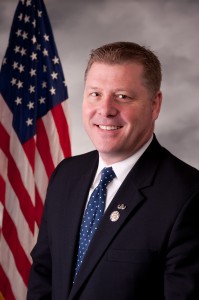
U.S. Rep. Rick Crawford’s 1st District in eastern Arkansas is home to half the nation’s rice acres. Cuba imports 400,000 tons of rice a year, mostly from Vietnam. So yeah, he’s for opening up trade to Cuba.

Speaking by Skype last week to a pro-trade-with-Cuba gathering at the Winthrop Rockefeller Institute on Petit Jean Mountain, Crawford said the trade embargo, in place since Oct. 19, 1960, has punished American producers instead of the Castro regime. Shipping rice from Vietnam take 36 days, versus the 36 hours it would take to ship Arkansas’ better, fresher rice, but the market is closed. Crawford, a member of a pro-Cuba trade congressional working group, has sponsored legislation that, among other provisions, would let Cuba buy rice on credit rather than requiring it to pay cash, which it doesn’t have. He’s traveling April 5-9.

Crawford isn’t the only Arkansas policymaker favoring a new approach to the communist country 90 miles off Florida’s shore. Sen. John Boozman also supports a change. He says the 55-year embargo hasn’t removed the Castro brothers from power, so it’s time to try something else – trading goods and ideas. The United States does business with worse regimes, he says, including Saudi Arabia and China. Last year, Gov. Asa Hutchinson – who helped enforce the embargo as undersecretary of the Department of Homeland Security, led a delegation of about 50 Arkansas business and government leaders to Cuba. He favors more trade without completely lifting the embargo.

Naturally, these policymakers have allies in the business community, including Arkansas Farm Bureau and Riceland Foods, both of whom see Cuba as a huge market.

Two Arkansas policymakers disagree. U.S. Senator Tom Cotton criticized President Obama as he traveled to Cuba last week, pointing out that the Castro regime arrested a human rights activist shortly before the trip. Rep. Bruce Westerman, who represents the 4th District, says opening up trade with Cuba rewards a regime that is still in power and still guilty of human rights abuses.

The state’s two other congressmen are still on the fence, sort of. Rep. French Hill, who represents the 2nd District, told KARN radio the other day that Arkansas will benefit from opening up the Cuban rice market, but he needs to see a path toward democracy and a market economy, and he’s concerned that there doesn’t appear to be a plan to make reparations to those who lost their businesses to the Castro regime. Rep. Steve Womack, from the state’s 3rd District, is still weighing the benefits and pitfalls of opening up trade, his office said.

The trade embargo began more than 55 years ago under President Eisenhower. In that time, all that’s been accomplished is that an ailing Fidel Castro was replaced by his brother, Raul. During that time, the United States has had 11 presidents. Meanwhile, the Soviet Union has gone from world superpower to historical artifact (for the moment); China has gone from closed communist country to manufacturing powerhouse; Europe’s economic borders have largely been erased; and the two Germanies have become one.

So the world has changed a lot – all except Cuba, where the Castros are still in charge.

And yet even Cuba’s past doesn’t necessarily limit its future. At the Winthrop Rockefeller Institute, Ruben Ramos Arrieta, Cuba’s minister counselor at its Economic and Trade Office in Washington, said the country has been undergoing a “transformation” since 2008. He said 80 percent of its agricultural land is state-owned, but 70 percent of that is now being used by private farmers and cooperatives. Whether or not that’s accurate, it’s notable that he described the private sector positively and that he spoke of “transformation” rather than “revolution.” Michael Bustamante, a Yale University professor with family in Cuba, said Cubans have an entrepreneurial spirit that helps them maintain an “a-legal economy” that is often ignored by the government authorities. Who knows what they could accomplish given freedom and a free market?

It’s said in sports that Father Time is undefeated. The same is true in politics. Raul Castro has said he’s leaving office in 2018, and even if he doesn’t, he’s 84 years old. Fidel Castro is 89. In the near future, somebody else is going to be Cuba’s leader.

The question for policymakers is, would that person be more influenced by a trade embargo, or by free trade?

Related: Make Cuba thirsty.
In West Memphis, it’s all connected

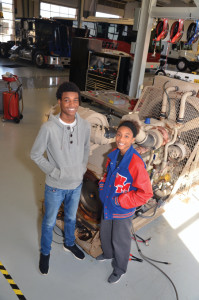
Junior Jeremy Paige is learning to become an aircraft mechanic, while senior Summer Abram plans to use the skills she learned in high school as a diesel mechanic to pay her way through school as she becomes a psychologist.

Junior Jeremy Paige is learning to become an aircraft mechanic, while senior Summer Abram plans to use the skills she learned in high school as a diesel mechanic to pay her way through school as she becomes a psychologist.

By Steve Brawner
© 2016 by Steve Brawner Communications, Inc.

The late Lt. Governor Win Rockefeller used to say that the education system is like a string of water pipes laid end to end but not connected. In West Memphis, they’re connected.

The high school, known as the Academies at West Memphis, has a conversion charter, which is an arrangement with the Arkansas Department of Education where some of the usual rules don’t apply and the school can experiment and innovate.

Students there choose pathways that prepare them for a career and then can spend up to six of their eight high school periods a day at Arkansas State University Mid-South, the local community college 1.3 miles down the road. In fact, it’s possible for a 10th-grader, on the first day of school, to get on the bus and sit in a college class before ever sitting through a high school one.

High school students can take tuition-free, for-credit college classes at ASU Mid-South thanks to the Thomas Goldsby Scholarship, funded by a local oilman. If they’re dedicated enough, they can receive a college associate’s degree on the same stage where their receive their high school diploma. Then, because of ASU Mid-South’s connection with the ASU system and with various other four-year schools, they can further their education and receive a bachelor’s degree, even a master’s, on that same college campus.

In effect, West Memphis has become a college town without the state having to build a huge campus with dorms and a football stadium.

Most students who make the eight-minute bus ride from the high school to the community college aren’t seeking a college degree. Instead, they’re taking career-oriented classes in a variety of fields. For example, five high school students earned welding certifications last year and then after graduating went to work at TrinityRail Maintenance Services in Jonesboro earning about $18 an hour.

Perhaps the most interesting connection in West Memphis is the aircraft mechanics program shared by the high school, the college and FedEx, the Memphis-based package deliverer founded by Arkansas native Fred Smith. The company has invested $250,000 at ASU Mid-South to build a new FedEx Aviation Technology Center, which when completed this year will include aircraft hangar space and classrooms. It even donated a Boeing 727 plane whose shell is sitting on the college campus after being disassembled and transported by a Stuttgart company.

This means that, as part of his high school education, junior Jeremy Paige is learning to maintain a jet airplane. This time next year, he’ll be crawling around the plane as he earns his certification in airframe mechanics – the aircraft’s structure. After he graduates high school, he’ll further his education at ASU Mid-South and earn his certification in powerplant mechanics – the engine. With those two certifications, he can go to work for FedEx and make a six-figure income.

Meanwhile, senior Summer Abram is learning to be a FedEx diesel mechanic. She won’t make the same kind of money as Paige, but she has different long-term goals: Work while taking college courses and playing basketball at ASU Mid-South and studying to become a psychologist. If it all works out, she’ll be making a living at FedEx while in school instead of piling up student debt.

Is there a downside? Long term, perhaps there’s a danger that the pipeline will become too connected – that the system could just funnel students straight from school to their corporate sponsors’ workforce.

Of course, those sponsors are offering up to six-figure opportunities. Moreover, under this model, students have many choices other than a simple high school diploma, which is worth less than it used to be. As Dr. Glen Fenter, who was ASU Mid-South’s chancellor when all these deals were made, said, “The most powerful model for combatting the lingering vestiges of poverty in this country is to speed up the educational process, particularly for poor students.” Get them ready to earn a paycheck in a good job, he said, and then they can always travel different pathways from there.

How to do that? In West Memphis, they’re connecting high school to college and career opportunities, using a 1.3-mile pipeline and, for some, a jet airplane.

For more stories about how Arkansas schools are using innovative techniques to teach students, check out:

Goals, not grades, are the focus at Warren.

A marvelous day in a Marvell school.

No Child in Flippin left behind.

Is China a threat or an opportunity? Both

By Steve Brawner
© 2016 by Steve Brawner Communications, Inc.

Is China a threat? Yes, but not the kind you might think, and it also represents an opportunity for Arkansas, says a professor and entrepreneur who knows more about this subject than I do.

Jeremy Haft, author of “Unmade in China: The Hidden Truth About China’s Economic Miracle,” says his experiences building companies in China have left him without fear that the country will soon overtake the United States. For all the talk about China’s ascendancy, the gap between the two countries’ wealth is widening, and for good reason.

The system just works better here than it does there, he said at the Clinton School of Public Service Feb. 11. Holding up a bottle of water, he said only a few companies are involved in the production thanks to America’s efficient, transparent supply chain. The United States has been producing goods for the free market for centuries and has a well developed system of corporate law and a climate of individual freedom. Chinese products require 15-20 firms, many of which lack basic governance skills, and each step in the production process adds risk.

I know all American regulators such as the EPA are supposed to be terrible, but after listening to Haft, our system sounds pretty good. China’s regulatory system is “broken and fragmented,” leading to corruption and unsafe practices, he said. China has had many safety scandals in recent years, including 300,000 babies suffering from renal failure because baby powder was contaminated by an industrial chemical. Sales of American dairy products to China quadrupled that year. And when something bad happens in China, rather than challenge the system, the one-party Chinese government tends to find one person to scapegoat and “take him out back and shoot him,” he said.

Chinese consumers know about these safety and quality problems, and as a result will pay a premium for American products. In his export company, farmers export their goods to China at a high price and sell pork products like organs that Americans won’t eat but Chinese like.

China represents a huge opportunity for Arkansas food producers. Agriculture is Arkansas’ number one export to China, while China is the state’s second largest export market after Canada. The country of 1.4 billion people contains only enough land suitable for farming to fit inside the state of Texas, and 90 percent of the country’s aquifers are contaminated. For all of the country’s supposed technological advancement, most farming is done on 140 million small farms tilled by hand. That means China imports a lot of agricultural products – cotton, soybeans, pork and soon, rice. Many Chinese aqua farms also are contaminated – chicken coops are placed over ponds and the fish are fed by the waste – so catfish is another potential export product.

China represents other economic opportunities for Arkansas. China’s deforestation activities have left it short of forestland, which is why it recently announced it was investing $1.3 billion in a pulp mill in southern Arkansas. Aerospace – a major Arkansas export – also represents an opportunity because the Chinese are less adept at such advanced manufacturing processes.

The real threat from China isn’t from continued trade dominance, but from substandard, often unsafe products. Remember the baby powder scandal? The United States imports four billion pounds of food annually from China. Risky Chinese raw materials are used to make American medicines and other products. When California contracted with a Chinese company to repair the San Francisco Bay Bridge, the welds connecting the decks were cracked and the quality random. When U.S. inspectors sounded warnings, California fired the inspectors.

So instead of creating trade barriers to China’s huge and growing market of 1.4 billion people, American policymakers should be finding ways to capitalize on those people’s desire to buy our stuff, Haft said. Meanwhile, policymakers should concentrate on the real threat from China – unsafe and shoddy products.

Haft made a compelling case. As he was saying all this, I noticed I was taking notes on my Apple laptop while keeping an eye on my iPhone, both of which were invented by an American company but made in China. Apple took my money; China got most of the jobs. So is China a threat or an opportunity? Both, I guess, like a lot of things.

To watch Haft’s address at the Clinton School, click here.

Priorities and the Hogs

Football on tee - transparentBy Steve Brawner
© 2016 by Steve Brawner Communications, Inc.

Merriam-Webster’s online dictionary defines “juxtaposition” as “the act or an instance of placing two or more things side by side.” On January 27, an interesting one occurred at a University of Arkansas System Board of Trustees meeting.

The trustees were led on a tour of the University of Arkansas for Medical Sciences hospital campus in Little Rock. While parts are new and gleaming, what once was the main hospital needs $13 million just to become fire code-compliant, and even then it would be badly outdated and inefficient. UAMS would like $97 million to spruce up that building and other facilities, all for administrative space. Tearing the building down and replacing it would cost $250 million.

Board members later heard from the University of Arkansas at Pine Bluff. Students there enjoy a new science and technology building and a new fitness center, but in the middle of campus is an unused old multistory facility with weeds growing from the roof, and not as part of a science experiment. The campus security headquarters is an aging house, which can’t be reassuring to parents, and after a good rain, parts of the campus are underwater. UAPB would like money, too.

Then came the University of Arkansas Athletic Department, which seeks a $160 million expansion of its football stadium that would include 3,200 premium seats along with other amenities, such as a video board. The project would be funded through $40 million in donations and a $120 million bond issue repaid through higher ticket prices, paid mostly by fans not sitting in those 3,200 premium seats.

The trustees gave Athletic Director Jeff Long their blessing to continue gathering information, but not before former Sen. David Pryor had questions and abstained from voting. He said he was not necessarily opposed, but priorities should be discussed. This would be, he said, “the largest single bond issue in the history of higher education in the state of Arkansas.” He asked who would benefit, and how much of the costs students would bear.

“A bond issue is a debt of the University of Arkansas,” he said. “It is a debt of the people of Arkansas, and ultimately if something goes wrong, who’s responsible? And that’s the people.”

This is where the columnist perches in his ivory white tower and wags his finger at the trustees, right? Well, not necessarily. Pryor had it right. A discussion is needed.

True, it was quite a juxtaposition to see the state’s teaching hospital and one of its universities asking for money that’s currently not available for boring but necessary stuff like medical administration and drainage, which was then followed by a mostly celebrated $160 million request for football seats used six or seven times a year by rich people, along with other amenities.

However, the needs UAMS and UAPB are seeking to fill would be met partly by tax dollars that haven’t yet come from the Legislature. Moreover, it should never be assumed that public entities are spending the money they already have as efficiently as can be expected (or that they’re not).

Long, in contrast, was asking to pursue money paid voluntarily by donors and fans who, if they don’t like the higher ticket prices, could choose to watch the games on TV, which is what I do. The UA Athletic Department is one of the nation’s few big time college programs that turns a profit and is self-sustaining. In fact, it’s given money back to the university for academics for the newly built Champions Hall.

Finally, at what point do the Razorbacks add to the university, and at what point do they distract from it? The head football coach, Bret Bielema, is by far the highest paid state employee, including the doctors saving lives at UAMS. That seems like a misplaced priority. On the other hand, the Razorbacks are the university’s best marketing tool and a tie that binds the state together. And on the third hand, does all this send a message to young people that while we adults tell them to hit the books hard so they can become doctors, what we really value is how hard the Razorbacks hit the opposing players in the SEC?

It’s a complicated discussion, and it’s worth having before letting people spend $160 million of their own money on a football stadium, and making taxpayers responsible if something goes wrong.

Arkansans of the year

arkansasFlagBy Steve Brawner
© 2015 by Steve Brawner Communications, Inc.

Time magazine names a “Person of the Year.” Sports Illustrated has a “Sportsperson of the Year.” Who are the Arkansans of the year?

In politics, it’s not even close. On issue after issue, Gov. Asa Hutchinson either achieved his objectives or appointed a study commission to buy time to achieve his objectives. He wants to continue but change the private option, the controversial program that uses Medicaid dollars to buy insurance for lower-income Arkansans, so he asked the Legislature to fund it two years while a replacement can be found. That’s what’s happened – so far. He and the State Board of Education butted heads over the Common Core-related PARCC exam. He wanted to replace it; the Board wanted to keep it. It’s gone. In the debate over the Religious Freedom Restoration Act, Hutchinson was perhaps the only elected official who pleased (too strong a word?) both sides. His signature education issue, requiring high schools to teach computer coding, has resulted in 4,000 students taking a class. The only downside to Hutchinson’s year is that next year can’t be this good.

Honorable mention: Baker Kurrus, superintendent, Little Rock School District. A non-educator in one of the state’s most high-profile education jobs, he’s trying to smooth ruffled feathers while telling hard truths. Does the Little Rock school superintendent belong in the “politics” category? He certainly does at the moment.

In business, I’m going with Donnie Smith, president and CEO of Tyson Foods. He and his company were questioned last year when Tyson bought Hillshire Brands for $7.7 billion. That was a lot of money, but buying the makers of Jimmy Dean Sausage and Ball Park Franks expanded Tyson’s already considerable reach. Tyson’s operating income rose 37 percent this year to $2.25 billion, and its sales of $40.6 billion are an increase of 9 percent over last year. That’s not chicken feed.

Honorable mention: George Gleason, CEO of Bank of the Ozarks. The $800 million purchase of Georgia-based Community & Southern Bank was the largest bank buy in Arkansas history and made Bank of the Ozarks an instant major player in Georgia. Full disclosure: I own a journalist-sized amount of stock in the company – meaning, not much.

In health care, I’m making New Hampshirite John Stephen an honorary Arkansan. Hired by the Health Reform Legislative Task Force to consult on reforming Medicaid, he and his firm, The Stephen Group, have offered information, insight and solutions, and as a result have much influence over Arkansas policymakers. They’ve argued the state shouldn’t completely ditch the private option while also shining a light on Medicaid’s problems. When he speaks, lawmakers listen, and he’s been speaking a lot.

Honorable mention: Hospital CEOs Troy Wells (Baptist Health), Dan Rahn (UAMS) and Chad Aduddell (CHI St. Vincent) are leading three of the state’s big institutions in a consolidating industry. You know how other areas of the economy such as banking and retail are increasingly dominated by a few players? It’s happening in health care, too.

In sports, it’s Brandon Allen, Arkansas Razorbacks quarterback. Has an athlete ever made such a quick turnaround from supposed “choker” to “clutch”? After missing late-game passes early in the season, he’s become one of the SEC’s most reliable quarterbacks and was one of the main reasons the Razorbacks won five of their last six games.

Honorable mention: Bret Bielema, Razorbacks football coach. He stuck with Allen and never lost faith in the team even when some were losing faith in his coaching ability. The Hogs have improved every year since he was hired.

In charities and nonprofits, The CALL and Project Zero are finding foster and adoptive homes for kids who really need them. The issue attracted attention this year when a report detailed problems with the state’s foster care system, and when Hutchinson spotlighted those children’s needs at his faith-based summit. Since 2007, The Call has brought 758 foster and adoptive families into the system, its website says, with more on the way. Project Zero, meanwhile, raises awareness through its Heart Gallery photos of waiting children.

Honorable mention: Too many great ones to name.

So who is the Arkansan of the year? There’s no way for me to know. What seems noteworthy today will be forgotten tomorrow, while seemingly minor events will have lasting consequences. (“Baby born in manger” probably didn’t make many headlines.) Maybe the names I’ve listed were important, or maybe they were just important to me.

At any rate, that’s my list. What’s yours?