Category Archives: Business and economics

About that record low unemployment rate

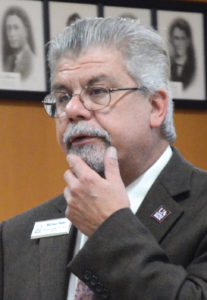
Dr. Michael Pakko

Dr. Michael Pakko speaks to engineers Nov. 7 about the state’s economy.

By Steve Brawner, © 2018 by Steve Brawner Communications, Inc.

Economics has been called the “dismal science,” so leave it to an economist to offer a dose of reality regarding Arkansas’ “record low unemployment rate.”

That rate is 3.5 percent, the lowest ever measured and one that is slightly lower than the national 3.7 percent rate.

Elected officials understandably brag about those numbers because they are much better than in the recent past – particularly October 2009, when 10 percent of Americans were unemployed. The Great Recession supposedly had ended in June that year, but nobody knew it – certainly not those 10 percent.

Dr. Michael Pakko, chief economist and state economic forecaster at the University of Arkansas at Little Rock’s Institute for Economic Advancement, offered a different take during his annual economic forecast Nov. 9. I heard him speak a couple of days earlier to an engineering association.

Pakko, whose overall forecast was positive, particularly regarding the next two years, is looking at another number – the labor force participation rate.

It tells us more. The unemployment rate measures only workers with a job or looking for one. The labor force participation rate includes people who aren’t trying to find one. Continue reading

Head Hog’s must-do list: revenues, wins

By Steve Brawner, © 2018 by Steve Brawner Communications, Inc.

The University of Arkansas athletic director has two must-accomplish responsibilities: first, keep the money flowing, and second, keep the fans happy by winning football games. Hunter Yurachek knows as well as anyone he’ll have to succeed at both.

Yurachek, who was hired last December, spoke Monday before a capacity crowd at the Little Rock Touchdown Club. His predecessor, Jeff Long, spoke to that same group nine times before being fired because he succeeded only at the first responsibility. Continue reading

A few less Arkansas tumbleweeds?

By Steve Brawner, © 2018 by Steve Brawner Communications, Inc.

Plastic shopping bags have been nicknamed the “Arkansas tumbleweed” because of the way they drift across the landscape in the wind. If more retailers follow the example set by one national chain, there might be fewer of them tumbling.

Kroger last Thursday announced it will begin phasing out the plastic bags companywide, starting with its Seattle-based QFC division by next year. The transition to reusable bags in other parts of the company will last until 2025.

It probably will take that long to reach the stores in Arkansas. Old ways die hard, even when people have good intentions. The Brawner household is trying to reduce its plastic use, but numerous times I’ve found myself behind a shopping cart and realizing I’d left the reusable bags at home. Lately I’ve been skipping bags entirely on short trips when I forget. I don’t need a plastic bag to carry my lettuce that comes in a plastic bag. Continue reading

Today’s trade wars and future taxpayers

By Steve Brawner, © 2018 by Steve Brawner Communications, Inc.

What will be the results of President Trump’s so-called “trade wars”? Maybe they will lead to better deals for Americans, or maybe they will slow the economy, and definitely they will cost future taxpayers $12 billion.

On Tuesday, the Department of Agriculture announced it would borrow that amount from the U.S. Treasury to subsidize producers of various agricultural products, including soybeans. It also will purchase surpluses of other products and distribute them to food banks and other programs.

The move is necessary because tariffs instituted by the Trump administration have been met by tariffs from other countries. The most important was China, which retaliated against Trump’s tariffs on $34 billion worth of Chinese imports with tariffs on $34 billion on American goods.

Continue reading

NCAA athletes: How to pay, not whether

The current college basketball scandal may have been caused by the fact that we’re asking the wrong question. Instead of asking “whether” athletes should be compensated, it should be, “how best to.”

On Friday, Yahoo! Sports reported that the FBI is investigating more than 20 programs for rules infractions by sports agent ASM Sports. These range from five-figure gifts for players to, in many cases, just a meal. Caught up in the scandal are some of the country’s top programs, including (shocker!) the University of Kentucky.

Then over last weekend, the news broke that the FBI had wiretapped University of Arizona coach Sean Miller’s phone conversations where he allegedly discussed paying a top freshman $100,000 to sign with the school. Miller strongly maintains his innocence.

The stories are casting a pall over college basketball at a time when the talk is usually about who will make the NCAA Tournament and partake in March Madness. Continue reading