Litter letter campaign seeks to make Natural State more natural

Drivers on Arkansas’ roadways are passing the word “Natural?” written with five-foot-tall metal letters and wire mesh and crammed with something very unnatural – manmade litter.

The signs are part of the Arkansas Department of Transportation’s stepped-up effort to clean up the state’s roadsides. Two have been in circulation with a third recently built.

“We pick up litter in a district, fill it up, fill those letters up, and leave them there for about a month as sort of a public service announcement,” said ARDOT Director Jared Wiley.

“Kind of trying to step on toes to say, ‘Hey, this litter’s not natural. It’s making our state look bad. Please help us to curb the problem.”’ Continue reading

Effort to rein in LEARNS stalls, as expected

Rep. Jim Wooten, R-Beebe, knew his resolution meant to reduce spending for the LEARNS Act’s educational freedom accounts would not gain much traction. In fact, he said so.

After no member of the House Rules Committee made a do-pass motion last Wednesday and the resolution failed, he said, “Thank you. Expected that.”

Wooten’s resolution would have allowed Sen. Bryan King, R-Green Forest, to introduce a bill limiting the scope of the LEARNS Act’s educational freedom accounts (EFAs). Those are providing families $6,864 per student for private and homeschooling expenses this year. Next year they will provide $7,208. 

King’s bill would have reduced that amount to $5,000 for homeschooling students while making students ineligible for the accounts if they were already enrolled in private schools when their families applied for the EFAs. That provision would have disqualified most of the current recipients. It also would have required students to achieve a minimum score on a state test to continue receiving the funds.

Continue reading

What happens to a country of contempt?

How well can a nation based on being a representative democracy and a free market economy function when a majority of its citizens say their countrymen are immoral?

We may find out in the coming decades.

The first paragraph’s question arises from the Pew Research Center’s recently released survey of 30,000 citizens in 25 countries.

The United States was the only country where a majority of respondents – 53% – viewed their citizenry’s morality and ethics as “somewhat bad” or “very bad.” Turkey and Brazil were close with only 51% having a positive view of their countrymen. The percentage was 55% in both Greece and France.

In contrast, 92% of both Canadians and Indonesians believed people in their country were “very good” or “somewhat good.” Eighty-eight percent had the same view in India and Sweden. Australia was at 85%, while Japan and Mexico both were at 83%. Continue reading

Sanders’ State of the State shows what will pass

One big difference between a president’s typical State of the Union address and Gov. Sarah Huckabee Sanders’ State of the State address April 8 is this: What the governor proposed will actually happen.

While the State of the Union often features a laundry list of policy proposals applauded only by the president’s party, Sanders’ State of the State at the beginning of this year’s fiscal session didn’t offer many policy specifics. And while there were standing ovations and opposition sit-downs, it didn’t have a partisan vibe.

In fact, don’t expect a lot of fireworks during the fiscal session, for three reasons. First, fiscal sessions, which happen every even-numbered year, are designed to last 30 days and focus on relatively boring budget matters. Lawmakers can get into other topics, but most don’t want to. Second, Sanders is in her first term and still likely to pass most of her priorities through a supportive Legislature. Third, Sanders has taken the most contentious item, her proposed 3,000-bed Franklin County prison, off the table for now. It just doesn’t have the votes, and may never have them.

We can be fairly certain, then, that lawmakers will agree to Sanders’ request for full support of the educational freedom accounts in her 2003 LEARNS Act. Those accounts provide families of any income level about $7,000 per child annually for private and homeschooling expenses.  Continue reading

Rep. Steve Womack: Biggest threat not Iran, China or debt

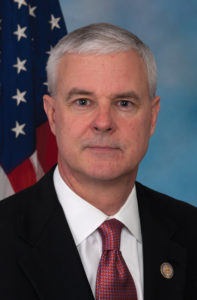
Steve WomackWhat’s the country’s biggest threat? According to U.S. Rep. Steve Womack, it’s not a nuclear-armed Iran, China attacking Taiwan, or the nearly $40 trillion national debt.

“It is the profound division in the body politic that prevents the legislative branch of the greatest country this world has ever known, that prevents that legislative body from doing its most basic function,” he said in Springdale Wednesday. “And then you have to ask, ‘How did we get here?’ …

“Let me tell you how we got here. We got here because we couldn’t control ourselves in the area of redistricting.”

Womack, who represents the 3rd Congressional District in northwest Arkansas, made his comments at a conference of the state’s engineering firms and the Arkansas Department of Transportation.

While part of his remarks covered infrastructure, he spent most of the last 10 minutes discussing partisanship and gerrymandering. The latter is the centuries-old process where majority parties redraw congressional districts using sometimes squiggly lines to ensure their states elect more of their own party members. Democrats and Republicans both do it. Continue reading